
I am a proud Filipino-American and a proud Asian-American. Most of that pride is rooted in parents that had left everything they have ever known to work tooth and nail for a middle-class American life that I could reap the benefits of, as well as my Asian-American peers who are some of the fiercest and most passionate people I have ever had the pleasure of meeting. I’ve seen first-hand the sort of humble beginning immigrants like my parents started out from and have heard from immigrants like my parents the sort of hostility you encounter just for trying to make it in the country that prides itself in being “the land of opportunity.”
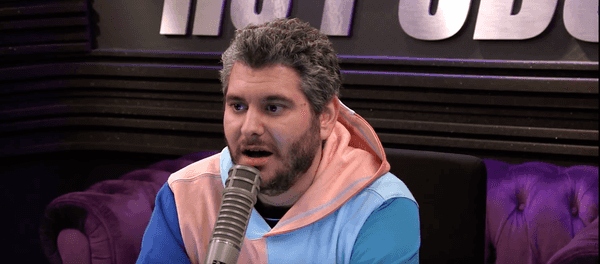
So as a proud Asian-American, not only did I become viscerally angry watching the “Chinatown” piece of Fox News’ Jesse Watters, I became viscerally angry with Watters’ more-excuse-than-apology calling the segment “a light piece” that is “to be taken as tongue-in-cheek.”
Sure, Watters, let me apologize for finding “offense” to a segment that is, for lack better phrase, “racist?” Maybe “something that belongs in the 19th Century more than it does modern television?” Yeah, let me gather all the Asian-Americans who have definitely not heard a “light-hearted” karate-joke before, sounds like the type of thing we would love. Why don’t I let you interview my parents, who gained fluency in English after being forced to adapt after too many encounters of being yelled at to do so, just so you can overlay some captions over them? Maybe intercut some more “tongue-in-cheek” movies clips with actors yelling at them “Speak! Speak! Why don’t you speak?”
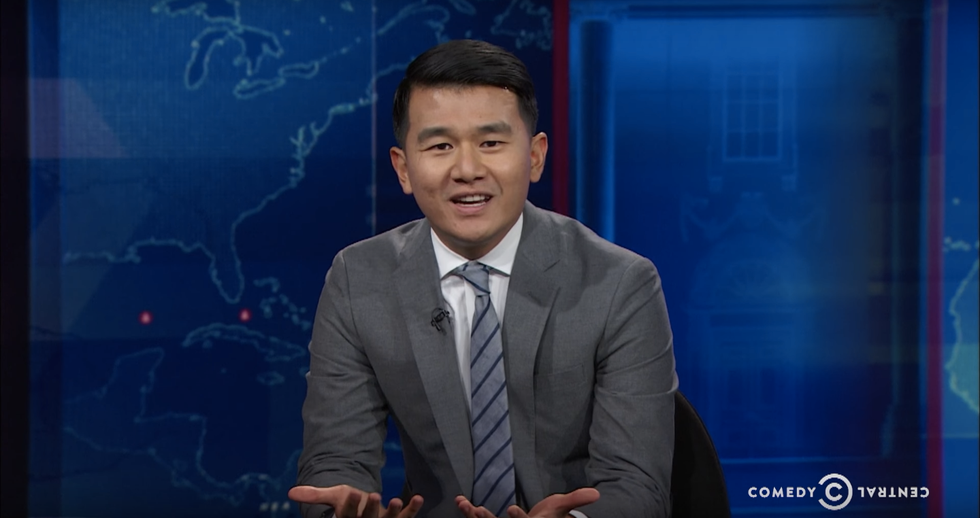
So as a proud Asian-American, I became even prouder with the segment of “The Daily Show’s” Ronny Chieng absolutely tearing apart Watters’ segment. Now, I was excited about Chieng ever since he was announced as a contributor to The Daily Show just before Trevor Noah took the helm from Jon Stewart. Not only would Chieng be a part of growing Asian representation on television, greatly exemplified by Aziz Ansari and his show “Master of None,” but also East and Southeast Asian representation (Chieng being of Chinese descent, born in Malaysia and raised in Singapore).
Yet, amongst more prominent contributors like Jordan Klepper and Roy Wood Jr., Chieng never got the chance to standout, being designated to fluff pieces and decent remote segments. That is until this very explosive piece in response to Watters. Chieng came out of the gates swinging, right away exposing the absurdity of the piece’s premise: “They say ‘China’ in the debate so you go to Chinatown? In New York? So when they mention Mexico, do you send someone to Taco Bell?”
What follows is a vigorous, bit-by-bit breakdown that so perfectly puts into words the immense frustration and rage anyone of Asian-descent would get from watching Watters piece. Chieng rebukes Watters stereotypes and especially tears apart the blatantly inaccurate ones in a way any Asian could empathize with: “Karate isn’t Chinese, it’s Japanese! And you’re doing it in a taekwondo studio, which is Korean you ***ing jack-off!”
Chieng also rips Watters for his references to outdated media caricatures like Mr. Miyagi, making a “tongue-in-cheek” call for him to use more contemporary stereotypes: “If you want to come at Chinese people, make fun of China’s high pollution, or the fact that they censor most of the Internet. Which in this case may be a good thing, since no person in China will ever have to watch your garbage attempt at comedy!”
Perhaps Chieng’s most dead-on point came in response to the elderly that Watters’ “interviews,” who remained silent throughout due their inability to speak English, much to the delight of Watters’ and his edited-in cricket-chirps. Chieng simply says: “Hey, asshole, they don’t speak English…It’s easy to make fun of someone when they can’t respond. Here. I’ll show you,” and then, talking to various static pictures of Watters, lobbies barbs like “Why do you look like a guy who carries around a pack of roofies - just in case?” Sure, you can admonish
Chieng for not taking the high-road in his expletive-laden, personally-insulting attacks, but there is certainly something cathartic in them after watching Watters’ absolutely humiliating segment.
Yet the most important thing that Chieng does in his segment is create his own man-on-the-street segment, one that actually is a tremendously more accurate representation of the politics of Chinese-Americans and, more important, actually treats Chinese-Americans with respect. Instead of responding with implicit, mocking contempt not speaking English, Chieng speaks with Chinese with interviewees and elicits (surprise, surprise) actually insightful commentary on the presidential election from the Chinese-American perspective.
Viewers of the Watters segment might be surprised to learn from this segment that Asian-Americans might know English! They even might know a thing or two about American politics because, believe it or not, they’re from America. For example, after conversing with an interviewee throughout in Chinese, he asks her why she knows so much about US Politics, to which she respond in English (and the most hilariously flippant way possible): “I’m from Queens!” (#QueensRepresent)
Cheing’s segment is so critical not only because it sheds light on the disgusting stereotypes Asian-Americans, especially Chinese-Americans, still have to face, it lends a megaphone to the Chinese-Americans and Asian-Americans that overall lack any voice in media. What was strikingly missing from the initial media backlash against the segment was the backlash from any prominent Asian-Americans in media, which is because they are hardly any. “Master of None” co-creator Alan Yang brought light to the lack of meaningful Asian-American media representation in his Emmy acceptance speech, and his point was greatly illustrated in Watters’ grossly racist “news” segment. This is why we need to talk about Ronny Chieng’s brilliant demolition of Watters’ segment: for that greater conversation of what it means to be Asian in America and in American media.