


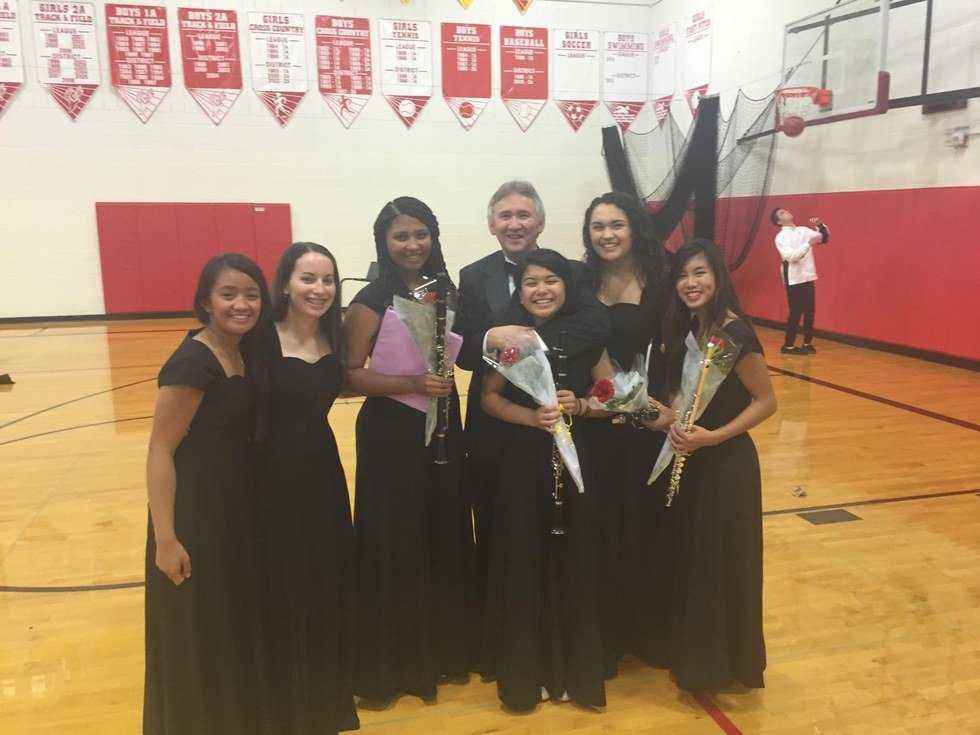
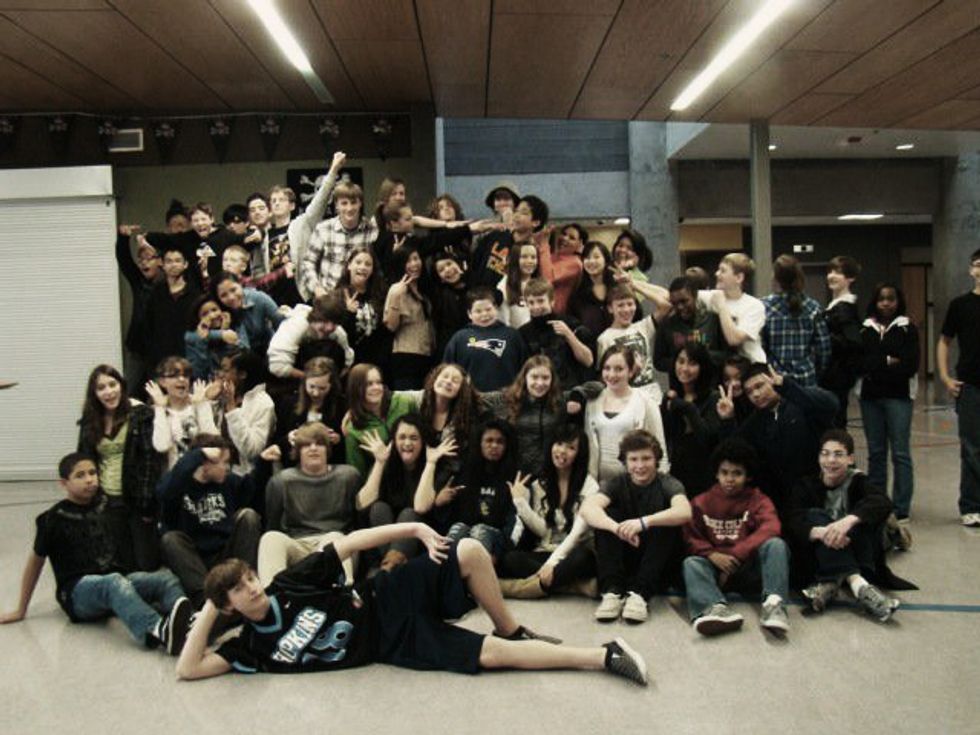
 Photo Credit: Pioneer Middle School Year Book Club
You're a fifth-grader, with hands made for making sandcastles and scribbling with crayons, you enter a room with alien-looking contraptions of brass and wood. A man with kind eyes and a child-like zeal lets you try out these instruments. "This is the one," he says. You take the instrument home, and learn to make loud screeching noises with it that will one day become music.
The next thing you know, you're a high school senior, you're striding across a stage, clad in an ill-fitting cap and gown. You shake hands with the superintendent, principle, and class advisor with sweaty hands, and grab a fake cardboard diploma along the way. At the end of the stage is that same man from the fifth-grade, directing "Pomp and Circumstance". You run to him, hug him in front of hundreds of people who may not even know who he is. You can't hold back the tears.
At the end of this school year, my middle school and high school band director Bruce Folmer will retire from teaching. The impact he made on my life and the lives of others through music and education were multiplicitous and long-lasting. Without Mr. Folmer I wouldn't be the student I am today.
Thanks to Mr. Folmer, I learned the power of music.
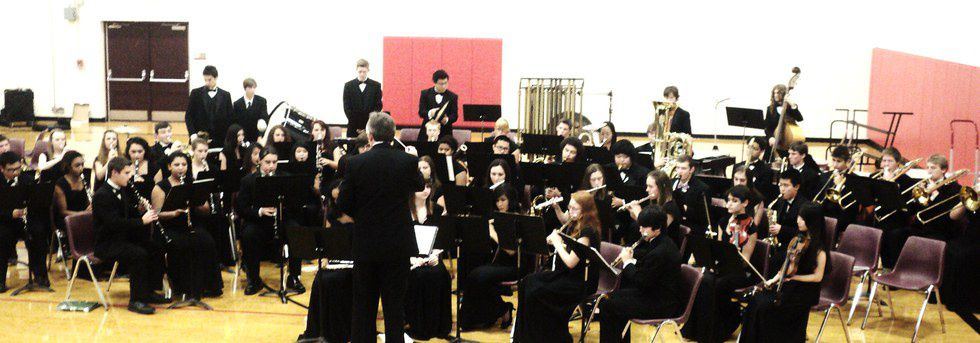 Photo Credit: Mariaisabel Gonzales
There's something about being surrounded by the swelling sound of French Horns, the deep rumbling of timpanis, and the regal power of trumpets that is very different from being in the audience. There is something about participating in that interplay; in my case, dancing on waves of sound with a flute vibrato; that is very different from only listening.
Playing complex symphonic pieces was in a way, creating a story. Some instruments were the villains, playing driving beats in imitation of pursuit. Some instruments were the heroes, a calvary playing in unison against the villains. And some instruments created the setting through melodies that intertwined and created the feeling of castles, dark forests, and raging waters. When you played in the band, you took on the guise of those characters. You were the courageous, powerful hero. You were the cunning villain. You were the graceful, beautiful magical being. You were a force of nature.
Thank you, Mr. Folmer, for creating those worlds for us. For taking us out of the classroom and into other universes. For making us feel powerful, and graceful, and more than ourselves. For creating magic in our lives through the power of playing music with others.
Thanks to Mr. Folmer, I learned the value of hard work, and a job well done.
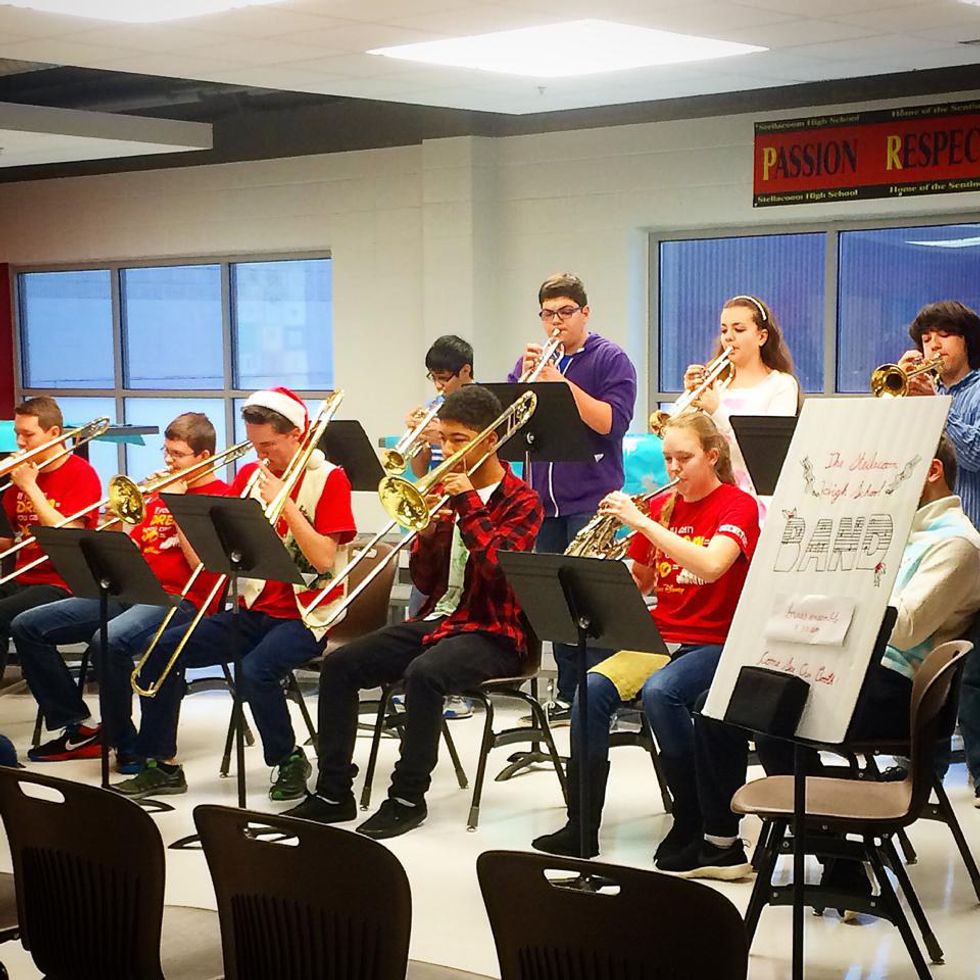 Photo Credit: Hannah Rector
In band, if you only play 95% of the correct notes in a performance, it will, in all honesty, sound terrible. In other classes, a 95% is usually an A or 4.0 (the best possible grade).
In band, you only have up to fifteen minutes to showcase months of rehearsal and practice, and you only have one chance to do so. In other classes, you an hour or more to take a test, and you have days to edit and peer-review your essay before turning it in.
In band, every crescendo, furmata, and staccato matters to conveying the story intended by the composer. The student must keep this in mind while playing the correct notes, maintaining posture, and keeping time. In other classes, all you need to focus on is answering the questions correctly.
Band and other music programs teach students the value of going above and beyond the expectations set before you, doing a job right the first time, and maintaining multiple expectations at once. What many people see as being an "easy-A" class truly taught me and my peers values that made the true difference in our academic and creative excellence. Thank you Mr. Folmer, for using band as a way to push us to our limits as students, and teaching us lifelong skills. I don't think I would be a Dean's List Scholar at the University of Washington without Mr. Folmer's standard of excellence.
Thanks to Mr. Folmer, I met the people who will be my best friends for the rest of my life.
 Photo Credit: Emily Anderson
Every two years Mr. Folmer would put in additional hours organizing, fundraising, and training the band to make the trip to Disneyland in Los Angeles, California. Although the time on stage and in the recording studio was brief and costly, the experience gained from going to Disneyland was one that transcended any academic frame of mind.
During the trip, you end up gravitating towards the same people to go on rides, get food, and see attractions. Although these people were my friends, I did not spend much time with them outside of school, and we all played different instruments in different corners of the band room.
Within twenty-four hours, we were all crying of laughter, dancing down Main Street, and battling little kids with Lightsabers. Being able to spend time in an environment dedicated solely to fun allowed us to be ourselves in a way we'd never experienced before. That strong sense of self lasted long after we touched down in Sea-Tac.
Today, we call ourselves Legion, and meet up during every single school break. Two of us are Mormon missionaries in Russia and Boston, yet we still keep each other posted through letters and email updates. And when I think of who I'll be spending time with ten years from now, I think of them. Without Mr. Folmer I would not have gained such strong connections with others. These connections helped me transition to college and will help me in every journey onward, because I know that I do not need to worry about other people's approval. Legion knows me for who I truly am, and they value me. Thank you for giving us the experience of Disneyland, Mr. Folmer. It was truly a dream come true.
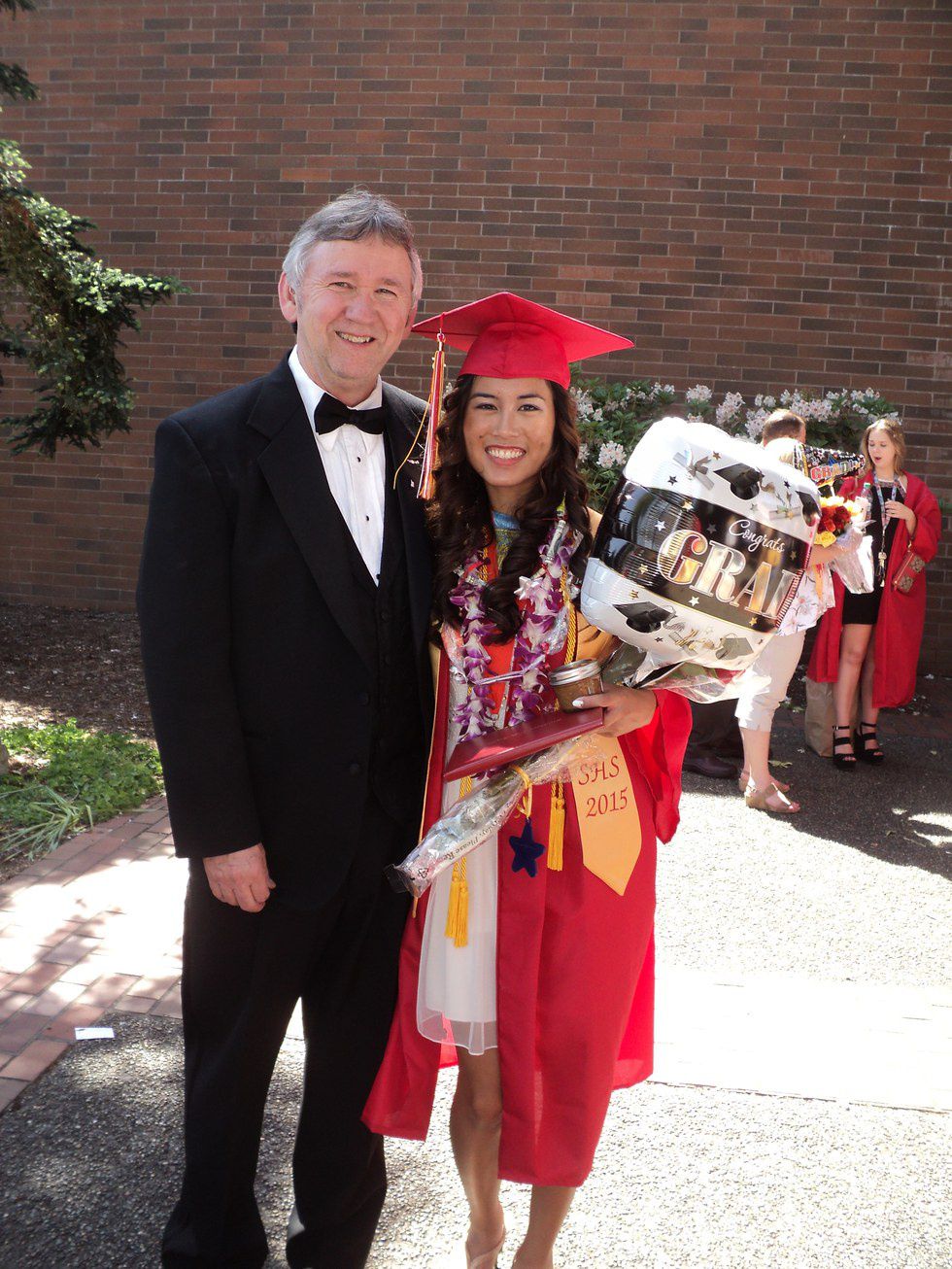 Photo Credit: Mariaisabel Gonzales
Although the people who have met and been taught by Bruce Folmer part ways, work, and study in the far reaches of the United States and the world, anyone who you ask will agree: He changed their lives for the better. Have a great retirement, Mr. Folmer. You deserve it.

















