

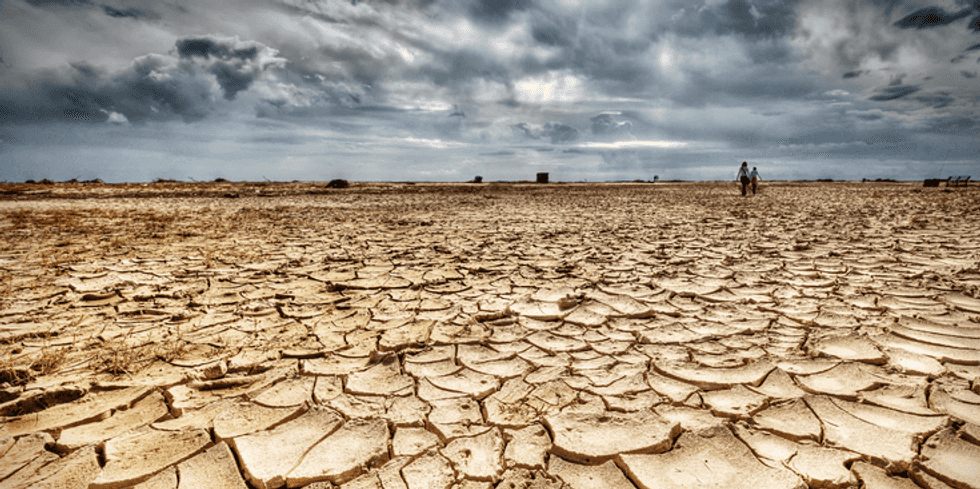
The issue of water scarcity has been growing as global warming is constantly and rapidly increasing. There are different and conflicting ways to address the issue of scarcity -- it is then these conflicts that prevent any institution, government, international organization or non-governmental organization from proposing a solid and strong solution. In this article I explain the different views in compliment to my reflection of a short movie called "Flow: For The Love of Water."
The movie “Flow” revolves around the themes of water privatization, plastic waste, community water rights and commodification. The main argument made in the movie was that water is being treated as any other selling good due to private corporate interests, and a resource like water is common and no one should own it. The movie also stresses upon how strong advertisement causes people to buy bottled water, even though in reality it is not any safer or purer than city tap water.
An example of common advertisement was given, and an activist in the movie explained how the images of “trees and mountains on the bottle” persuade buyers to go for bottled water, when in reality the bottle is simply full of local tap water. I found this example to be very striking as it showed how something as minor as the design of the bottle has such a large effect on the mindset of the buyers.
What made this movie really effective was that it covered the global desire to protect water; it included scenes from Michigan, USA, as well as South India, and showed how people from different places are dealing with different problems regarding water and then coming up with their own solutions. The example of Nestle in Michigan showed how dominating brands can be, as Holly Wren explained that Nestle pumps out “218 gallons per minute,” which is making “bodies of water turn into mud flats and sinkholes.” Similarly, the Coca Cola Company in South India disturbed the flow of water and displaced thousands of people and thus affected household economies. These global examples show the environmental and socioeconomic impacts of water privatization, and in my view, convincingly manage to show the audience that bottled water is harmful.

In my opinion, “Flow” was very powerful in the sense that it projected the view of the common people and advocated that if everyone has the will of uniting under a certain cause, dominant and exploitative organizations can be successfully defeated.
However, in my view, there are several other factors regarding this as well. If I look at the documentary from an economic perspective, I do not agree with the idea of water being an unlimited common resource like the sun and air. In an economic sense, clean water for drinking is actually limited and is not a common resource, and when something it scarce, it should be marketed and sold. However, the problem begins when the practice of marketing leads to large firms exploiting people through privatization methods. It also leads to these firms acting as decision makers regarding the water that everyone has the right to access.

On the other hand, an anthropological perspective would stress upon the idea of the common people rising against the firms and the idea of supporting protests (also referred to as “taking to the streets” in the movie). This perspective would also focus more on how the corruption in the water ministry contributes to the unequal distribution of the resource. However, viewing the documentary from an anthropological lens, I believe that the movie should have included more methods of water management, as water management is the ultimate solution. This would have made the movie more practical and less emotive -- simple because if water is managed in the sense that rules are established regarding how much a private company can pump out, then the provision of water will be more equal.
On an ending note, I believe that “Flow” glorified a view that was not fully pragmatic, as it argued that water is like the sun and air, and so it should be completely free. Whereas the economic view would be the polar opposite and would suggest that water should be privatized and sold, because economically it is a scarce “good.” The anthropological view can be considered a reconciliation of the statements presented in the movie and the suggestions of an economist, as it simultaneously supports the rights of the common people and advocates the need to regulate water in a fair manner.