WARNING: This article contains spoilers for the movie "Finding Dory."
"Finding Dory" was a wonderful movie for more reasons that it being a sequel to "Finding Nemo." "Finding Dory" has swum its way to my heart as a Pixar favorite because it serves as a powerful and thought provoking allegory to how people with mental illnesses are received in society.
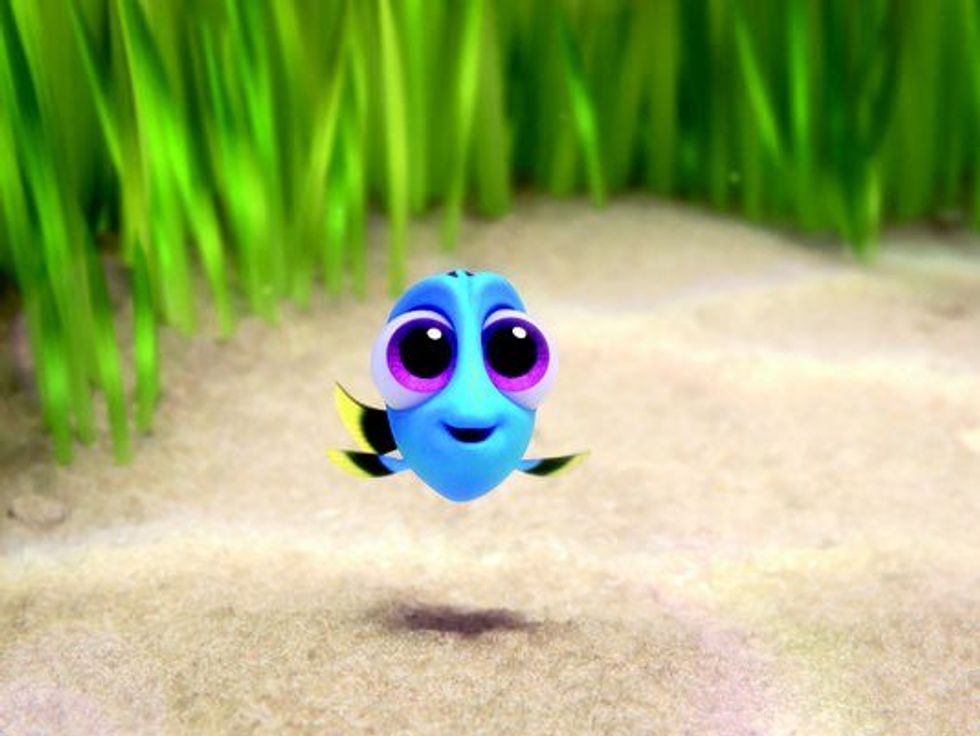
Without any major spoiler alerts for those who have not watched the movie yet, Dory experiences vivid flashbacks to her childhood and realizes that she has lost her way from her home in Morro Bay, California, where she believes her parents still live. Dory's flashbacks introduce us to her adolescent self, with adorable bulging eyes, trying to navigate her "mental illness" of short term memory loss. We're shown how loving and supportive her parents are, as they create clever tips and tricks to help Baby Dory whenever she finds herself in difficult situations made even more daunting with the existence of her memory loss.
Baby Dory's personality is a mix of pure joy and low self-esteem because she not only feels embarrassed about her memory loss but also inadequate and at fault for it. Her parents, Jenny and Charlie, do their absolute best to instill confidence and self-love in Dory, despite their apprehensions of her success should she be left to her own devices. Jenny and Charlie comfort and lean on each other in times of fear for Baby Dory's safety but never let her apologize for her disability, although she feels the need to. The movie effortlessly illustrates how important a support system is for children struggling with invisible disabilities and how far familial acceptance and warmth travels in the psyche.
The movie is not without conflict for Marlin, Nemo's father, is initially hesitant on following Dory on the journey to reunite with her parents. Once convinced, he is shown to have a short temper when Dory's memory loss lands Nemo, Marlin, and Dory in various dangerous situations. When Nemo's life is threatened by a predator on the journey to California, Marlin angrily snaps at Dory which leads to her separation from the group in an attempt to redeem herself by locating help for Nemo. Dory meets an Octopus (or "Septapus" as she calls him) named Hank who also displays frustration and low levels of tolerance for Dory's short term memory loss. Marlin and Hank serve as reflections of a society that we so often see where disabled people are concerned: judgment, blame, and inflexible attitudes.
The movie solves this problem by Nemo advocating for Dory's passion and creativity with the mantra "What would Dory do?" when Marlin and him find themselves stuck in an aquarium with no escape. This line of thinking saves their lives and Marlin realizes his insensitivity and goes on to apologize to Dory. Hank too finds a source of compassion and patience for Dory as she proves to be a worthy companion. Marlin and Hank provide a space for friends and family members to feel exasperated when "dealing with" loved ones who have disabilities while also finding resolution through empathy.
Dory challenges all odds and faces obstacles that have thrown her off in her past. She is overcome with love for her family (including Nemo and Marlin) and is determined to take care of them and achieve her goals by invoking childhood memories. "Finding Dory" is a lovely reminder for those who are differently abled and their loved ones to "just keep swimming."