

The Coen brothers' "Hail, Caesar!" represents a return to broad comedy that has been absent seen since "Burn After Reading." While "Burn After Reading" was well-constructed and funny, it ultimately was a mediocre entry in their oeuvre, a screwball comedy that doesn't do much more than pass the time with reasonable satisfaction. Really, the same could be said about "Hail, Caesar!" and if anything, the latter's lack of a truly cohesive through-line only emphasizes its messiness and reminds how neatly all characters in "Burn After Reading" were intertwined.
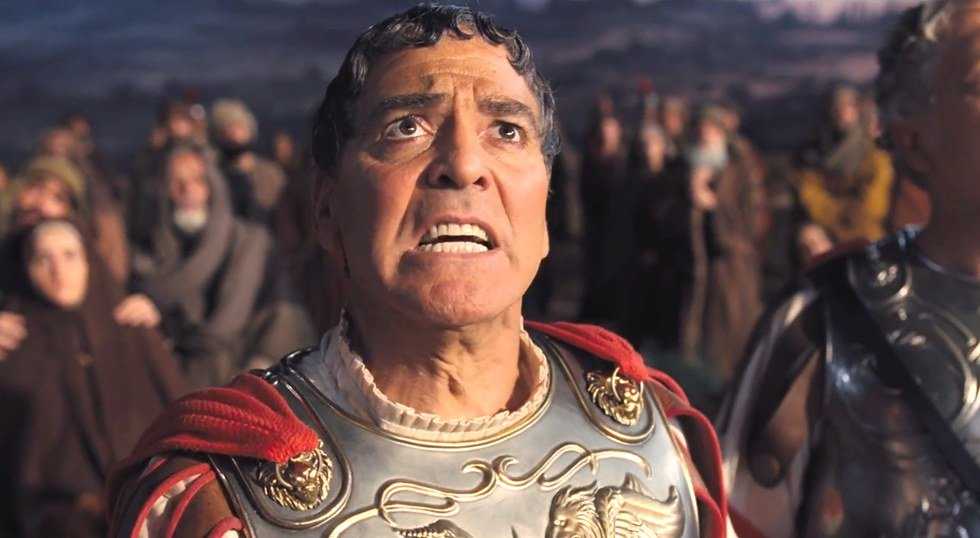
The ostensible plot is that Josh Brolin is Eddie Mannix, the head of physical production at the fictional Capitol Pictures during the later stage of the Golden Age of Hollywood in the early '50s; the terrors of television and communism looming large over the major studios. Movie star Baird Whitlock (George Clooney) is kidnapped by Marxist screenwriters who, like the crooks in "Fargo," have a convoluted ransom plan to upend the system, and it's Mannix's job to find Whitlock and snap him out of his commie thinking.
But Mannix also has other work to do, which turns the Whitlock plot into something more of a clothesline to hang other comedic skits that occur at Capitol Studios. Channing Tatum has an impressive tap-dancing sequence as a movie star shooting a sailor musical with not-so-subtle homoerotic overtones. Scarlett Johansson is a Brooklyn actor starring in a lavish mermaid film. Ralph Fiennes, an artsy director, and Alden Ehrenreich, a dumb movie star trying to branch out into drama, have the funniest scene in which the former tries to teach the latter how to speak with an upper-class English accent.
I'm not saying these don't work. In fact, I laughed through most of them. The only problem is that, unlike the Coens' superior work like "Fargo" and "The Big Lebowski," the humor doesn't come out of the increasing insanity of the story: It's just a series of sketches. They're good sketches, and they reminded me that this is what a good parody film should be like. It just isn't very memorable.
But there's still plenty to admire. Brolin has the standout performance as he demonstrates himself to be an actor of brilliant comedic subtlety. Clooney is always entertaining in Coen brothers movies due to his consistent casting as a complete moron, but his farcical performance pales almost embarrassingly in comparison to Brolin, who elicits more laughs with an eye movement and a grunt than all of Clooney's physical humor.
I'm also a sucker for parodies of the film industry, though I have a feeling that may alienate audiences who don't know how the studio system ended, what a moviola is, or what script supervisors do. What also may alienate audiences is the typically anticlimactic nature of Coen brothers movies. Most of their hecklers complain that their films feel like they have abrupt endings, but if you really reflect on this film and others, the stories are always resolved. There just isn't a big showdown that culminates in a climactic fight over the primary conflict. We're so used to that trope as audience-goers that a lack of it sticks out and makes the film feel incomplete. The irony of it all is that it's an anti-classical movie about the classical movie period. If you think that's funny, then this movie is perfect for you.
Otherwise, one of the even stranger aspects of this film is its inconsistency in both tone and style. "Inside Llewyn Davis" star and dreamboat X-wing fighter Oscar Isaac related that Joel Coen describes directing as "tone management," but that seems a lot wobblier in this film than "Davis," which was really an upper-tier Coen brothers movie that was received as a mediocre one. While all of the characters talk in that distinctly Coen brothers style, the reality of it all shifts from wink-wink Old Hollywood falseness to hyper-real sequences in less than a minute.
It's also not really in my place to criticize cinematographer Roger Deakins (who, by the way, Leo-whiners, has 13 Oscar nominations without a single win), but I was confused sometimes by the lighting and camerawork. For one, sometimes the movies would be screened for the characters in color and others in black and white. Wouldn't they all have been in black and white? Also, some "real-life" scenes are shot like they're on a bad soundstage while others look like they're happening in our reality. Comedy can work if it's at either extreme, but a meshing of both feels messy, and the cinematography only adds to this feeling.
But in the end, I might be overthinking these quibbling points due to the standard set by its makers in the past. Adam Sandler's earlier work has often been praised as the kind of movie you get entertained by if you have nothing else better to watch on a late Saturday night. I wholeheartedly disagree and can't even derive that form of passing enjoyment from those films, but a movie like "Hail, Caesar!" I could get behind. Like Pedro Almodóvar's "I'm So Excited!" it's a movie set in a small universe with some funny moments that happen along the way. The fact it's utterly forgettable is forgivable. In our current cultural landscape, a comedy that doesn't insult your intelligence is its own small miracle.

















