
This post is about the F-word. This word will send some running the opposite direction and others running straight ahead with pitchforks. I however, prefer to talk things over with coffee, a slice of pie and regular forks. This word is a part of who I am. This word that never fails to spark a reaction, is “feminism.”
Before frantically clicking the exit tab button, just hear me out. Because whether you hate it, fear it, or celebrate it, everyone has something to learn from feminism.
Feminism isn’t about yelling in faces with megaphones, burning bras, or hating men. Feminism is about giving people choices and giving people voices. Feminism is what has given me the voice to write this post and the voice to write at all.
For some, feminism gives people a voice to declare their sexuality, a voice to say no to toxic masculinity, a voice to say “no.” For some, feminism gives people the choice to wear dresses instead of tuxes, to have a career instead of babies or to have both, to make decisions about their own bodies.
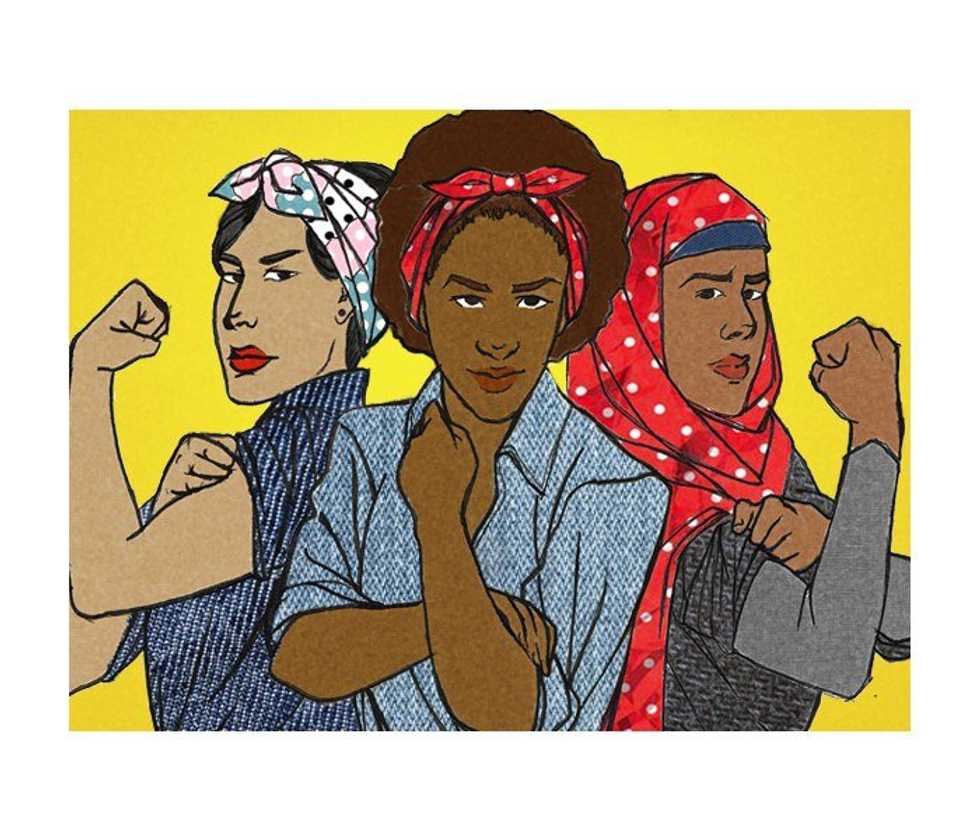
Feminism is not some exclusive club with restrictions on who can join, because that would just be feeding into the exact type of society that feminists are trying to dismantle. There are, however, some boundaries to be established. Wear your feminist buttons and t-shirts proudly, but don’t forget the responsibility that follows. Moving forward with personal empowerment while inhibiting or forgetting the empowerment of others is not true progress. Feminism must be intersectional to be progress. Feminism without intersectionality moves only within the cycle of all forms of oppression.
One of my favorite definitions of feminism is from author bell hooks and she writes, “Simply put, feminism is a movement to end sexism, sexist exploitation, and oppression.” I like this definition because it is still centered on sexism and gender discrimination, but it acknowledges oppression in general and doesn’t limit feminism to a movement solely about the oppression of women. A problematic trend is the default kind of feminism that only accounts for white, cisgender, heterosexual women. To make progress, feminism must account for the different experiences of oppression on account of sex, gender, race, class, age, ability and every intersection.
I also appreciate hooks’ quote for the subtle disclaimer she adds to explain that this is just the simple definition of feminism. This simple definition of feminism, and the bare minimum understanding it provides, is just the start. There is always more to learn and more to do in order to make feminism intersectional and effective.