

As of recently, I've been seeing more and more people on my Facebook and Twitter newsfeeds sharing around videos and articles on why so-and-so doesn't need feminism or doesn't agree with feminism. In fact, I even came across one on the front page of the Odyssey this morning as I was logging in to write this article. And that's a totally understandable, I can't imagine how I'd feel if someone told me, "Hey, would you like to be a part of a movement that advocates for the equality of all genders and seeks to end gender roles so that everyone can live life and express themselves in the way they choose?" That would be terrifying! No one would expect anyone to go along with such a crazy idea without further persuasion.
So to help assist the transition into feminism, I'd like to take some time to address some of the most common concerns that I've witnessed about this movement and its possible risks.
1. "I'm an egalitarian/equalist/etc, I believe in equality. Not feminism."
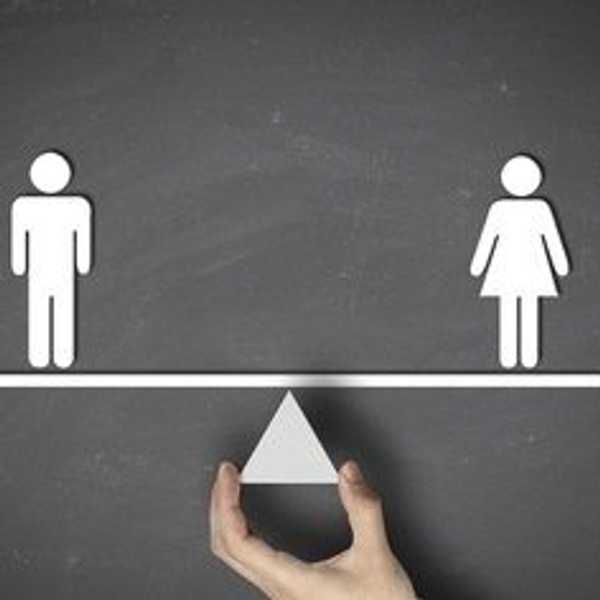
Well, in saying that you believe in equality, you are saying that you believe in the point of feminism. The definition of feminism (and I promise that I'm not making this up, you can Google it) is "the advocacy of women's rights on the grounds of political, social, and economic equality to men." So though the name sounds contradictory (because it came from a time where women were looked at as property and needed advocacy to gain rights), the feminist movement is only intended to equalize all genders so everyone has the same rights and opportunities.
2. "Well, no matter what the definition is, I still think that feminists are just man-hating radicals who want women to rule the world."
I mean, you're not wrong in thinking that man-hating radicals who claim to be feminists exist. People with radical ideals have always existed, be it in movements, political groups, or just groups of people in general. But the problem with labeling radicals who hate men and want women to be the privileged group is that they're not true feminists. They have lost sight of the point of feminism, which is to make men and women equal, and they're often the ones who give feminism a bad name. But say, there was a news story on how a white man went to some public place and shot a ton of people (and I know you can image this, because it seems to happen quite a bit). I don't think anyone would think, "Oh wow, I can't believe someone would do that. I never would have thought white people could be so dangerous. I better be more careful around them now, since one of them could just shoot me at any time." Probably not, because the actions of one person should not degrade the integrity of the whole group they represent. It's the same with feminism; a few radical women who use feminism to promote inequality should not ruin the reputation of the feminist movement as a whole.
3. "I think there are bigger problems that we should be dealing with than women wanting to dress inappropriately, like poverty/economics/etc."
I do think that poverty and the economy and things of that nature are important to deal with, you're correct in that statement. But when in 2013 one in seven women lived in poverty and over half of the children living in poverty were living in female-run households, it's obvious that inequality towards women is evident in all aspects of our society. And considering that there are only 23 female CEOs in all the Fortune 500 companies, making 95.4% of the major companies in the world run by men, it's no secret that the business world is not equal in representation for all genders as well.
But feminism is about more than just allowing women to wear what they'd like without being harassed. It's about stopping rape and not promoting rape culture, ending domestic violence, equalizing the wage gape, and combatting human trafficking (79% of which is made up of sexual exploitation, meaning the majority of people trafficked are women and children). There are many things that feminism seeks to change, and just being able to wear a crop top without being called something rude isn't the only one.
4. (in reference to women not holding CEO positions/the wage gap) "Women just don't work hard enough! They don't get paid the same because they're too emotional/don't have the business smarts/some other weird reason."
This is simply not the case.
In a shortened version, the concept of gender roles (something feminists advocate highly against) is that masculine traits are expected from men (like being leaders and not showing emotions), and feminine traits are expected from women (like not questioning authority and being nurturers). This hurts both men and women by forcing them into roles that they may not want, be good at, or even physically be able to fulfill. In the situation of business and women not being in powerful positions, women who do try to be leaders and authoritative are showing what are seen as "masculine" traits, which doesn't fit the role that others expect of them due to their gender. This makes others uncomfortable and makes the woman in question seem "bossy" or "bitchy," making moving up in a company much more difficult.
On the other hand, gender roles negatively affect men as well. Men who cry or show any extreme emotion are called "weak" or "girly" or "gay." Men are significantly less likely to win custody of children after a divorce, even if the mother is less able to provide for the child/children, and this can be attributed to the idea that men aren't as nurturing or aren't as emotionally bonded with their child/children.
So, I hope with the help of this article, you have had all of your concerns/questions addressed, and that you see the benefit that feminists aim to have on our society. And if after reading this entire piece, you still have any hesitation in supporting feminism, then well... I'm not sure if I can help you. We'll just have to agree to disagree.

















