
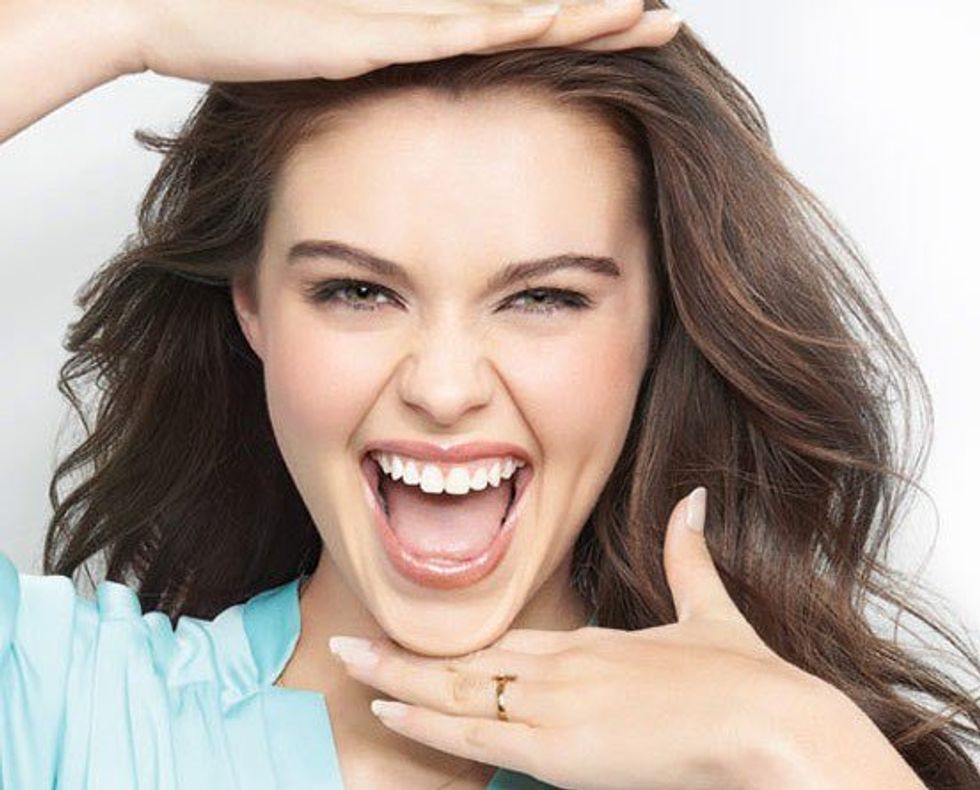
Yesterday my friend who recently started as a Mary Kay consultant gave me a free facial to showcase the company’s line of beauty and skincare products. I found myself enjoying how soft and smooth my skin felt after the deep cleanse and the moisturizer, and I couldn’t help but feel relieved when she mentioned that the products combat wrinkles. Then I paused, and asked myself (as many feminists do from time to time), does worrying about how I’ll look as I age make me a bad feminist?
The debate has existed for generations, and covers a wider array of issues than aging alone – everything from what women wear to their choice in makeup to whether they shave has come under the lens of feminism at some point or another. We ask ourselves, “Is my decision to straighten my hair, never leave the house without foundation and mascara, wear a short skirt, or use an anti-aging lotion a feminist decision? Or am I doing this because the patriarchy tells me I should?”
It’s a difficult question. Issues of empowerment and oppression come into play – on one hand, if you feel good about how you dress, and you gain empowerment from your appearance, and who’s to say that that’s a bad thing? But, others argue, why do you feel empowered in a push-up bra and lipstick? Who told you that that’s what it takes to be beautiful? That’s right, our beauty standards come from the patriarchy. These companies simply buy into the ideal and market it at women, making money off of our insecurities by feeding us unrealistic goals about what it takes to be beautiful.
While exceptional in quality, Mary Kay’s products are not unique. All sorts of skincare companies from Aveeno to Clinique to Dove market products to make women look like younger, Photoshopped versions of their true selves. But what does this mean for women? Is choosing to wear makeup or spend your money on a slew of facial products an inherently anti-feminist choice?
As I admired my reflection, I thought about how far we still have to go to treat women equally in society. Women face higher expectations than men in many regards – women are expected not to age, or to age “gracefully,” while men are celebrated even as they age (for proof, consider how older men and women in Hollywood are treated); we are expected to wear makeup, if not everyday then at least when we’re dressing up, while men are not; we are expected to have long hair (which is a pain to care for) but to still keep it looking picture-perfect day after day; we are expected to maintain a “perfect body,” which can often lead to unhealthy body image and eating disorders; and don’t even get me started on body hair. And yet, the “ideal girl” is expected to be low-maintenance and to look this way without putting in all of the work. It’s hard to consider all of this and feel good about the beauty industry.
Then again, I thought, if having smooth, clear skin makes me feel pretty, and if a little bit of make-up gives me a boost of confidence, so what? If I feel good, why should it matter who or what those standards originated from? I’m buying this stuff and using it to look good for me, not for anyone else.
Maybe what’s important is the reason you buy these products. If you’re using them because the ads have convinced you that you’re not good enough as you are, save your money and spend it on something you actually enjoy (and don’t let society tell you you’re not beautiful, because, girl, you are gorgeous!) But if you’re wearing them as a means of expression and self-identity, if nothing makes you feel as boss as a bold lip or booty shorts, then you do you! These products do not have to be oppressive, as long as we don’t let them.