Take a moment to close your eyes, to stretch back to the memory of your commute this morning or your jog around the neighborhood. Do you remember the passing of grass pounding beneath you? Was it a starched and dry yellow or a vibrant green? Were there glistening wrappers that made you think of diamonds in the sun or was the soil just brown with the untouched beauty of God's hands? Painted on the backs of your eyelids, you probably imagine the latter, a classic image of what you believe it should've looked like. The image is mangled with tree roots and meadowed fields and tall evergreens. However, we cut out the spaces in between, forgetting those paper bags strangling limp branches and the razor sharp cans ripping into the soil. We don't picture the destruction caked on our own hands. We overlook and overlook, too busy with our own lives to notice the impending death of life itself.
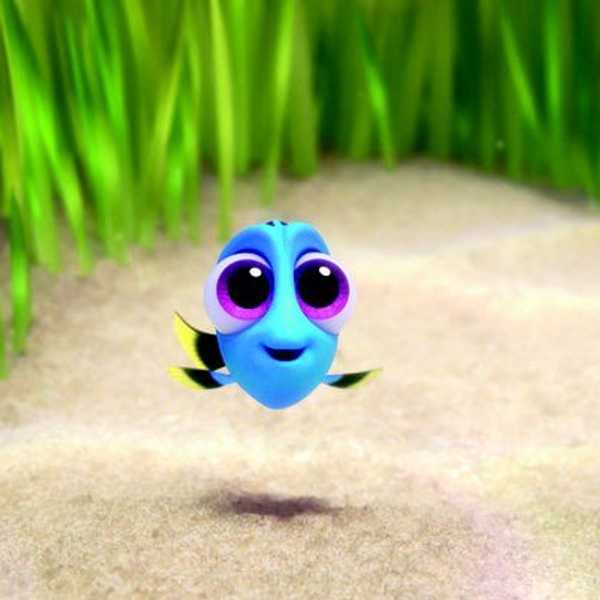
Disney Pixar, the nation's largest corporation to target the education and imagination of children, has been exposing environmental issues in franchise movies such as Finding Nemo and Wall-e, intertwining both metaphorical and blatant warnings into the entertainment of our future generations. The famous line "all drains lead to the ocean" doesn't just mean freedom for our fish friends, but it also works on a metaphorical layer, suggesting that human waste too swims among the depths of the sea. In fact, Finding Nemo is an advocate movie for the fish and the ocean, not for humans. We get so consumed by Nemo's journey home that we don't even recognize that we too are betting against our own kind, the humans acting as villains within this particular plot. Not even the ocean's biggest predators, the sharks, have the hunger for fish (one of them actually mutters that it's a typical human and American process to scoop in fish as a commodity). And if that wasn't conspicuous enough for you, Gill tells the fishtank crew that aquatic animals simply weren't designed to be trapped between the boundaries of glass. It's selfish really to assume that because of our dominate weight on the food chain we can capture and kill and shuck animals, and not just fish, the way that we do. God blessed us with thickly wired brains and two feet to stand on, but had the creation story been reversed, would we want to be slaughtered for commodity?
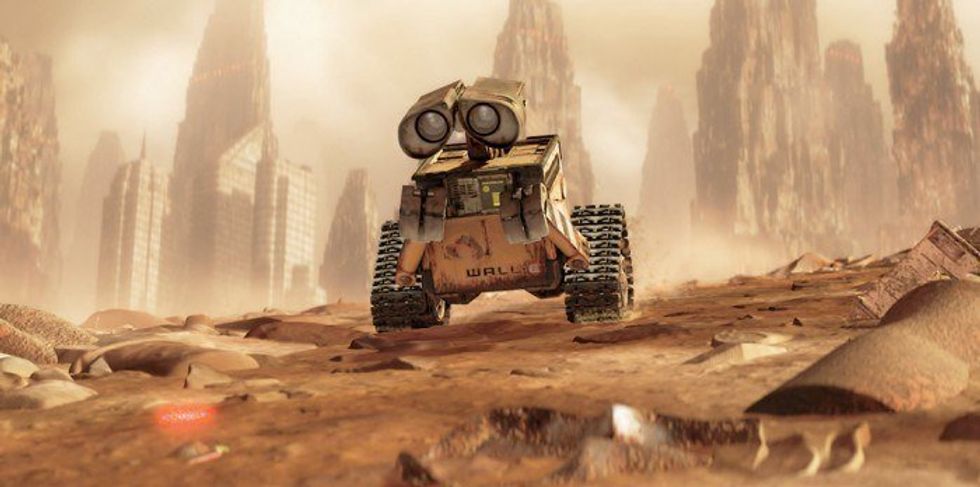
Perhaps the scariest of the two, Wall-e details a not-so-distant future that's broken and abandoned, the humans exiled from their own planet as the robots clean up its destruction. There's nothing but fractured bits of our man-made remnants lying around: aluminum cans, rusted coolers, withering newspapers. Everywhere. All of the skyscrapers within the cities are made of discarded human litter and waste, a metaphorical representation of what corporations produce and the environmental impacts of products created by people only interested in how far your wallet expands. As Wall-e travels through the cities, we see glimpses of his wheels rolling over money that's been rubbed into the dirt, almost as if those green bill wads were worthless. Need more proof that Disney is totally dissing the greed of corporate America? Well, the BnL Starliner, the galactic cruise ship housing the sum of all humans, advertises its luxury by glorifying the use of robots to wait on your every need, including the ability to walk. Ideas like this are transformative to the advancement of technology, specifically those refreshing moments when they make our lives just a little bit easier. However, where do we draw the line between technology and our humanity? Where, between hover chairs and robots, does our necessity as a species cease to exist? We keep building and building and building when our only earth, so beautiful and pure, is dying. The luxury and the money won't matter when there won't even be an earth left to share it with.
These two movies aren't just warnings but reminders of the fatalities of human carelessness towards the environment and its inhabitants. The first step is to pay attention, not just to your own actions but to others as well. Some strategies include recycling, biking or walking when manageable, eradicating your littering habits (seriously, just never do it), planting trees and keeping the ones you have, and shutting off the water when you aren't using it. Also, for Nemo's sake, be kind to your fellow animals. The worst mistakes we often make with these routines is believing that our carbon footprint doesn't matter. It's like when voters don't go to the poll because they believe their vote doesn't calculate into the grand scheme of the election. However, if everyone began to believe that, there would never be an accurate representation of votes. The same principle applies here. Every effort you make saves our earth by a day!