


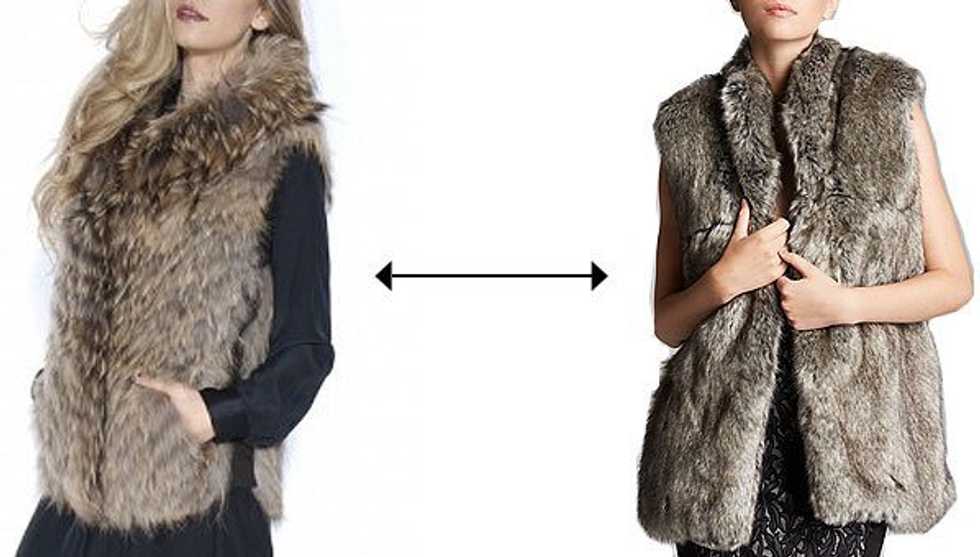
A few words come to mind when one hears the word fur: luxurious, expensive, warm and last but not least, cruel. A few words come to mind when one hears the word faux fur: cheap, fun, cruelty-free, etc. Have thoughts of horribly impacting the environment ever come to mind? Both high fashion designers (Stella McCartney) and fast fashion retailers (Forever 21, Zara, H&M) sold the hottest faux fur vests, boots and shawls this past season, but at what cost? While fur hurts animals in an obvious way, faux fur is hurting everyone in more ways than one, that might not be so obvious to the average consumer.
Faux fur is not made of animals, that's a given. So what is it made of? The answer is synthetic materials such as nylon, acrylic and polyester. These synthetic fibers have become part of our everyday lives. Some of these faux fur garments that rocked the world of fashion this past year can take up to 1,000 years to decompose. One. Thousand. I don't know about you, but I don't have that kind of time and neither does the earth. Clothing waste is a huge global issue. Lots of faux fur garments and accessories are hugely trend inspired and oriented, which means those who buy them are likely wearing them for only one or two seasons. Because faux fur is mass produced, the massive majority of them are thrown into the giant landfill our planet is becoming.
You may wonder why they're being thrown away instead being recycled. The answer is simple. Fake fur can't be recycled. The synthetic fibers they are made from, and the chemical treatments they undergo (to make them appear and feel more like real fur), are petroleum-based and nonrenewable.
Some real fur is also treated or chemically-dyed, which negates biodegradability, but untreated real fur usually takes a year or less to biodegrade. Real furs (and leather, for that matter) are worn in the first place to provide warmth, the highest quality and durability and longevity. Faux fur offers none of those. Also, it still looks like you're wearing a dead animal even if it is fake.
Do I eat meat and wear leather? Yes. Am I more inclined to buy products such as cosmetics and skincare that are cruelty-free? Also, yes. Am I strongly for or against using real fur? Not really. I understand the argument that fur is bad and I absolutely support the ethical treatment of animals. Some fur farms are absolutely awful and treat the animals like dirt. But other fur farms claim it would be a waste of an animal's life if they were not used after being deemed road-kill or being derived from a cull. So, which is better? A coat, or rotting road-kill?
This discussion comes down to the lesser of the two evils. I am not trying to persuade, or say that real fur is always the better choice, because I have no way of truly knowing. I simply want to inform. I believe that whether your decision is to wear real fur or faux fur, it should be an informed decision with information from both sides. And whichever one you choose, or don't choose, more power to you.

















