Barbie, one of the world’s most recognizable women, is getting another makeover.
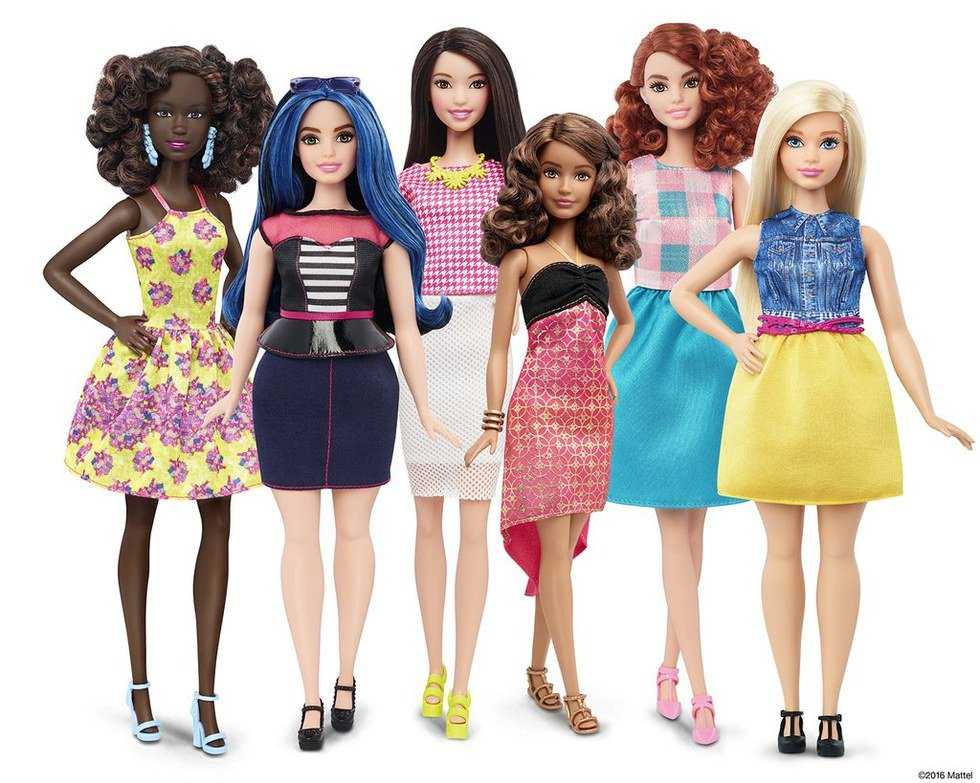
On January 28, 2016, toy company Mattel announced a new campaign, The Evolution of Barbie (using the hashtag #TheDollEvolves), to expand their classic line of Barbie dolls and accessories. This change comes after years of criticism of Barbie’s unrealistic silhouette and limited scope of career choices and skin colors.
Since 1959, girls have grown up playing with Barbie and friends, dressing her up in the cutest accessories and decorating the Barbie Dream House to perfection. Barbie has the perfect closet, the perfect boyfriend, and the perfect life.
But that perfection that young girls see in Barbie and her very pink life is exactly the problem. Many girls who grow up playing with Barbies unknowingly begin to internalize her figure and her lifestyle – the lifestyle of a beautiful, thin, white woman – as the ideal. As they get older, they emulate her, wanting to love only shopping, pink accessories, and their very own Ken. For a long time, Barbie dolls didn’t provide career aspirations, only fashion goals – fashion goals that were physically unattainable for any real person.
Although some say Barbie is just a toy and doesn’t have any real influence, her sheer ubiquity begs to differ. One woman in the Ukraine has even undergone surgery and maintains a rigorous diet in order to become the “human Barbie.”
When a company creates such an iconic figure, doesn’t it have a responsibility to promote the wellbeing and self-esteem of everyone it reaches? Mattel is now taking on that responsibility.
With their new campaign, Mattel is launching a new line of Barbie dolls in four body types – tall, curvy, petite, and original – seven skin tones, 22 eye colors, and 24 hairstyles. And Barbie’s physical appearance is just the beginning (as it should be).
Mattel will also be creating Barbies across different career fields, rather than just traditionally “feminine” jobs such as nurse, teacher, and ballerina. Game Developer Barbie will soon be hitting the shelves. This summer, Mattel is even coming out with a President and Vice President Barbie, reinforcing the dreams of so many young girls who want to make a change in the world. Now, they’ll have the chance to play with a doll who looks like them, dresses like them, and has the same big dreams that they do.
On their evolution, Mattel says on the Barbie website: “From offering products that feature more empowering and imaginative roles to partnering with best in class role models, we believe in girls and their limitless potential. #YouCanBeAnything.”
Skin and hair color may seem like small changes to make, but these new dolls will pack a strong girl power punch. In fact, Barbie has already done that in other ways.
In September 2015, Mattel created a limited edition Barbie version of Disney Channel actress and activist Zendaya in her Oscars attire with a loc hairstyle.
While the doll elicited controversial reactions, Zendaya and Mattel both defended the importance of diverse representation so that every girl could find a Barbie who looked like her. Having a doll who looks like you can be powerful; after all, dolls are beautiful, and every young girl deserves to feel beautiful in her own skin.
Barbie has also created a series of vlogs on Youtube recently, like this one, which deliver empowering messages about following your dreams and exploring new skills. Barbie’s vlog features Mae Jemison, a doctor, astronaut, and dancer, who “inspires” Barbie to never choose between her passions.
This is only the beginning of a new era of girl power that includes so many new possibilities for young girls to aspire to. Now, they don’t only have to love Barbie for her dream house or her dream boyfriend, but for her success and her comfort in her own skin. Barbie is no longer just a symbol of beauty, but one of a successful, well-rounded woman.
You can check out the full features of the new line at Barbie.com.