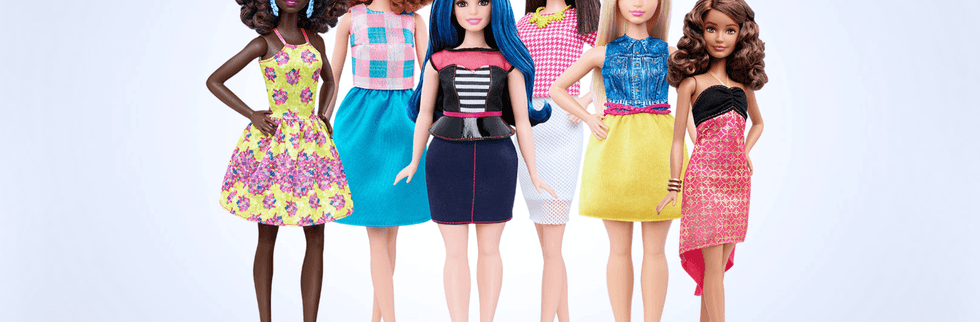
On Dec. 18, 2015, on the very cusp of 2016, “Star Wars: The Force Awakens” was released into theaters countrywide, bringing along with it a deep love for its main character: Rey, the badass lead with the cutest smile, yet the most wicked staff techniques. On Jan. 28, 2016, Mattel released a new line of Barbies, complete with three different body types and multiple different skin tones. What connects these two, seemingly, vastly different topics? The affect they’re going to have on little girls worldwide, and the power they will give them. 2016 is the welcome wagon to the decade of girl empowerment, I swear.
Mattel, founded in 1945, created Barbie around the very idea that girls should be allowed to imagine a future. Instead of watching her daughter ignore baby dolls for more mature paper dolls, Ruth Handler, the creator of the world’s most prominent toy to date, designed the first doll in the United States to have adult features. Because of this, girls could have a glimpse into the future, using their own imaginations and dolls that spanned ages farther than childhood. From there, it only broadened the idea of where women could go. Barbie’s first career was as a fashion model, but as it evolved she began going to new places, becoming a ballerina, a flight attendant, a registered nurse, even an astronaut. Later, by 2009, her jobs spanned hundreds of careers. This summer, Mattel will even be introducing a President and Vice President Barbie for girls to embrace a position that a woman has yet to hold. There’s no wondering why she became so influential.
With 90 percent of the world's girls, aged nine to 10, owning at least one Barbie, it’s been very important for Mattel to be inclusive. From giving her new hair colors, to even better, different skin tones, Mattel has worked over the last 57 years to create a doll that every girl can love, and relate to.
Of course, one of the most noticeable features has been the doll’s body: a thin hourglass figure that many people felt the need to actually prove is unrealistic. Families in turn banned Barbies from their households, opting for dolls with stronger backgrounds, and sometimes, even toys that weren’t modeled after humans to begin with. But the thing is, Barbie does have a powerful background, and because of this, she’s perfect for children. Barbie was created to give girls a faucet to put their imagination, to visualize futures so far beyond what the world had accepted when she was first produced. To this day, little girls are already being doctors, professors and film directors years before they’re even able to. Watch Barbie’s "Imagine the Possibilities" video. It begins with the tagline, “What happens when girls are free to imagine they can be anything?” before jumping from different little girls, in all different professions, pretending to be the actual thing. At the end, they’re playing with Barbies. It matters because giving little girls the chance to believe they can one day join these professions is one-step closer to creating a world where they won't be afraid to.
If that’s not a fierce background, then I don’t know what is.
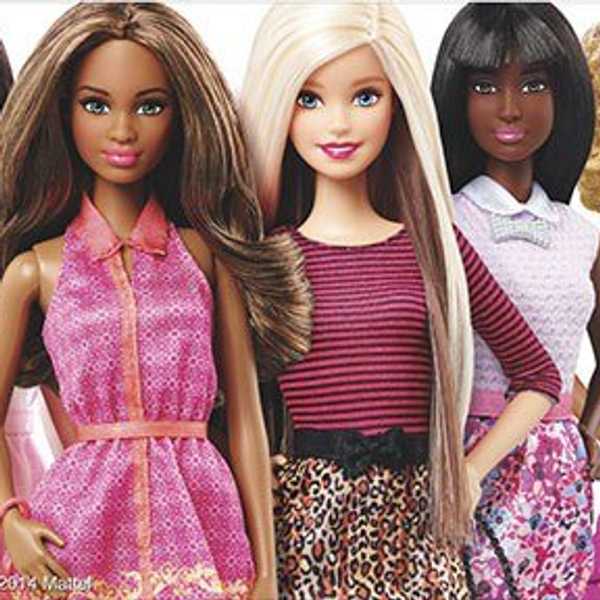
After almost 60 years, Mattel has evolved and adapted to try and include everyone. This year, they seemed to take the criticisms against the doll’s form and put them to good use. Earlier this week, Jan. 28, they unveiled the new line, with dolls that were deemed “curvy” and “petite” and “tall”. They also included multiple new skin tones, new hair-dos as well. Looking at pictures of them side by side, all together, their differences glaringly obvious, left me with a feeling that I couldn’t quite place—like I was witnessing the beginning of a revolution.
And I believe I am.
The video accompanying the new line showcases girls of different shapes and colors, interacting with the new dolls and sharing what they thought about them and what people they knew that the dolls reminded them of. One girl, at the beginning says, “It’s important for Barbies to look different. You know, like the real people in the world,” and I believe that encompasses this entire movement.
The more I was left to stew over the new development, the faster my emotions blindsided me.
I love little girls being empowered. Nothing makes me happier than a vision of a future full of strong women who learned from childhood that no body, no society, no man, could hold them back. I believe that’s one of the reasons I embraced the new “Star Wars” so wholly: for the fact that there were little girls dressing up as Rey, that now it was deemed okay to buy them light-sabers. That there is an actual commercial of a little girl portraying her best Rey is what makes me live. And now, with this new line of dolls, showing that all shapes can be beautiful? What could be better? I’ve always held a respect for Mattel, and Barbie, and now it’s two fold for taking the first step in an evolution that desperately needs to happen. In a world where bullying runs rampant, growing crueler and more dangerous by the second, it’s time that the mainstream begins to change.
For many of my 18 years, I struggled with body image issues. It wasn’t till the tail end of my 17th year that I finally learned to be okay with what I was given. Even though I grew up with people who loved me and cared for me, made me feel good, at the same time I grew up with teasing and people who didn’t know when enough was enough. I grew up with Barbies and Bratz and TV shows and movies that highlighted the beauty of the skinny, gorgeous girls. I had to work hard to make myself feel good about the space I was inhabiting, and my dream for the future is for thick little girls to see that it’s okay. You can be curvy, with a tummy and thighs that touch, and still be beautiful. And you know how they’ll know that? Because they’ll be able to go to the store and have in their hands a doll that looks like them.
It’s not society’s job to deem what is okay. It’s not society’s job to call out people who may be bigger than others, or who may be smaller than others. Leave that to doctors and professionals, for when they believe that the size may be a harm to someone’s life. But for people running media? Toys? Pieces of life that little kids see every day with innocent eyes that hold the future of our world within? They deserve better. It’s time for society to instead mold into a new norm where there are people born petite, born a bit bulkier than others. And it doesn’t even have to be a born-into thing, you can still be thick and healthy. Very skinny and healthy. As long as you’re happy and healthy, what does it matter?
It’s amazing because there will be a generation who grows up with inclusive Barbies. There will be a generation who only reads about the fight over Barbie’s body.
I know you’re probably thinking that they’re just dolls, that this change won’t have too big of an impact as some people are expecting, but I promise you, you are the farthest thing from right. Little girls will see these changes, and will change with them. Children are our future, and we want the best for them. I wish I grew up in a world without bullying, and having children playing with dolls that are all-inclusive may begin to lead one day to a world very similar to that dream. When you have children looking at dolls of all shapes and sizes and colors, looking like the world they live in, they’ll get excited about the differences. As one of the little girls does in the video, she points out the similarities between a Barbie and her neighbor. Another points out a similarity between her and her mother. We need these Barbies, and we need more people to step up and take the plate, begin including more of the world in their toys, in their ways of thinking. When aspects like tall girls, and small girls, and big girls, and girls with curly hair, and girls with skin different than yours becomes normal, maybe little girls and little boys as well, will begin to see them as normal too.
These Barbies are a revolution in the making, a revolution that will lead to little girls feeling good about themselves, about the world. They’ll watch as strong-willed Rey takes over cinemas with two more movies to come and after, go home and play with dolls that represent so much more than a little tummy, a little curve. Little girls who couldn’t find a doll that was small enough, big enough, tummy-fied enough now have a little place on the shelf next to those un-realistic girls who have had too much time in the spotlight. It’s their turn now. And if you don’t think I’m already on the waiting list to pre-order one of the “curvy” Barbies, I hate to admit, you’re quite wrong.
I wish I had a doll like this when I was younger. A doll that looked like me so I didn’t feel like my body made me something less than everyone else. But I'm happy, and I'm proud. Because now mothers can take these dolls and show their daughters, “See, no one is perfect, but everyone is beautiful.”