


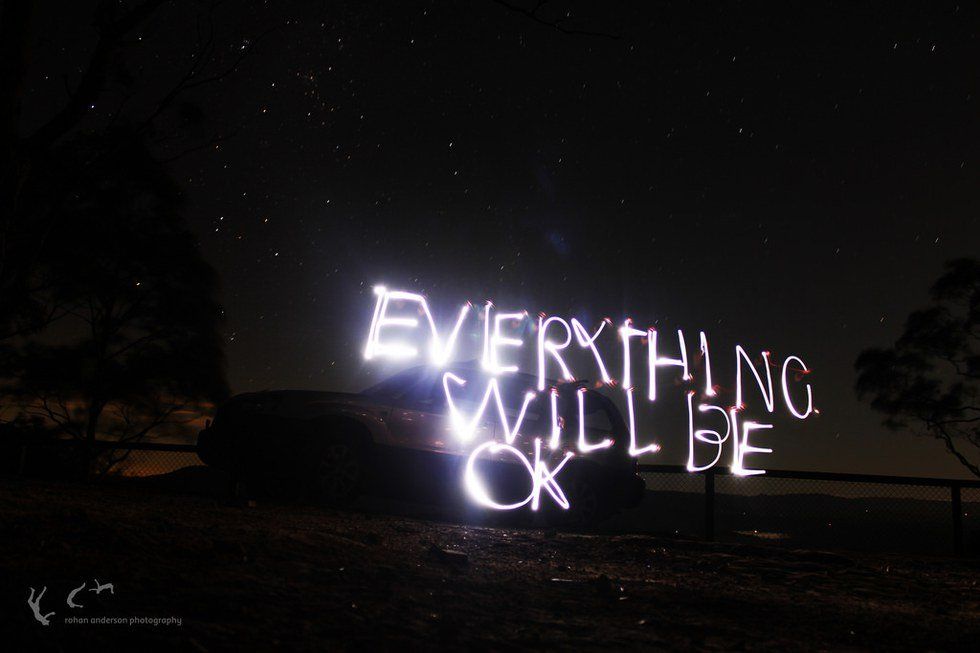
Throughout my childhood, whenever something went wrong I remember my mom repeatedly saying in a sing-songy voice, “it’s OK”, until I calmed down and/or everything became magically better. Now that I’m older, I’ve added this skill to my repertoire. When consoling someone, it is my go-to. “Everything will be OK”. Whether it’s heartbreak, failure, or a loss of a loved one, somehow we find ourselves resulting in this simple phrase.
After the facts have been stated, when nothing seems to be going right, “OK” is the best we can hope for. Think about it—your last heartbreak, failure, loss of a loved one, or whatever it may be—odds are you heard this very phrase. The mysterious fact of it is that the consoler most likely is half-heartedly saying it unless they’re "That's So Raven." And likewise, the one suffering is either not believing it or clinging onto those four words because it is the best option they have right now. “Everything will be OK." Not to be cynical, the worst part is when everything really isn’t “OK”—a situation in which both parties are helpless, out of control, and unsure of the coming events. Then why does this phrase work? Why did this make me feel better when I was younger? Why do I still say it to people? And why does it still make me feel better? Well, this my friends, is the mystery. Imagine if every time you searched on Web MD it said, “everything will be OK."
With Google and today’s automated answers to every possible question, the simplicity and vulnerability of “everything will be okay” is strangely attractive and soothing. Whether you say this phrase or you’ve heard it said to you, and whether you’re a fan or not; embrace that unknown because hey, maybe “everything will be okay”.

















