


It is very hard to understand how much nothing there is.
We often see pictures of our own Solar System, for example, that look like this:

The sizes of the planets in this picture may be to scale, but the distances between them are nowhere near to scale. That is entirely understandable since the actual distances between planets look more like this:
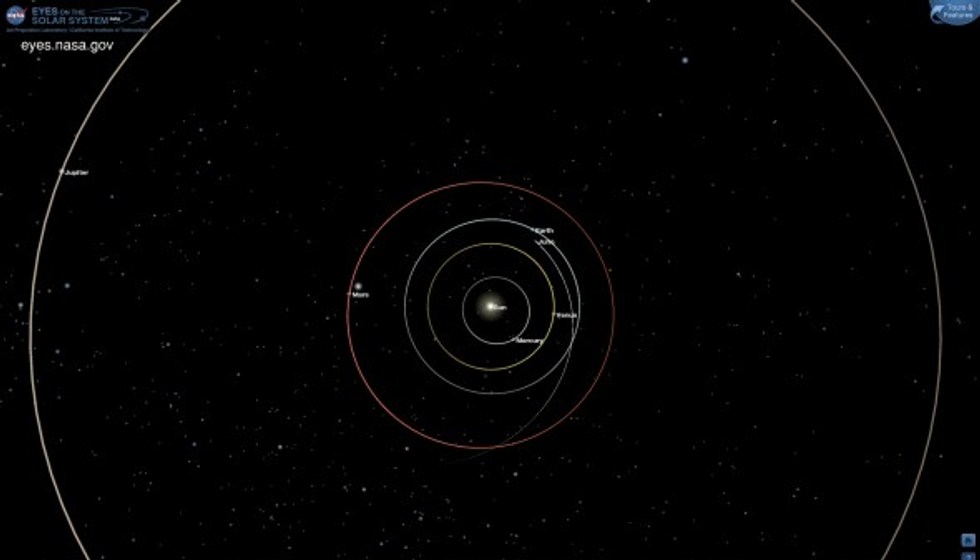
...and that picture only goes out to the orbit of Jupiter. Each outer planet's orbit distance is about double that of the next-closest planet: Jupiter is about 0.78 billion miles from the Sun; Saturn is 1.43 billion; Uranus is 2.88 billion, et cetera. Here is a picture which zooms out all the way to the orbit of Neptune:
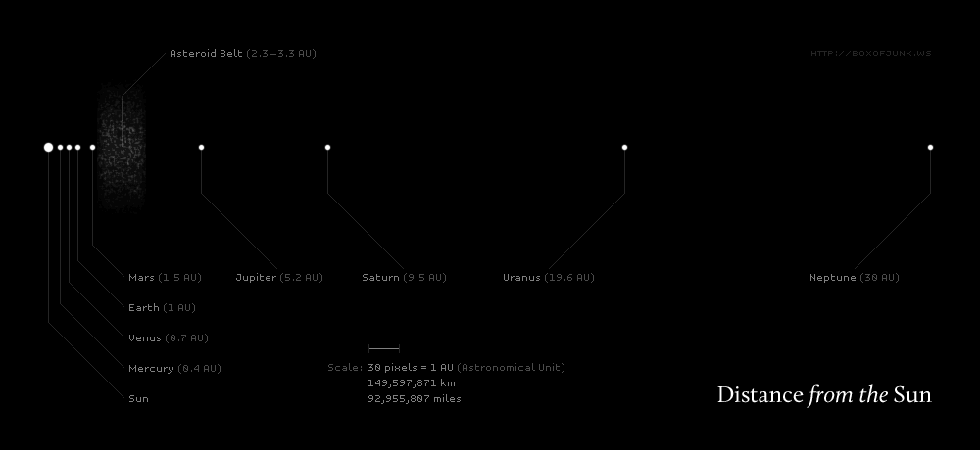
And, of course, those white dots are way too big to represent what the planets would actually look like. If that picture was truly to scale, you would barely be able to see that our solar system has anything in it at all.
If you have a free half hour or so, I would highly recommend checking out the visual journey offered by the website "If The Moon Were Only 1 Pixel" which maps out the entire solar system to scale. It also provides humorous and philosophical commentary to fill the unimaginably huge amount of empty space between the Sun and Pluto. The map stops at Pluto, though, since one would "need to scroll through 6,771 more maps like this before we see anything else."
So there is a lot of space between things in the universe. But what about the things themselves? There are a lot of things that you can see, hear, feel, et cetera, but not nearly as many as you might expect. Other things, like dark matter and dark energy, can only be detected by their effect on gravity and cannot be touched or seen or directly detected in any way. Hypothetically, a large string of dark matter could be passing through you right now and you would never notice.
These undetectable things make up most of the universe. Only about 4% of matter in the observable universe is "baryonic matter," which includes "all matter that may be encountered or experienced in everyday life." Everything else is dark energy (about 68% to 74%) or dark matter (about 22% to 27%). Roughly speaking, the difference between the two is that dark matter attracts things to itself and dark energy repulses things.
Even most of baryonic matter is nothing. All baryonic matter is composed of atoms, which are composed of a nucleus and a cloud of electrons flying around it. So everything that looks solid is made of atoms. But since there is so much space between the nucleus and the edge of the atom, 99.9999999% of an atom is empty space. To be fair, most of this "empty space" could have an electron in it, maybe, since the electron's location is spread out across the entirety of the atom's space.
But the point remains that if we made every electron stay in one point and compressed every part of your body into that empty space, you would fit in a particle of dust and the entire human race would fit into a sugar cube. The reason that things feel solid is that the electrons in atoms repel the electrons in other atoms, since the negatively charged electrons are always on the outside and like charges repel.
There is an absurd amount of space between things, most things cannot be felt or seen, and everything that can be felt or seen is composed almost entirely of empty space. We usually ignore empty space because it is empty, and forget that we are ignoring the overwhelming majority of the universe.
What is my point? Well, does there have to be a point? Can my point be nothing, since almost everything is nothing?
Here is your point, if you want one: Maybe we should take a moment now and then and think about nothing, since it constitutes way over 99% of everything. Take a minute now and then to appreciate how much nothing there is.