
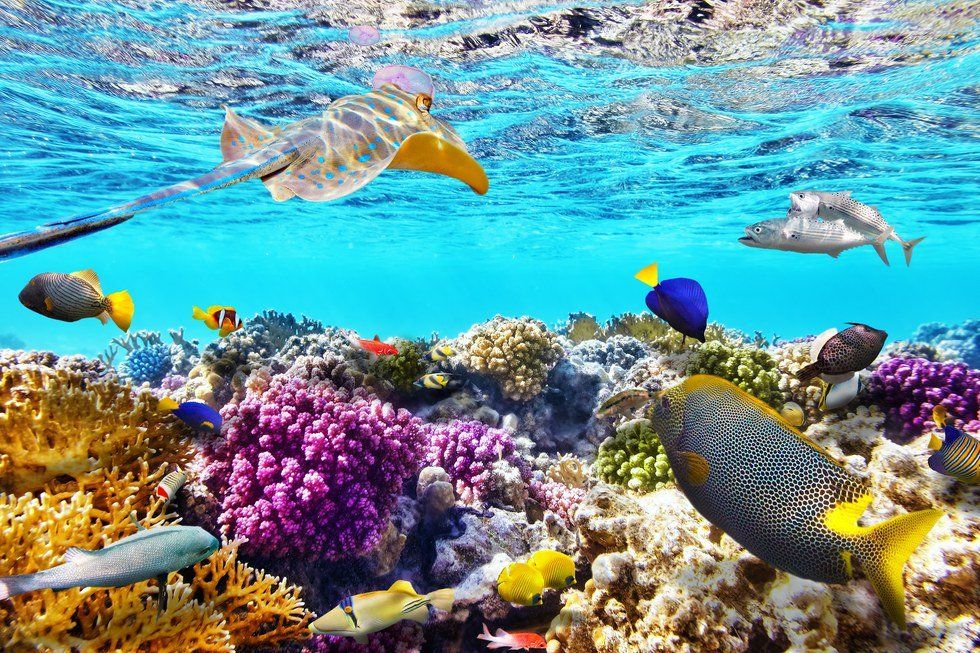
As tweets and memes about the death of The Great Barrier Reef have emerged this past week, one might wonder what’s going on. Any environmentally conscious millennial would care and would know that this is bad, but would they know exactly why is happening? Fear not, I have compiled everything you’ll need to know about the final days of The Great Barrier Reef.
The Great Barrier Reef is a 2,300 kilometer long reef of the coast of Northeastern Australia that was designated a “World Heritage Site” in 1981 by UNESCO. The reef, in size, was larger than the United Kingdom and, at it’s ecological peak, was home to more than 5,300 different species, which is more biodiversity than the continent of Europe. The Reef is a huge tourist destination and contains more than 1,050 islands for visitors to adventure on. Now that we’ve established why The Reef is so special, you might be wondering what exactly happened.
The Great Barrier Reef is home to over 2,900 individual and colorful reefs, what gives these reefs such bright and diverse colors is the algae on them. Algae and reefs have a symbiotic relationship, and they also support all other life in the reef, such as fish, dolphins and whales. Putting it simply, when the temperature in the water increases, the algae dies. When the algae dies, the reef is left “bone dry.” This is called bleaching because the reef loses its diverse color and turns white. Whether you “believe” in climate change or not, water temperatures in this part of the ocean have increasing for almost the last 40 years. The first mass bleaching occurred in 1981, when two thirds of the inner reef were affected and died in months. Over the years, more mass bleachings have occurred and the acid level in the reef has reached a point where no coral is safe, and neither are we.
Now that you know the problem, what can you do? Of course, the usual climate change preventing strategies: recycle, stop smoking and maybe pick up a piece of trash of two next time you’re at the beach, but that seems weak, doesn’t it? Here’s an idea: stop eating meat. Now you may be wondering, other than actually eating the fish from The Great Barrier Reef, what does not eating meat have to do with some World Heritage Site in Australia? Well, we know that carbon dioxide contributes to climate change, which contributes to the bleaching of The Great Barrier Reef, so how do we lower our carbon dioxide output? I’m so glad you asked, did you know that one serving of chicken is equivalent to the carbon dioxide output of 500,000 cars in one day? Did you know that if just one person (you) changes their meat eating diet to a vegan one, it would reduce their carbon emissions by one and a half tons a year. That’s not all you can do with a vegan diet to help climate change and The Great Barrier Reef, carbon dioxide emissions aren’t the only thing contributing to climate change, there are lots of factors. Humans intervening in forest destruction, animal killing and wasting almost a 15 trillion gallons of water a year on the animal agriculture industry is also contributing to climate change.
Now that you know the facts about the death of the Great Barrier Reef and what you can do to help, I’m sure you want to learn a lot more, and you can! You can visit cowspiracy.com and vegan.com/how/ to learn how can help protect The Great Barrier Reef everyday with something as simple as your diet!
Facts and figures for this article came from OutsideOnline.com’s obituary for The Great Barrier Reef and Cowspiracy documentary.