History repeats itself and moves in cycles. This is a common theme shared between all groups of people, but black people especially can appreciate the interesting perspective that we’ve been afforded in respect to this idea. In the past, many cultural revolutions had black roots, though history often conveniently forgot the pioneer status of black people. However, in the last few years, the United States in particular has once again been involved in a cultural revolution created by black people, especially in the fields of music, art, fashion, literature, television, and other forms of entertainment. Consequently, everybody wants to be part of this wave, and as such, there is a great deal of appropriation in respect to black American culture.
Now, appropriation isn’t a new idea, especially among Millennials, and it definitely isn’t something that only happens to black people. However, the idea of appropriation does permeate through the art forms with considerable contribution from black people to a large degree. Sometime last year, I went to a poetry set, where the “father of slam poetry” was supposed to perform. He was an old white man. So this idea is definitely very applicable, and as such, the phrase, “Everybody wants to be black, but nobody wants to BE black,” holds a good amount of relevance.
Basically, what this phrase means is that it’s cool to be black when it’s convenient, when one wants to perform the music, be a part of the conversation, enjoy the humor, dictate when it’s okay to use the N word, and so on. However, when it comes time to deal with the other dynamics of the culture, when one has to deal with the consequences of everyday life as a black person, it isn’t approached with the same enthusiasm.
This dynamic is easy to see when analyzing “nonblack” (though, everybody is from Africa somewhere in their lineage) individuals, but I thought it would also be pertinent to look inward, and see how the cultural effects of slavery and Eurocentric society have shaped our own prejudices as black people, especially pertaining to the above phrase. The reason for this is that the world’s hatred of us (but ironic love of our culture) has spilled over into our own interactions, and the only way to hopefully get rid of this dynamic of self-hatred is to discuss it.
There are many things that brought me to this conclusion, but one of the most obvious is the unanimous disrespect of black women on all fronts, even among black men. While black people as a unit are oppressed, black women in general are in a very sensitive and vulnerable position, partially because as black men, we aren’t always as protective over our women as we should be.
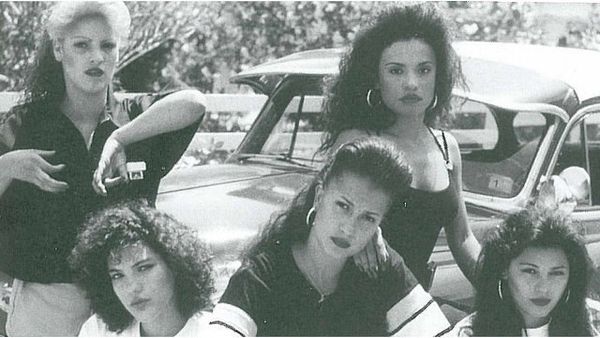
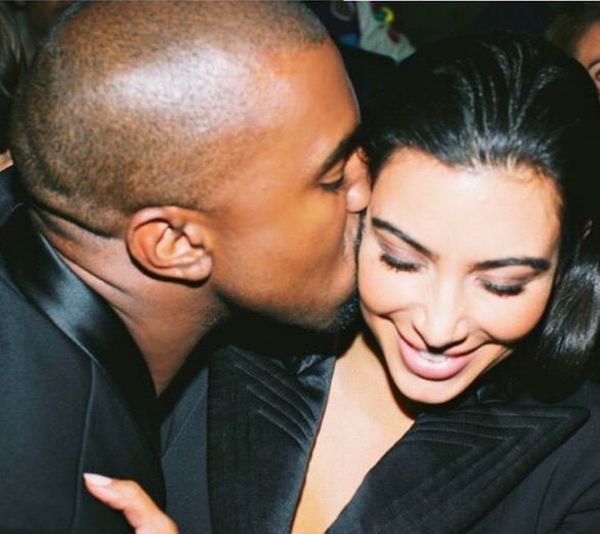
Now some of this is obviously due to the underlying sexism of our society as a whole, but in juxtaposition to other cultures black American men are some of the only people to be okay with actively making life harder for our female counterparts, at least in my experience, which is counterproductive, because one would think that with our shared history of oppression, we would catch on to the fact that division amongst our people will contribute to the detriment of our progress as a collective. There are many black men that feel “too good” to date black women, either out of perceived social or financial status or because of the Eurocentric standards of beauty that make up our society, and even if they do, they specifically go for a woman with light skin and “good hair” (or at least a perm). In terms of the qualities characteristic of black American women, men assign negative connotations to them, yet praise them in other groups of women. For example, man will claim attraction to the strong, demanding nature of Latina women, while frowning upon the same quality in black women, categorizing it as “masculine.” The examples could go on.
This is by no means a mandate to date within the race, as I personally deal with girls from various cultures and ethnic backgrounds quite frequently, and think that diversity is beautiful. However, there is a way to appreciate the beauty of others without disrespecting and ignoring the beauty and strength that exude from black women, and as men, we must do a better job to protect and uplift them.
With that being said, all of the blame doesn’t fall onto black men. As we’re in this together, the responsibility for our current situation can be allocated to both sides as well. I am not a black woman, so I don't have the authority to speak on this side of the spectrum too extensively, but from my experience, the black woman’s contribution to the self-hatred with which we interpret ourselves has come largely from the influence of the previously discussed European standard of beauty.
That being said, much of this isn’t the black woman’s fault. As a result of patriarchical society, women around the world have been forced throughout the years to conform to the narrow spectrum of what is considered to be desirable by men, and women of color to an even greater degree. Historically, black women were victims of a unique position because of slavery, where their acceptance of this mentality meant survival in many cases. During a time where the rape of female slaves was common, the master would often assign the more “desirable” slaves to the house, close to him, which was generally seen to be significantly less harsh than the field work other slaves were assigned to. When, as a result of rape, these women were impregnated, the children, who generally came out light-skinned and with “good” hair (see the correlation?), were also assigned to the house, having favor with the master, being his illegitimate children (see: Thomas Jefferson, George Washington, and other important white men in history class). Because of this, light skin, colored eyes, less-curly hair, and other seemingly European features have been accompanied with a sentiment of positivity throughout the years.
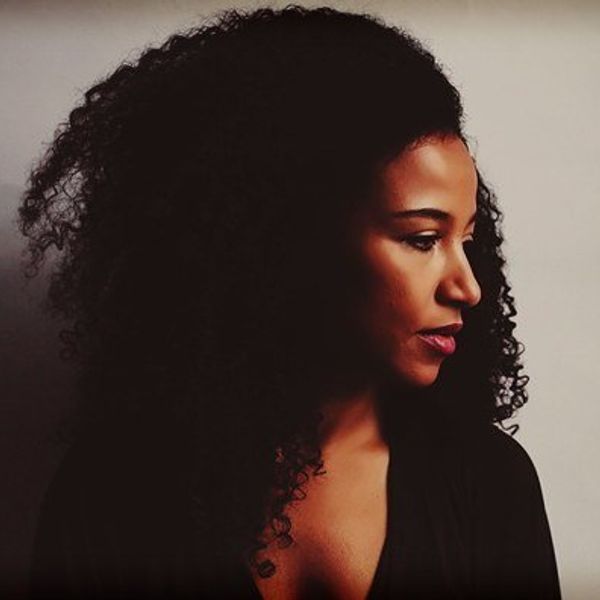
However, while none of this is the initial fault of black women, why is this still the mentality generations later? Growing up with a unique hair texture, hearing the term “good hair” in respect to my hair, though meant to be a compliment, was often bothersome, simply because it implied that having the “normal” texture of a black person’s hair was somehow a bad thing. Even after I started locking my hair up recently, many of my black female friends were confused as to why I wanted to wear my hair in a style such as dreadlocks, as opposed to its usual natural curl, as if one is better than the other.
I’ve seen girls go to the beach fully clothed because they don’t want to get any darker, and on both sides of the spectrum (both men and women), I’ve seen people attribute their perceived beauty to different groups of ethnic ancestry, almost as a way of separating themselves from the race.
Speaking to that, it seems like black people as a whole have an issue with this, subconsciously making an effort to separate themselves from their blackness by putting emphasis on the nonblack ancestors. How is it that every other black person I know is part Native American, or part Latino? You’re from New York, dude. I’m positive you’re not Cherokee., unless your family is from the Carolinas or Georgia. And even with that, it’s been shown that more black Americans have white ancestry than Native American. So somebody’s been lied to. And even though the existence of ancestry from Latino countries is more plausible, "Latino" is more of a cultural label, and there are Latinos of all colors, including black. However, with things like that, there is once again a certain amount of cultural appropriation added to many conversations about ancestry, being that there’s no real basis in the cultures. For example, my great grandmother was half Native American, and my grandmother’s people are from Cuba. However, I never claim to be Native American or Cuban because I have no personal experience with those cultures, and to do so would be disrespectful to those cultures as well as my own.
Being black is good enough. In fact, being black is great. The influences of our culture seem to be good for everybody else, from men who want to listen to the music and dress like rappers, to women who want to get tanned, do squats to get bigger butts, and date black men (No shade intended. You know who you are). While everybody else is trying hard to appropriate us, we are the real thing, and we have to own it, be proud of it, and unite in order to progress even further.