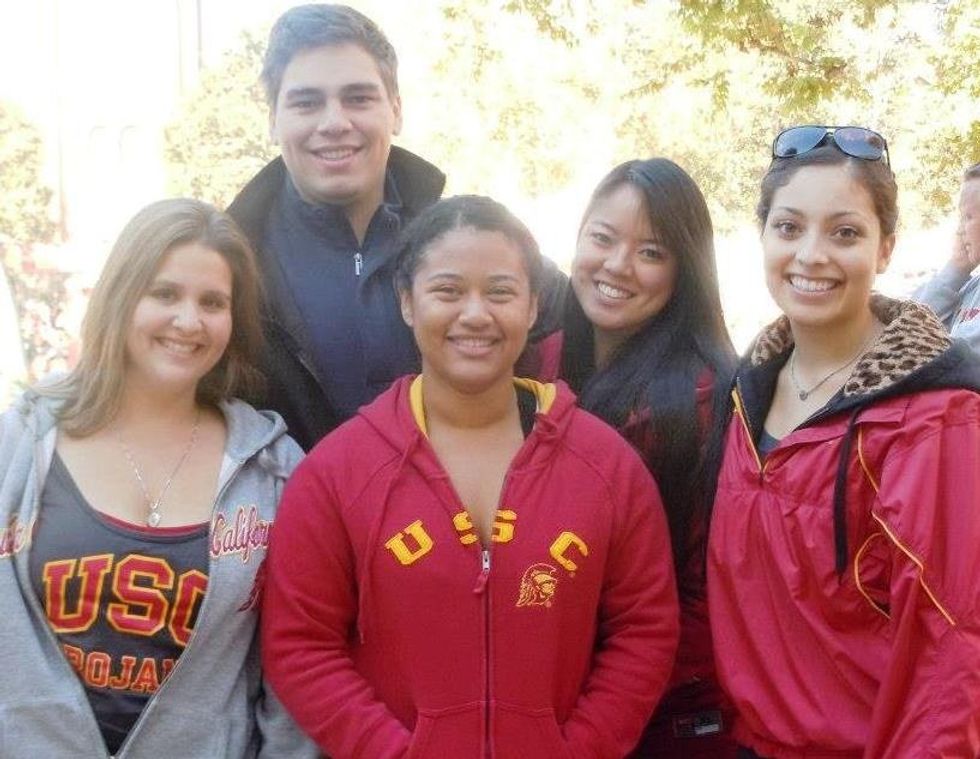
We've all seen it in college: groups of minority students who only seem to hang around other people of that same ethnicity. But in an era where we're supposed to look past race when we identify with one another, why do these bubbles still exist, and how should we respond to them?
It’s no secret: USC is one of the most ethnically diverse universities in the nation. For the 2013-2014 school year, US News and World Report had USC ranked as the 30th most diverse university in the country in terms of domestic students. Add to that the fact that we have the second largest enrollment of international students, and thi becomes even clearer.
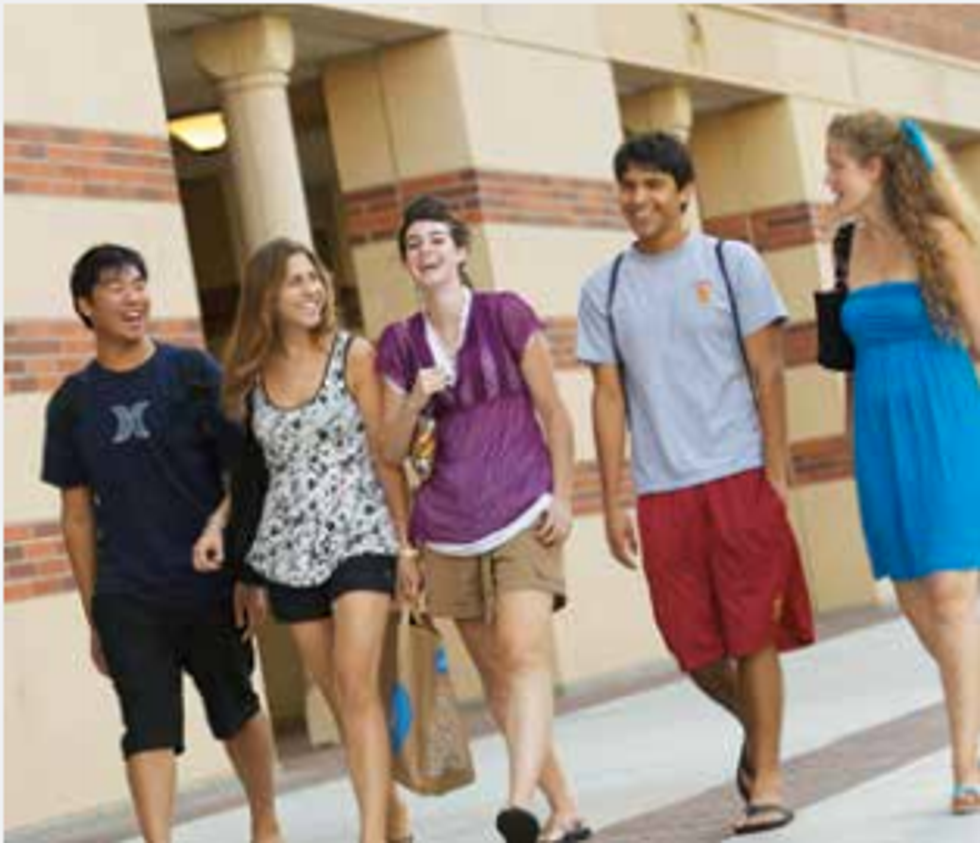
Even before I started my freshman year, I already had a picture of what my new friend group was going to look like. We would all be incredibly photogenic and super diverse, just like the brochures. I wasn’t going to be that person that only had other brown friends because I didn’t know how to socialize with anyone else. So, two years later, why are most of my friends Indian?
Before we dive into the tricky subject we call “race”, maybe you should know a little bit more about me first. I was born and raised in the Midwest, though both my parents emigrated from South Asia. Growing up a brown person in the Midwest, I didn’t really see very many other people like me, and when I did, chances were, we were related.
I’m not going to paint some sad, tragic tale about a lonely childhood, because it was not like that at all. I was really awkward and silly, just like every other little boy, but I had friends of all different colors and sizes. This is because I had quickly learned the important skill every minority kid knows: code switching.
Code switching specifically means switching between different languages or dialects when talking to different people. But, more broadly, it can refer to changing the manner and way we express ourselves depending on who we’re around, like how I would always call my mom’s parents “Ammamma” and “Patta” at home, but “Grandma” and “Grandpa” around my friends, or when I would say I went to “Sunday school”, but really I meant “Bal Vikas”.
Growing up, I had come to the realization that if I wanted people to be my friends, there would just have to be some filters I put myself through first to become the least ethnic and most “acceptable” version of me possible, and I was fully prepared to continue this as I entered USC.
I had heard that in college you could always find at least one person you clicked with, but at USC, that one person was turned out to be dozens of people. For the first time in my life, there was an abundance of people around me who grew up with similar families, and I no longer had to constantly filter myself or offer alternate pronunciations of my name to be less ethnic; I could simply be my authentic self. However, as I grew closer to these people and friendships started to solidify, I soon found myself in the very position I had hoped I wouldn’t be in: I was in an Indian bubble.
If we’re supposed to strive for a “post-racial society” how are “minority bubbles” okay? Well, I’ve come to realize that minority bubbles don’t always happen on purpose. Many times it genuinely is a result of people with shared experiences coming together. To assume that minority bubbles are solely based on ethnicity is to assume that people are nothing more than their race.
On the contrary,
minority bubbles are full of people with their own personalities
and interests. Furthermore, minority bubbles exemplify the idea that college is
able to bring people together who would otherwise be apart. People are free to
be their true selves around their friends within the larger context of a
diverse society, making minority bubbles fundamentally no different than other
friend groups. And because of the ability of minorities to code switch, they are still able to survive, exist, and sometimes even thrive within the larger context of this diverse society.