As the dust from the 2011 wave of electoral uprisings known as the Arab Spring settled, it became clear that the institutions within the states rocked by unrest have been entirely hollowed out. Civil society and viable political parties were non-existent and state bureaucracies weak and corrupt—a consequence of mortgaging state capacity in exchange for an autocratic grip and a facade of stability. And while the motivations of the so-called revolutionaries in the face of tyranny are praiseworthy, the vacuums, left behind by crumbling dictatorships, were left unfilled at great peril.
Egypt’s transitional government tried and subsequently—after ceding power to the Islamist Muslim Brotherhood and then a military coup—failed. As did Lybia’s, where an Arab-American coalition had to initially intervene to bring an end to the slaughter of civilians by its 40-year dictator Muammar al-Gaddafi and which has now acquired the trappings of a failed state. Similar events precipitated in Yemen where armed militants, aided by Iran, forced out the official government and ignited a proxy war with Saudi Arabia along with a number of Sunni Muslim Arab Gulf nations which have now been indiscriminately bombing the country for a year.
Worst of all, as we know of course, is Syria. Here, Bashar al-Assad, similarly to Lybia’s Gaddafi, had decided that the best course of action was to turn on his own people with chemical weapons and barrel bombs. What we have come to witness is a full-scale civil war with government forces; over a thousand different rebel groups; and terrorist organizations like Hezbollah, al-Qaeda, and ISIS all fighting one another. This is quite a salad we find on our plate with the dressing further provided by international air strikes from the U.S., Canada, Australia, France, Turkey, UAE, Saudi Arabia, Bahrain, Jordan, Morocco, UK, and most recently, in a bid to maintain geopolitical relevance, Russia.
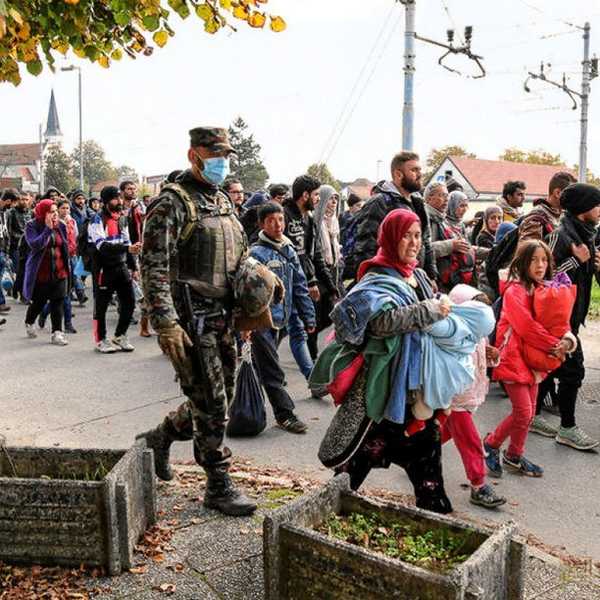
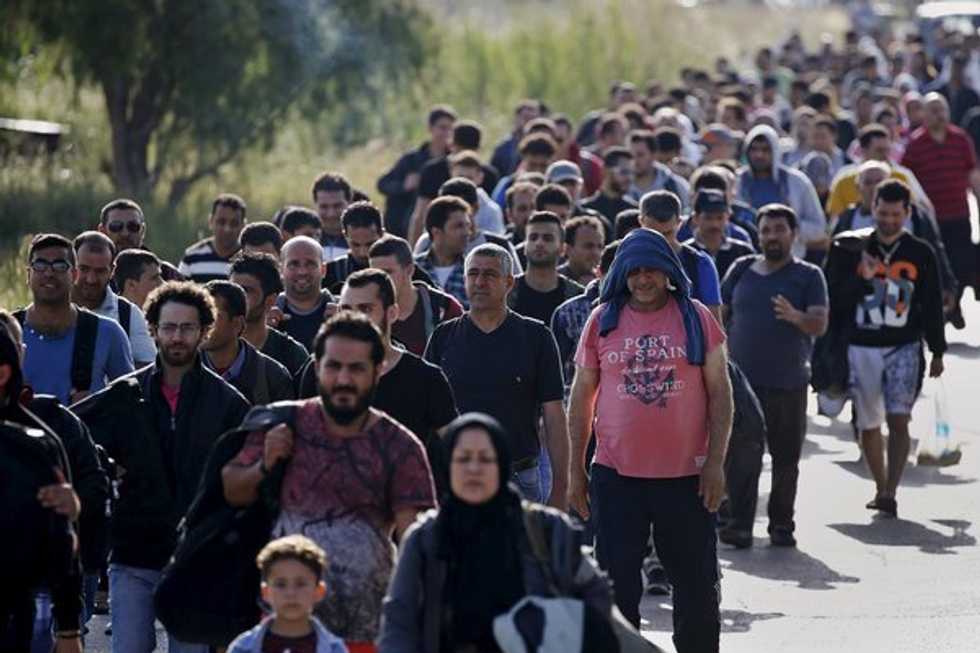
Given this chaotic, to say the least, environment, it is no wonder that so many people have decided, or have been forced, to flee their homes. By latest estimates, 4.5 million Syrians alone have been displaced with many going to neighboring Turkey and Jordan. Others, however--along with those fleeing from ISIS in Iraq, the Taliban in Pakistan and Afghanistan, and from a variety of conflicts in Africa--are attempting to make their way as asylum seekers, either by land or sea, to the European continent and particularly the advanced economies of Germany and the Nordic countries.
The number of asylum seekers in Europe in recent days has broken the one million marker with up to a million more coming in without the status of refugee. While some European countries have decided to close their doors due to either xenophobic rhetoric or substantiated fears of not being able to economically and socially absorb such a large number of people, others adopted a far more generous policy. Germany in particular, driven by Angela Merkel’s decision to open all doors, has taken in, by some estimates, up to a million migrants. Joining Germany’s camp is Sweden with the highest number of asylum seekers per capita. Finally, a number of incoming migrants is to be distributed throughout the European Union at large as set for in the European Commission’s European Agenda on Migration.
One can hardly disagree with the need to save migrants from imminent death in the Mediterranean Sea, and many have applauded the noble sentiment behind such a generous immigration policy on the part of some EU members. The problem with any sort of mass migration, however, is always going to be integration. Something Europe is not very adept at given its poor track record of failed multiculturalism policies including that of Germany, where migrants from Turkey have been treated as second-class citizens, albeit by generous European standards, yet nonetheless alienating. In the words of Angela Merkel herself, multiculturalism as a concept “has failed, and failed utterly." Exacerbating the problem of alienated and increasingly radicalization-prone European minorities is the flood of migrants, many of whom have no knowledge of local language or customs and are subject to the same failed multiculturalism policy of yore. Here is where the catastrophic repercussions of European immigration policy become clear.
The UN Refugee Agency classifies entering migrants as either male, female, or child (under 18) without consideration of gender. If one can reasonably expect half, if not more, of the children entering to be male, then the current demographic stands at 62% male and 38% female. That’s almost twice as many men as women, the majority of whom are, rather vaguely classified, under 59 years of age. An influx of able-bodied young men without families is sure to spell trouble. And while many come in search of better prospects, the tragic irony is that the places they yearn to reach are rather advanced economies in need of highly skilled knowledge-intensive labor thus rendering the migrants, for lack of a better term, superfluous to the local economy.
A language barrier and unfamiliarity with local customs are bound to create a cultural clash. Furthermore, research indicates that a lack of economic opportunity and the concomitant inability to integrate into the host society are a recipe for wide-ranging civil unrest in the form of increased property and violent crime rates. That is exactly the scenario Europe is facing now that the flow of refugees has slowed and many have been settled in one way or another.
Germany, in recent weeks, has struggled to get to the bottom of hundreds of reports of sexual assault and robbery on the streets of Cologne, Munich, Hamburg, and other cities. Most victims report perpetrators as being of North African/Middle Eastern appearance and not speaking German. The problem is further amplified by rumors of the German authorities’ attempts to cover up much of what is happening, including the New Year’s Eve attacks in Cologne by gangs of intoxicated men of potential refugee status. Unwillingness to speak out is not surprising given Europe’s tendency towards highly PC politics and people’s fear of being labeled racist or insensitive.
Recent days, however, have seen tensions escalate to the point of international diplomatic confrontation after the Russian Foreign Minister accused German authorities of covering up the kidnapping and rape of a teenage German girl of Russian origin, allegedly by men of North African/Middle-Eastern appearance. Sweden, after a spate of public attacks by migrants--many of whom have claimed to be unaccompanied minors in order to attain preferential treatment from Swedish authorities that don’t screen for age--has put forth a plan to expel up to 80,000 refugees, more than half of all migrants it received. Additionally, Finland, has gone public with a decision to expel 20,000 of its asylum seekers, 65% of the 32,000 it received. What is most worrisome, however, is that in the face of the present-day crisis, right-wing ethnocentric parties are gaining popularity and are poised to take seats of power in the government during the next election cycle, thus further undermining European institutions.
The current situation begs the question of how exactly the decision to resettle such large numbers of asylum seekers was made. While well-intentioned, Germany’s, Sweden’s, and other European countries’ policies have been ill-conceived. The immense negative repercussions that the Europeans are now experiencing were never considered as part of the debate. Europe’s leaders simply failed to assess the potential fallout from their decisions thus dooming themselves to the proverbial clash of civilizations. Furthermore, many justified such policies as stemming from a need to find a solution to demographic crises in aging developed European economies. However, one can only be baffled by the cost at which this sort of fix is to be realized.
Clearly, a greater degree of rationality must be present in the decision-making process regardless of the humanitarian value of an issue as sensitive as mass migration. The practice of hushing opposing views and their dismissal as xenophobic and irrelevant is also highly worrying, as it leads to the questioning of Europe’s commitment to its own democratic values. Moreover, the crisis is a symptom of a larger, system-wide failure of European institutions and the inability to reach an effective consensus-based solution that takes into account the needs of all European people.
What is direly needed in Europe now is clear thinking, reform, and directed action. The full weight of the EU body politic must be thrown behind creating a more organized and unified border policy, including greater funding and training for FRONTEX, the EU’s border authority. Human trafficking and smuggling operations must be dismantled and EU members’ influence and resources need to be effectively utilized to address the drivers of migration by promoting improvements of the security and human rights conditions in countries of origin. An effective system of refugee screening, including for age, possible prior criminal activity, and mental instability, must be implemented in place of the current ultra-liberal, indiscriminate open door policy of some states as well as in place of increasingly fear-driven policies of member states who deny entry to migrants.
Furthermore, the European Union must demonstrate a commitment to its own values through a more open and democratic process of setting the migration agenda where all member have a say and those who are disproportionately burdened can expect to receive the support they require. This can be achieved by replacing the existing Dublin Regulation of resettling migrants in the country where they first arrive with a more equitable mechanism for distribution among EU member states as well as by greater democratization of EU’s decision making processes to include considerations about the effects of various policies on the very people whom they serve--Europeans.