

There was a night several months ago, when I was home from school, during which my father and I had a very tense, heated argument about what I should and should not be wearing out. He didn’t care if I tramped around the house in a bra and shorts, but if I went out in a slightly cropped top and high-waisted shorts, it was not okay. When I argued with him that this was what I felt confident, happy, and pretty in- and what would keep me from having a heatstroke at a concert, where many young men were allowed to take their shirts off- he told me, “Well this is why you were assaulted.”
Now, listen: the point is not that my Dad is bad for telling me this. As a matter of fact, my Dad is hands down the most genuinely “good” person I know. The point is that in that moment, he, like so many others, did not understand. I get his perspective: it is love that drives him to say those things to me. I appreciate his protection. However, I need understanding.
This probably sounds incredibly familiar to masses of you, but if it doesn’t, here it comes: another article about slut-shaming. Except if this article is going to do any good, I would hope that it won’t be taken as “just another one” on the topic, or that it, at the very least, will heighten the impact that this topic has on society. This is one of those articles that I initially told myself I wanted to wait to write, as I tell myself with almost every other article idea: “I should hold off on writing this piece until it’s more fully-developed.” But honestly, the time is almost always now. So, here we go.
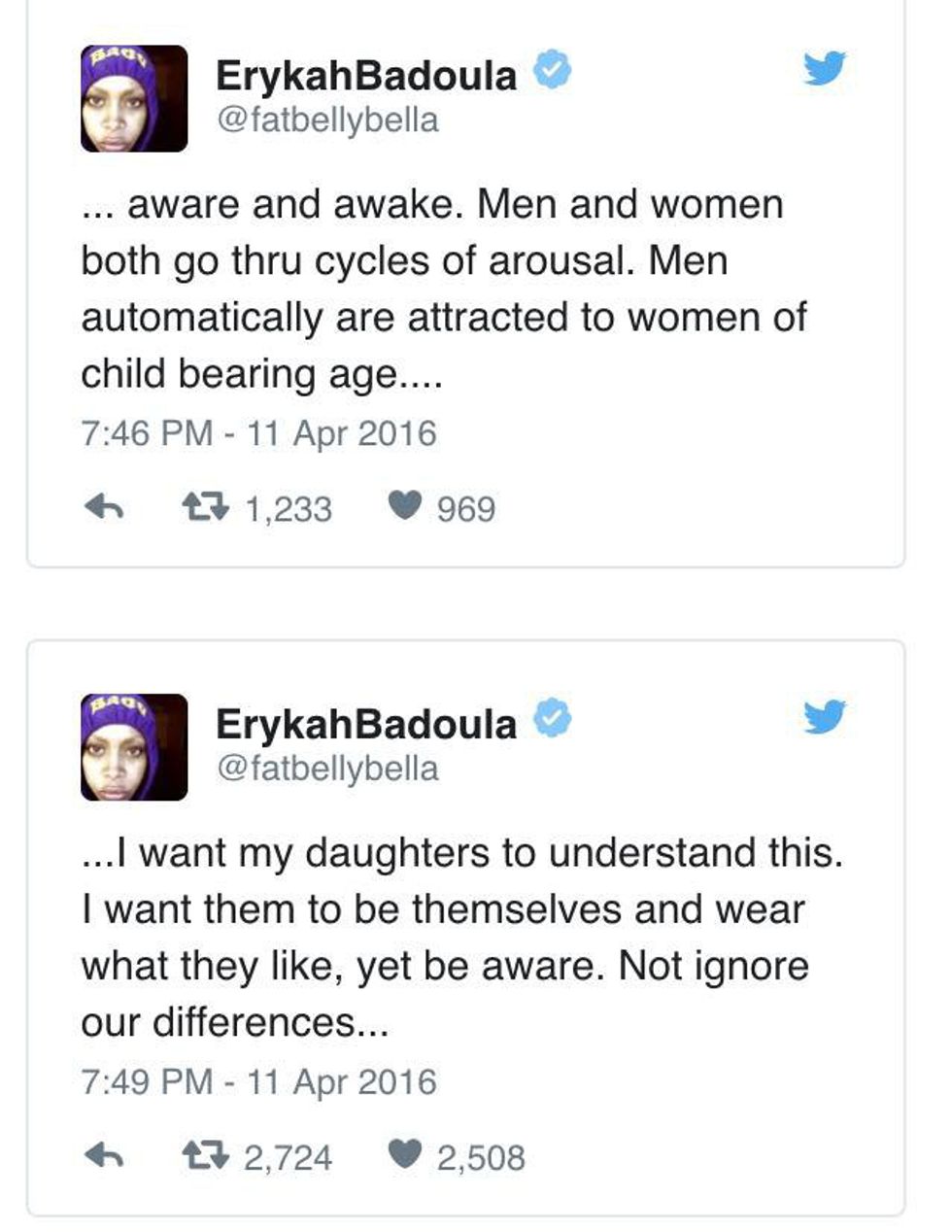
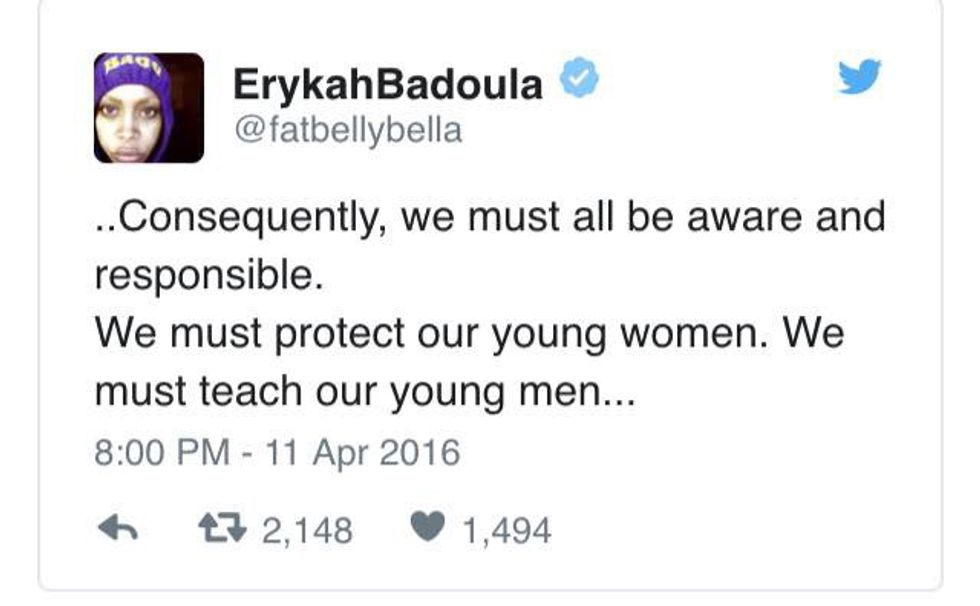
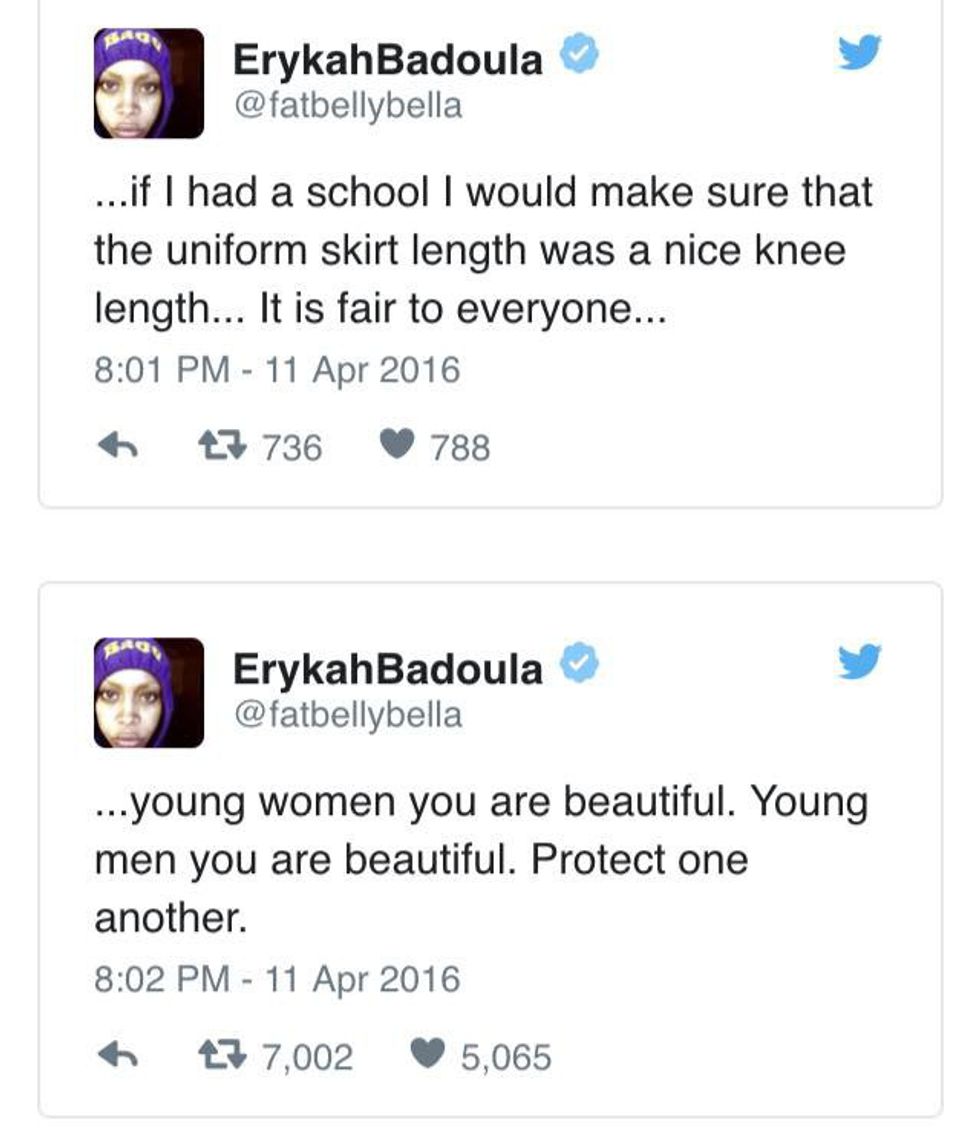
On April 11th, 2016, Erykah Badoula, a 45-year-old soulful singer from Texas, tweeted her response to several high school girls being told to lower their skirt hemline to knee-length. Erykah spoke, amongst her series of tweets on the topic, that she wants her daughters to “be themselves and wear what they like, yet be aware. Not ignore our differences… Consequently, we must all be aware and responsible.”
The singer was met with backlash for agreeing that “if [she] had a school [she] would make sure that the uniform skirt length was a nice knee length… it is fair to everyone.” Erykah brought to attention through her tweets that while young teenage girls should by all means be allowed to wear what they like when they want, it’s important to be aware of and respect the fact that it is natural for boys to be distracted by girls as well. What’s important is making sure we teach boys (and girls too, for that matter) how to be responsible about it.
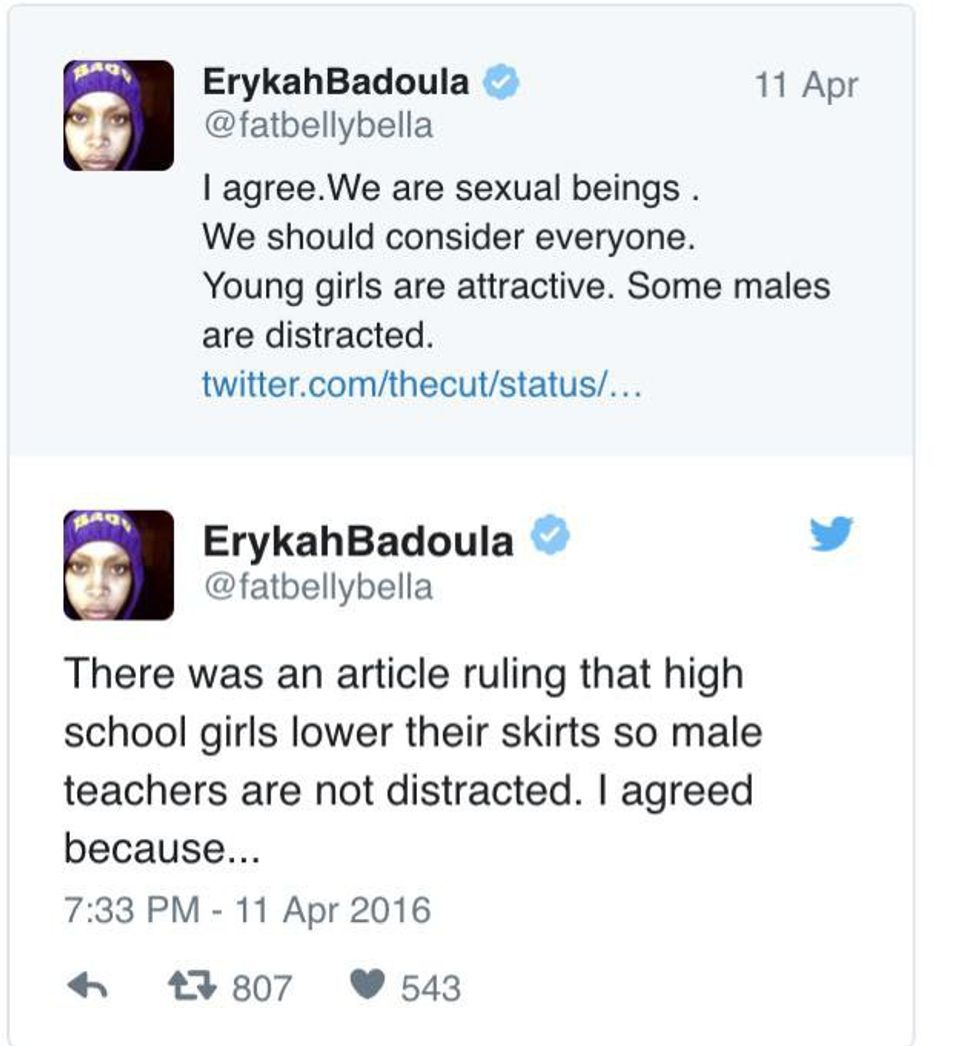
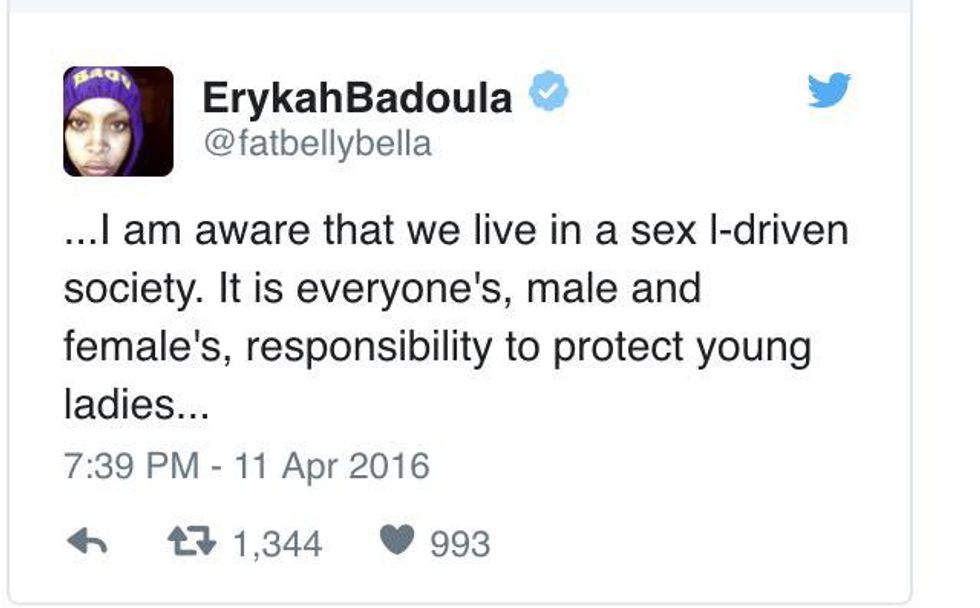
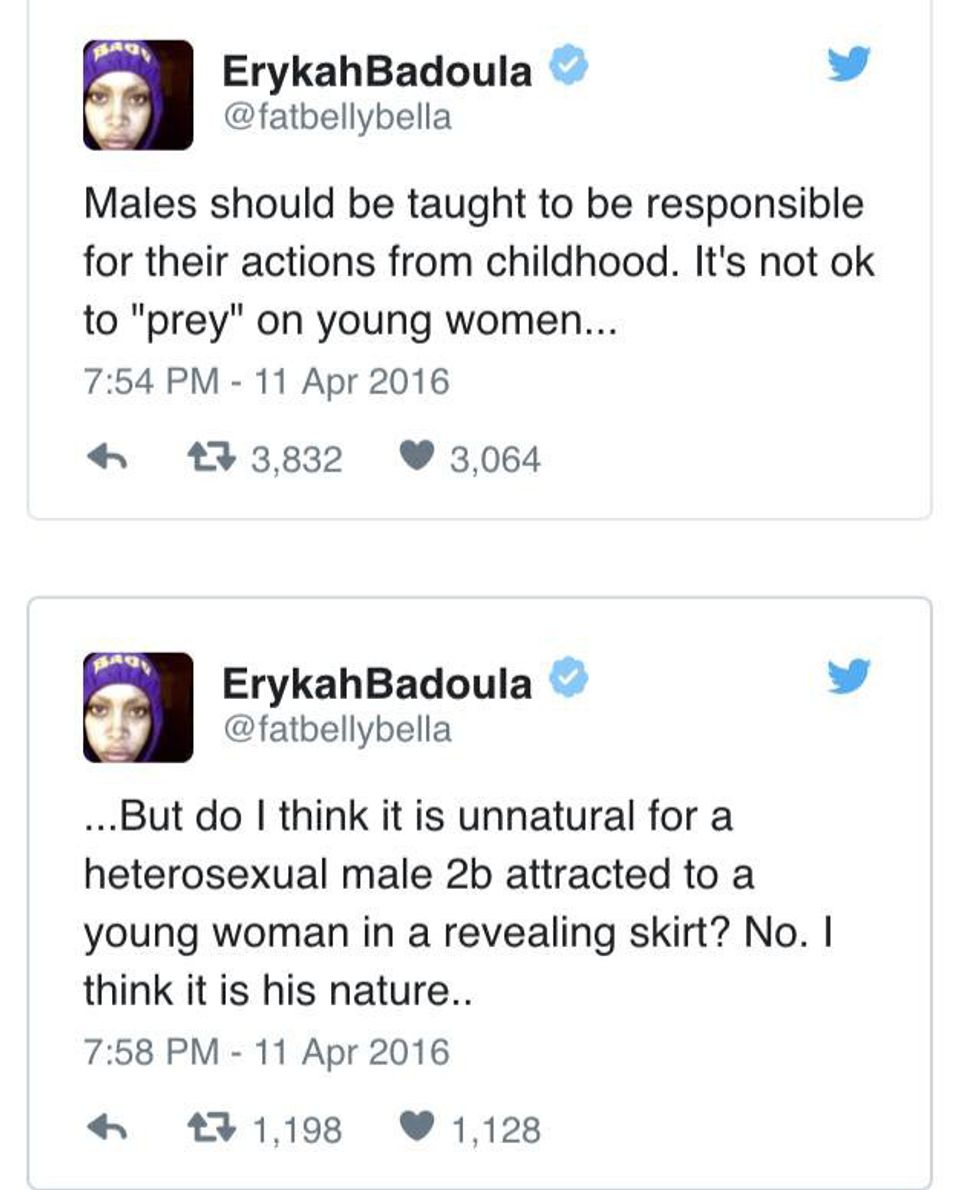
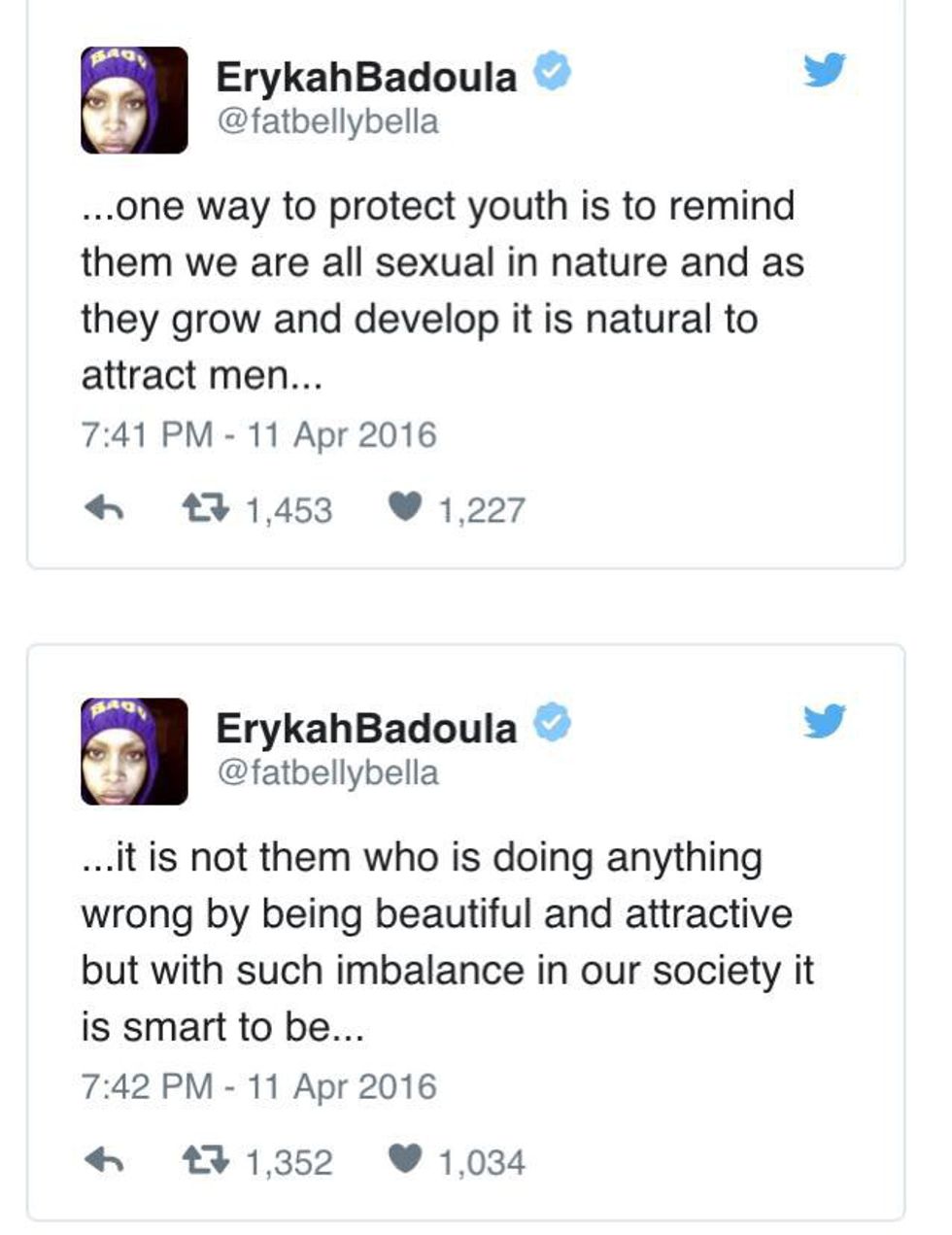
The problem is that so many people are uncomfortable with the sexual objectification of women, yet it is so much more than that. They think that lowering the hemline of a skirt will make boys just forget about everything that is underneath. That is not the case! Hormones don’t just look at a girl fresh out of the principal's office and say, “the skirt length is two inches longer, boys. Time to turn around and go home.” Boys can still fantasize plenty about what is underneath.
Personally, my boyfriend finds me much more attractive and, to fit the case, “distracting” in an ankle-length dress than in a thigh-length one. The solution to this problem is not to simply “stop sexually objectifying women” because that’s not going to happen: it is natural. Sexual objectification is part of accepting human’s natural drives to want to reproduce. What is different, however, is when sexual objectification takes over and becomes more inappropriate.
Women don’t want to be looked at like a piece of meat, and schools don’t want ladies’ bottoms hanging out of their shorts while they walk to the front of the class to turn in a test. It’s understandable. But the solution should not be to blame. Simply put, it should be about embracing the natural drives of humanity and then teaching responsibility with those drives to create the civilized-fitting kids that schools and society seem to dream of. When responsibility isn’t taught, the scale of issues may range from kids letting their distractions take over more easily to full-on rapists. People need to know what is and isn’t okay to do in such an intellectually-driven society as this one.
How do we teach responsibility, then? A start would absolutely be open-mindedness towards the topic of sex and sexuality. Framing something as natural as sexual growth during puberty and adolescence as unnatural is a huge part of what creates these distractions in the first place. Be accepting and open about the topics of sex with kids and they won’t be freaking out about it as much when the time comes for them to grow into their own sexuality. This same perspective has been found to help teach healthy drug approaches to kids who are beginning to experiment: be open and honest about drugs from the start and they won’t take dangerous routes to hide their usage from you, thus becoming more responsible about it. By being open and honest about our natural sexual drives, it helps to transition into learning responsibilities that come with those drives as well.
Humans evolved from apes, not robots. We are natural beings of this earth who should not be put down for feeling and wanting natural things that result from our body chemistry and hormones. However, the key is finding the balance: how much do we teach on natural drive and what’s okay to show, and how much do we teach on the responsibility of handling those drives when it comes to professional or even public settings?
On April 14th, 2016, Erykah Badu posted a Facebook post continuing off of her tweets from the 11th. She says, “I know it's confusing and we girls are angry and often blamed for ... Hell ... Everything. But, My point is: Can we not be MODEST without feeling SUPPRESSED?
How Can we teach our daughters FREEDOM without teaching them SACREDNESS?
THERE IS A BALANCE.” And that, as Erykah put it, is what the majority of America still needs to think about.