
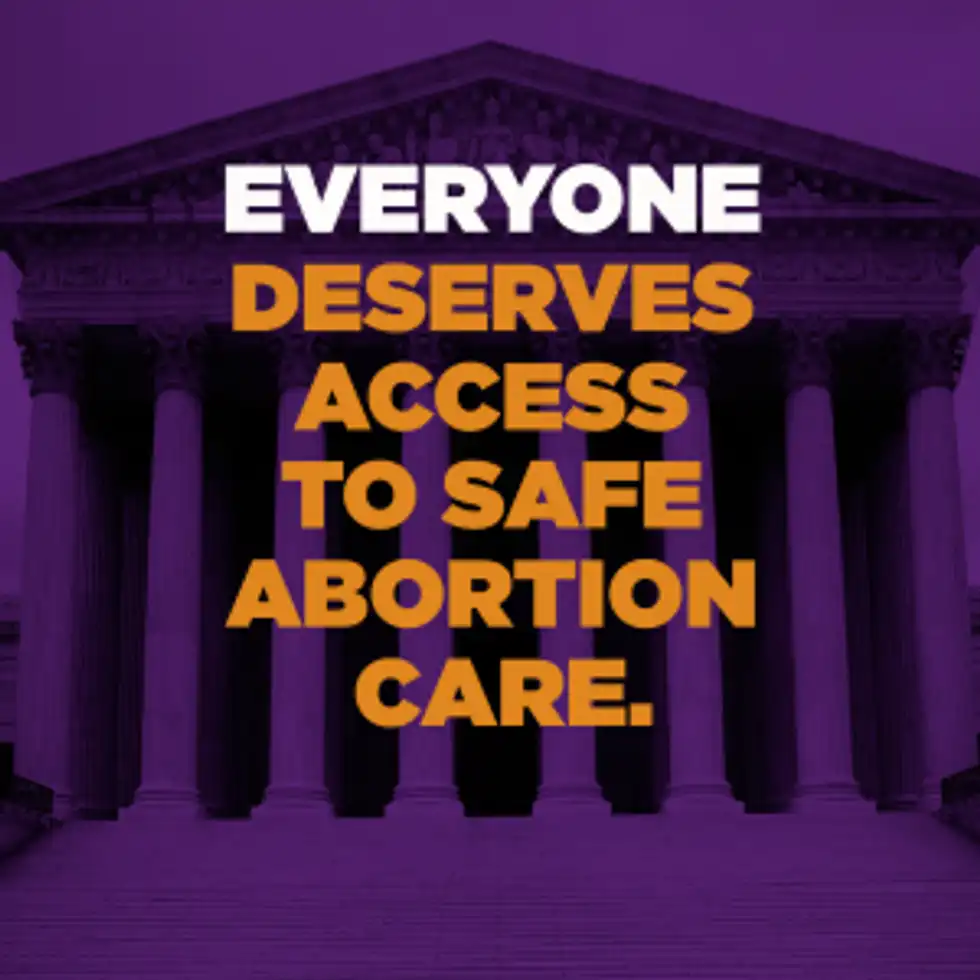
On March 2, 2016 the Supreme Court heard the most important abortion/reproductive rights case since Roe v. Wade. The Supreme Court case, called Whole Women’s Health v. Hellerstedt, looks at the availability of states to create undue burden on abortion clinics, which Texas is doing with the HB2 law that is mainly being discussed. The HB2 law in Texas basically makes it so abortion clinics have to have surgical grade infrastructure, including eight-foot-wide hallways, which is wider than TWO gurneys. These regulations are putting undue burden on reproductive and abortion care health clinics, like Planned Parenthood and Whole Women’s Health, while making it drastically harder and possibly impossible for clinics like those to exist.
According to the Center for Reproductive Rights, HB2 would make it so that “doctors who provide abortion services must obtain admitting privileges at local hospitals no farther than 30 miles away from the clinic; and every healthcare facility offering abortion care must meet building specifications to essentially become mini-hospitals (also known as ambulatory surgical centers, or ASCs).” The effects of this bill being deemed constitutional would make it so THE most populated state in the country was only running on nine or 10 abortion clinics state wide. Millions of women will have to travel thousands of miles, jump through unattainable hoops, or even pursue illegal measures just to practice their constitutional right to end a pregnancy.
So, if you don’t care already, I'm hoping after I give you these seven reasons that you do care if Whole Women’s Health wins or loses.
- According to guttmacher.org, “The number of U.S. abortion providers declined 4 percent between 2008 (1,793) and 2011 (1,720). The number of clinics providing abortion services declined 1 percent, from 851 to 839. Eighty-nine percent of all U.S. counties lacked an abortion clinic in 2011; 38 percent of women live in those counties.”
- According to guttmacher.org, “Eighty-four percent of clinics experienced at least one form of antiabortion harassment in 2011. Picketing is the most common form of harassment clinics are exposed to (80 percent) followed by phone calls (47 percent). Fifty-three percent of clinics were picketed 20 times or more.”
- According to guttmacher.org, about one in three women will have received an abortion before the age of 45.
- According to guttmatcher.org, “58 percent of women having abortions are in their 20s; 61 percent have one or more children; 85 percent are unmarried; 69 percent are economically disadvantaged; and 73 percent report a religious affiliation. No racial or ethnic group makes up a majority: 36 percent of women obtaining abortions are white non-Hispanic, 30 percent are black non-Hispanic, 25 percent are Hispanic and 9 percent are of other racial backgrounds.”
- According to guttmacher.org, “Abortion is one of the safest surgical procedures for women in the United States. Fewer than 0.5 percent of women obtaining abortions experience a complication, and the risk of death associated with abortion is about one-tenth that associated with childbirth.”
- According to operartionrescue.org, an anti-abortion organization that keeps tabs on the number of clinics being shut down, notes that as of December 2014, “The total number of all remaining abortion clinics in the U.S. is currently 739. Surgical abortion facilities account for 551 of that total while the number of medication-only abortion facilities stands at 188. Out of 60 surgical abortion clinic closures, 47 were permanent. This represents a 23 percent decline in surgical abortion facilities over the past five years.
- According to guttmacher.org, “In Pennsylvania, the following restrictions on abortion were in effect as of Dec. 1, 2015:
- A woman must receive state-directed counseling that includes information designed to discourage her from having an abortion and then wait 24 hours before the procedure is provided.
- Health plans that will be offered in the state’s health exchange under the Affordable Care Act can only cover abortion in cases when the woman's life is endangered, rape or incest, unless an optional rider is purchased at an additional cost.
- Abortion is covered in insurance policies for public employees only in cases of life endangerment, rape or incest.
- The parent of a minor must consent before an abortion is provided.
- Public funding is available for abortion only in cases of life endangerment, rape or incest.
Closing abortion clinics is not going to make abortion happen at a lower rate. Closing these fundamental clinics is increasing the amount of illegal and non-safe abortions. It is a constitutional right to end a pregnancy and the government is making it harder for people to practice this right. Understand that this Whole Women’s Health v. Hellerstedt is the biggest abortion access bill and if the Supreme Court allows for HB2, and laws like it to be deemed constitutional, reproductive rights are going to continue to wither. Stay tuned and end the abortion stigma. Fight for equal, fair, and safe access to abortion care.
Sources:
www.opperationrescue.org