
The meat industry is on the decline. According to http://latestvegannews.com/400-million-fewer-animals-were-killed-for-food-last-year-because-people-are-eating-less-meat/studies, there were 400 million fewer animals killed for food purposes last year than in 2007. Research demonstrates a 10% decline per capita in meat consumption, a number likely triggered by a rise in animal rights awareness and healthy eating over the past several years. Indeed, by eating meat, one is supporting inhumane cruelty to millions of animals worldwide, and intaking way more fat, calories, and cholesterol than necessary. Because of this, many people are choosing a meat-free lifestyle. But there's more to meat than inhumanity and health: the meat industry is taking a tremendous toll on our environment. It is killing our planet.
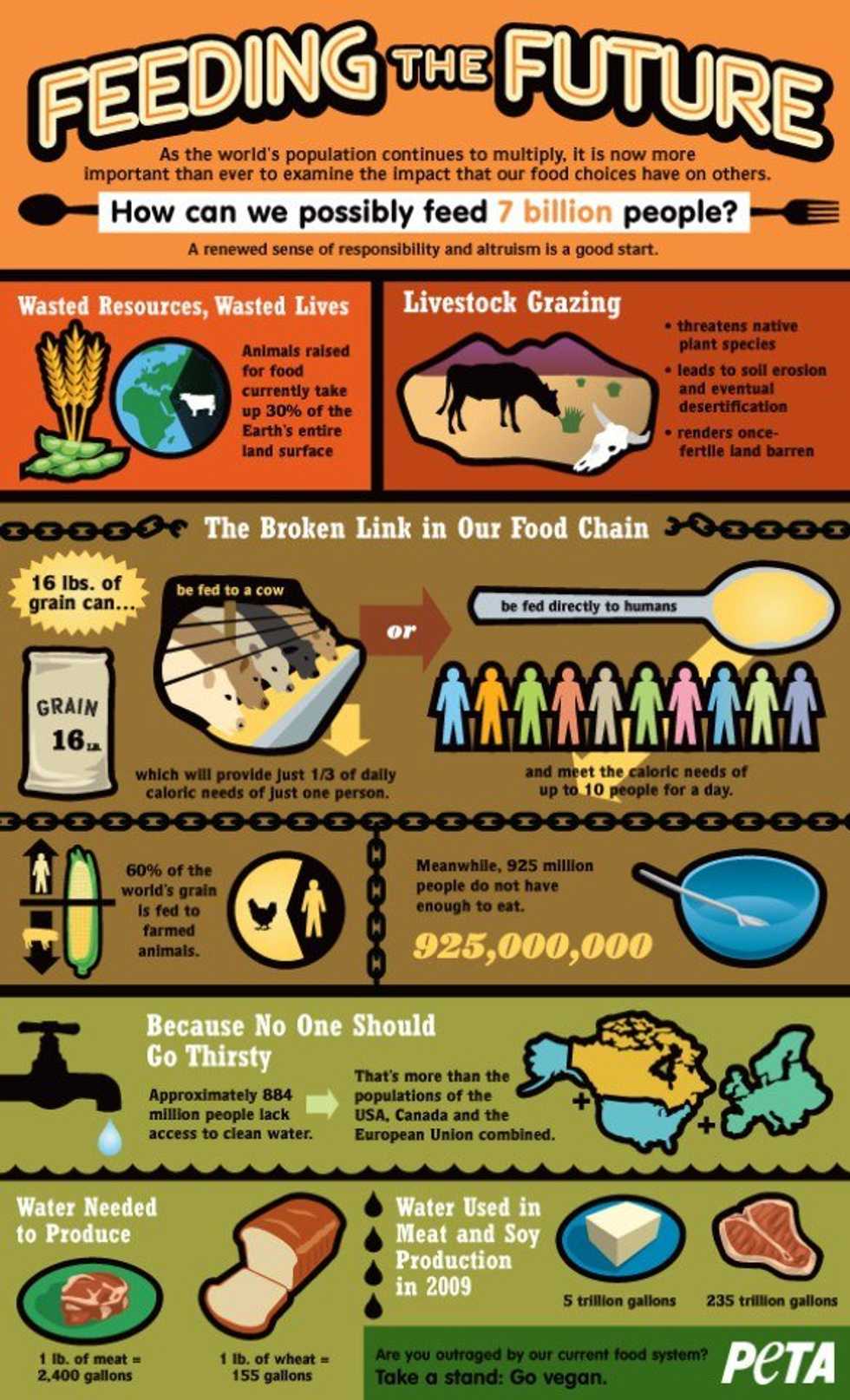
According to http://science.time.com/2013/12/16/the-triple-whopper-environmental-impact-of-global-meat-production/TIME, 30% of the planet's ice-free surface is used to raise livestock. The process of meat production uses one-third of the earth's fresh water and accounts for about 18% of the total human-caused greenhouse gases. The http://www.peta.org/about-peta/faq/how-does-eating-meat-harm-the-environment/Union of Concerned Scientists cites the meat industry as the second-greatest environmental hazard, following fossil fuel vehicles. This is a problem.
There is a lot that goes into meat production that we often don't think about. For example, each animal raised for consumption needs to be fed, and then this food turns into waste. "More than two-thirds of all agricultural land is devoted to growing feed for livestock, while only 8% is used to grow food for direct human consumption," reports the Livestock, Environment and Development Initiative (LEAD).
These researchers also found that "the global livestock industry uses dwindling supplies of freshwater, destroys forests and grasslands, and causes soil erosion, while pollution and the runoff of fertilizer and animal waste create dead zones in coastal areas and smother coral reefs."
In developing nations, statistics are even worse. A lack of resources contributes to a lack of efficiency in production, and as a result, factory farms in these impoverished places can http://science.time.com/2013/12/16/the-triple-whopper-environmental-impact-of-global-meat-production/produce up to 1,000 kilograms of carbon for every kilogram of protein.
We live in a world of overpopulation, limited fresh water supply, and global warming. There are a myriad of places where there simply is not enough land to contain the number of people living there. Yet, we choose to give up even more land so that we may eat meat.
In other places, citizens must hike miles to find fresh water sources, and thousands will die anyway from dehydration. In our own nation, we're witnessing a drought in the state of California, which is causing problems that extend way beyond the state borders. Yet, we choose to relinquish a large abundance of water we do not have so that we may eat meat.
The ice is melting, floods are increasing, and weather is going wacky from global warming, contributing to species endangerment, the loss of lives and homes, and an uncertainty for the future of our planet. Yet, we choose to keep pushing greenhouse gases into the atmosphere to this so that we may eat meat.
To put numbers into perspective, consider the following statistics from PETA:
- "Producing one hamburger uses enough fossil fuel to drive a small car 20 miles;
- "A typical pig factory generates the same amount of raw waste as a city of 12,000 people;
- "The world's cattle alone consume a quantity of food equal to the caloric needs of 8.7 billion people—more than the entire human population on Earth;
- "It takes 2,500 gallons of water to produce a pound of meat but only 25 gallons to produce a pound of wheat."
These numbers are ridiculous, and demonstrate the tremendous repercussions the meat industry has on our planet. Yes, choosing a meat-free lifestyle saves millions of animals from cruelty and death. It also promotes physical health in a variety of ways. But from an even larger perspective, choosing a meat-free lifestyle helps to save our planet.