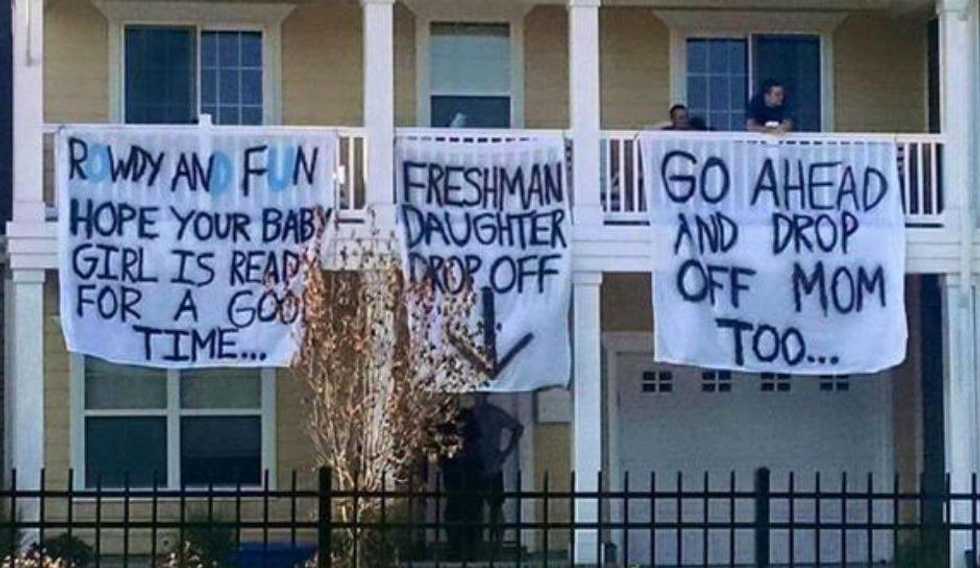
CNN recently published a story regarding offensive banners made by the Sigma Nu fraternity at Old Dominion University in Norfolk, Va. On freshman move in day, the frat allegedly hung several signs from their balcony with messages such as, “Rowdy and Fun. Hope your baby girl is ready for a good time,” and “Freshman daughter drop off.”
Though this particular fraternity is currently suspended, it seems as though incidents regarding the mistreatment of women have been running rampant through college campuses across the nation. Instances of sexual abuse and rape at universities are becoming more and more frequent in the media.
So, why does college seem to be becoming inherently sexist? Today’s culture has caused our generation to have specific expectations when it comes to gender roles, particularly in college. Many aspects of today’s media, such as rap songs that reference “college chicks,” and Twitter and Instagram accounts with the names “college girls daily” or “hot sorority girls,” are some of the many contributors to making college-age women into sexual objects.
As it turns out, this sexist mindset is especially prevalent in the U.S. Daniel Esfahani, a 21 year-old Australian exchange student at The University of Kansas, pointed out the differences between gender roles on college campuses in the United States versus Australia.
“No one buys drinks for girls back home, we don’t buy girls drinks, I feel like a lot of the guys here just need to get girls drunk, like to have sex with them,” Esfahani said.
The culture surrounding college life -- for example, guys buying drinks for girls -- sets the stage for women to be taken advantage of. The media that millennials are surrounded by every single day contributes to these gender stereotypes. Even American slang that is popular on social media outlets promotes the objectification of college age women.
“You know the term ‘side-bae’? We don’t have that. It happens sometimes, but guys don’t normally hit up multiple chicks at once. Here, it’s like a joke and it’s normal. It’s crazy,” Esfahani continued.
Although these trends seem harmless on the surface, perhaps they are the root of the sexist culture on college campuses. Now, more than ever, American students are exposed to media that suggest demeaning women is okay. Movies and music, for example, depict college as a time for wild parties with a different girl or guy every night, which develops a certain expectation for college students.
Taking a closer look at countries where the sexualizing college women is less prevalent could also give insight into how to put a stop to some of these issues. Why are American universities more sexist than universities in other countries?
If American media is one of the main causes of this problem regarding gender roles in college, perhaps it can be part the solution. Finding a way to depict equality and respect between men and women in the media is definitely easier said than done, but could have a huge impact on expectations of how to treat one another on a college campus in this country.