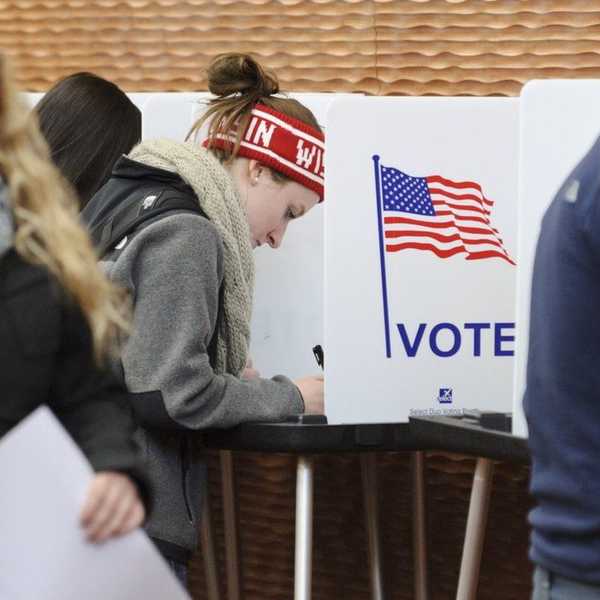

Earlier this week, I read an article on Yahoo! News that talked about how teachers are sensing a different environment in their elementary and middle school classrooms this election year. They spoke about how children seem more tense and unwilling to talk about the presidential campaigns, which is a required part of their curriculum. This article got me thinking: how are our political views and debates affecting the youngest members of our society?
Thinking about this sent me on a trip back to the 2000 presidential campaign when I was in Kindergarten. At the time, the two main presidential candidates were George W. Bush (Republican) and Al Gore (Democrat). Since I grew up in a very Republican family, my grandparents, uncles, aunts, and other family members were always talking about Bush and I took that information and formed my own political view at 5 years old: Bush had to win. However, my best friend at the time grew up in a Democratic household and she had internalized the exact same message, just the other way around; she believed Gore was the one who had to win.
This didn’t really affect us until one day on the bus, the election came up and I told her Bush was going to win because he was obviously the better candidate. She got angry with me and we got in an argument of Bush vs. Gore and why our respective candidates should win. It got so intense (for a 5 and 6 year old, that is) that we didn’t talk to each other the rest of the day.
Luckily, our friendship wasn’t permanently destroyed after this incident but there was some tension between us for a while, especially after Bush unexpectedly won. But the 2016 presidential race is a lot different than the 2000 race. Now, issues related to immigration, rich vs. poor, race struggle, gender struggle, and differing views on sexual orientation dominate most of what I see on TV and in the news. And through it all, the youngest members of society are internalizing everything their parents believe is “right”. Normally, this isn’t a bad thing and is to be expected as many of us get our political views from family members. However, it seems that one underlying theme has dominated this election in unprecedented ways. That theme is hate.
When it comes to this, Trump is the main culprit. When you have such an influential individual standing up in front of large crowds and saying the things he says, many people get extremely impassioned and this passion spreads on to their children. What results is a culture that is fostering hatred and disrespect from a very early age.
The article I mentioned above discussed how some children were going up to their classmates, who had come from Hispanic families, and telling them that, once Trump was elected, he would send them and their family back to Mexico. At such a young age, saying things like that breaks a part friendships, causes children to live in fear, and fosters the grudges we still see to this day between races, sexes, religions, and so many more. This is not right, especially since primary school is meant to be a place where children can learn and be themselves, free from the prejudiced opinions of today’s society. Because, let’s face it, at that age, we didn’t know what true hate was.
With the world the way it is, the last thing we need is another generation that lives their lives in hate, carrying grudges from the past with them into adulthood. I have a lot of hope for not only our generation, but for the generations after us. However, if we continue to perpetuate the hate that so many people carry within themselves, nothing in this world will ever change, no matter how hard we may work for it. We need to stop preaching hate and start letting our children be free to learn, explore, and discover who they are without their parent’s opinions hanging over them like a cloud.