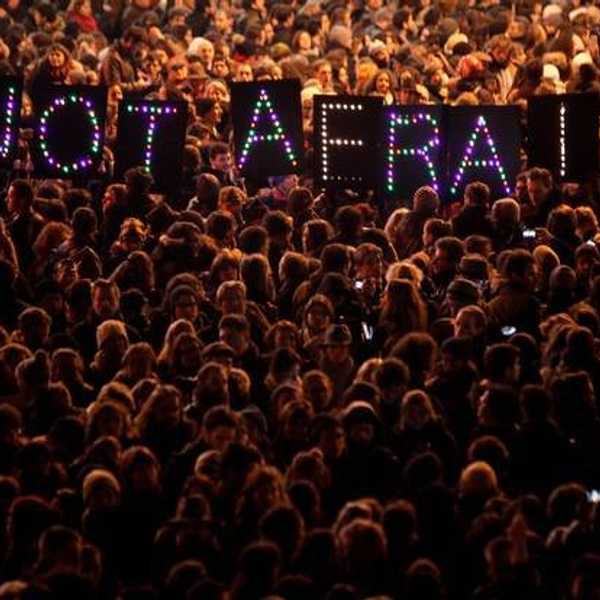
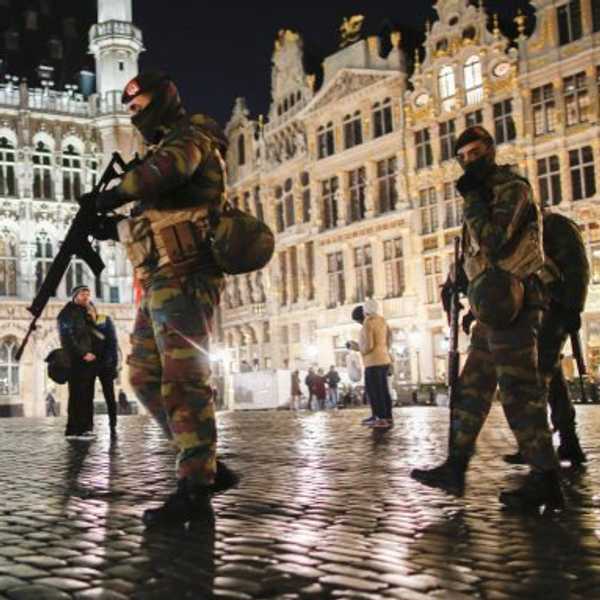
It was recently revealed that, in light of recent terrorism attacks in Paris, the French government was spending up to €1 million a day on security. In any case, this represents a significant injection of money into the economy that might not otherwise have been spent. Since the global crisis of 2008-09, Western governments have been trying to reduce their budget deficit, the gap between the government’s expenditure (on things such as welfare) and receipts (from things such as taxation). Terrorism has forced the European governments’ hands, requiring a great increase in the amount of resources needed to protect their citizens.
It is claimed that the London Metropolitan police simply cannot afford to deal with all reported crimes and thus, there is often a huge backlog for an understaffed and underfunded force to deal with. Germany, bearing the brunt of the mass migration crisis that has occurred over the past couple of years, is also finding it difficult to balance the books whilst having to provide for so many extra stomachs. Thus, it seems that we as a society have to get used to mediocre public services and increasing privatization.
However, it seems that in times of crisis, the goal of balancing the budget is put on the back burner. Whilst the terrorism threat to the US is reasonable, in Europe, it is higher than it has ever been. As a result, European governments are having to rethink the way they police their borders and collect intelligence, and more importantly, the resources they devote to such activities.
For example, the British Prime Minister David Cameron recently announced an increase of 1900 intelligence and security staff to be put at the nation’s disposal, as well as a £9m increase for aviation security. Whilst this may not sound like a big deal for we Americans, this represents a great deal of sacrifice for the UK, who in pushing through these plans, will be increasing their intelligence personnel by 15 percent.
Other countries too, are following France’s lead. Spain and Portugal, being in close proximity to extremist cells located in North Africa, has stepped up spending on intelligence and policing. Moreover, there is evidence this move towards increased spending is working. Britain has been on a ‘severe’ terror alert. meaning an attack is ‘highly likely’, for the past 7 months and there has not yet been an attack due to the valuable work of counter-terrorism agencies. It has been reported that at least six “Paris-style”attacks have been thwarted in recent months and it is evident that law enforcement bodies are working at an unprecedented level to keep the European population safe.
Europe’s already fragile economic state threatens be decimated by the strain of the threat of terrorism. Greece has been a primary entry point for the migrants, crossing the Mediterranean in dangerously overloaded dinghies. Whilst I am by no means making the explicit connection between migrants and terrorists, there is no doubt that some extremists have exploited the crisis to gain undocumented access to Europe.
Greece, with its finances already in ruins, cannot afford to round up and deport every migrant that arrives on its shores and therefore has let the new arrivals pass onto other European countries. Due to the Schengen agreement, people within the EU are able to pass from country to country without showing any form of documentation. Moreover, if the frequency of attacks increase, it is likely that microeconomics will suffer—Paris’ hospitality industry was predicted to have suffered a loss of up to €1bn after the October attacks.
Yet arguably the most important impact is the social effect upon Europeans. In Germany, far right forces have joined together to form an organization called Pegida, which claims to counter radical Islamism within Europe and, predictably, there are offshoots in many other European countries. This has been propelled into the public eye after recent terrorist events and some countries are seeing developing support for far right politics, for example Marine le Pen’s Front Nationale in France.
More worryingly, similar organizations have been accused of violence against innocent individuals of the Islamic faith. Incidents such as sex attacks and violent muggings have been perpetrated by migrants throughout Europe and whilst these crimes are utterly morally reprehensible, it seems the support for such organizations such as Pegida is ever growing. This only serves to increase polarization between different ethnicities and potentially driving more into the clutches of Islamic radicals. Moreover, migrant camps have been described as “breeding grounds for radical jihadism”, where extremists are allowed unfettered access to impressionable young minds.
Exacerbated by the migration crisis and empty government coffers, it is clear that Europe is being hit hard by the threat of terrorism. The situation calls to mind a saying attributed to ex-US Secretary of Defense, Donald Rumsfeld, who famously said of the Iraqi WMDs; “We know where they are. They're in the area around Tikrit and Baghdad and east, west, south, and north somewhat”. The same can be said for extremists in Europe, for however many resources are donated to the fight, some will always be able to slip through the net.