


I have been deeply involved in politics my entire life. I remember campaigning for Bush in 2003 as part of the Bush-Cheney Farm Ranch Team. I was 7 years old. For my 12th birthday, my dad made a $50 donation to John McCain's campaign and he took me to one of his rallies an hour away (on a school night) and I was able to ask McCain a question. Sounds like a weird kid, right? You’re not wrong. I have run a state legislature campaign, held staff positions on congressional campaigns, and interned for U.S. Senate campaigns. I love politics.
Unfortunately, many of my peers do not have the same passion for the constant of politics. I have always thought that if people just knew more about it, they would love it. Thankfully, this presidential election has captured the attention of many people, and a countless number of my friends have been asking me about what's going on. The most common question is something along the lines of “How does this primary thing work?” One of the most complex, complicated and important aspects of this presidential election is the primaries. It is also the system that baffles the most people. Hopefully, this clears the air.
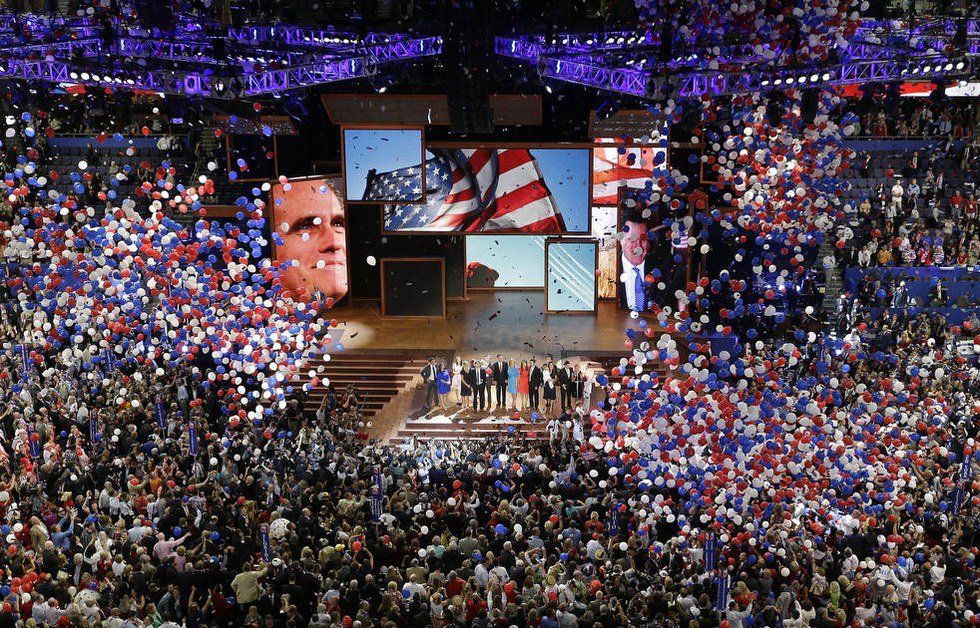
Let’s first talk about what the primaries try to accomplish. The political parties use the primaries to decide who they will endorse to actually run for president. They do this by basically having mini-elections in each state to see who the people in their party want to be the nominee. When a candidate wins one of those mini-elections, or even just gets a certain percentage in a state, they get delegates. The number of delegates per state and how they are distributed depends on both the party and the state itself. Delegates are people who will all come together in July to vote again at the national convention. The national conventions are when the delegates vote on nominations for president and vice president, as well as the party platform.
But before we get ahead of ourselves, there is already a wrench in the whole deal. Some states use a primary system, and others use a caucus system. They both accomplish the same goal, but go about it in a different way. In caucus states, only registered members of the parties can vote. They vote by raising their hands or breaking up into groups. There is much discussion and often verbal altercations at caucuses. In primary states, the parties hold elections by secret ballot, just like when you vote in the general, or "real" election.
OK, back to those delegates. They meet in the summer for a few days and vote. The delegates must vote for whoever they were assigned to according to who won their primary. For the Republican party, a candidate needs 1,237 out of 2,472 delegate votes to win the nomination. For the Democrats, a candidate needs 2,383 out of 4,763 delegate votes. The numbers are different simply because that is the way the parties decided to divide it up.
Here is another catch. The only thing keeping the delegates honest and voting the way they are supposed to is trust. Also, depending on the state, delegates may be completely free to vote for whoever they want at any time. Generally speaking, however, everyone must (should) vote for the candidate they were apportioned to for the first ballot. But again, they are only bound by trust. If someone does not have the necessary votes to win outright after that first ballot (1,237 for republicans and 2,838 for democrats), it is a free for all. The delegates will now be courted and traded in order to make a deal that will help the candidate either get the presidential nomination, or become the vice presidential candidate, or any number of cabinet positions. This is called a brokered convention, and it's a political nerd's dream. At this point, the candidates are vying for the free delegates, making deals and reveling in the chaos of politics. They will cast as many ballots as needed until someone reaches that delegate threshold. After the dust settles, someone will have reached the delegate number necessary for nomination. That candidate is now the Republican or Democrat nominee.
I sincerely hope that this has been helpful. Obviously, there are a lot of moving parts, and a lot of exceptions. The primary process is extremely complicated, but it is also extremely important to understand them. Look at your state’s voting laws, understand them, and get out and vote.

















