

Punk rock has been dead to me, personally, for a long time. It wasn’t always that way. In high school, I listened to as much guitar-based rock music as I could, and submersed myself in punk culture. I constantly went to local shows at a hall up the street from me to see any band of any genre that was playing there.
Soon I started going to Warped Tour, and would spend the entire day running from stage to stage seeing any band I knew the name of. But finally in 2011, I started to notice almost every band was made up of men and only men, whining about being wronged by women.
My final straw was seeing the political punk band, and one of my first favorite bands, Anti-Flag, on the Kia Motor stage. The lead singer was complaining about the car companies getting bailouts while a Kia sat spitting distance away from him. Punk rock was a sham. It, just like everything else, had sold itself to the establishment. That was the last time I went back to Warped Tour.
While I never exactly stopped listening to punk music, over the years it took a hit in how much I listened to it. I became more interested in artists trying to say something important. From Future’s cries out for help over heartbreak and drug addiction, to the nihilism brought on by systematic racism in Chief Keef's music, to the uplifting, self-aware raps of Chance the Rapper, and whatever the perfection Kendrick Lamar had been producing.
These were all worlds more interesting to me than stale songs where singers would yell about their hatred for girls over the same octave chords over and over.
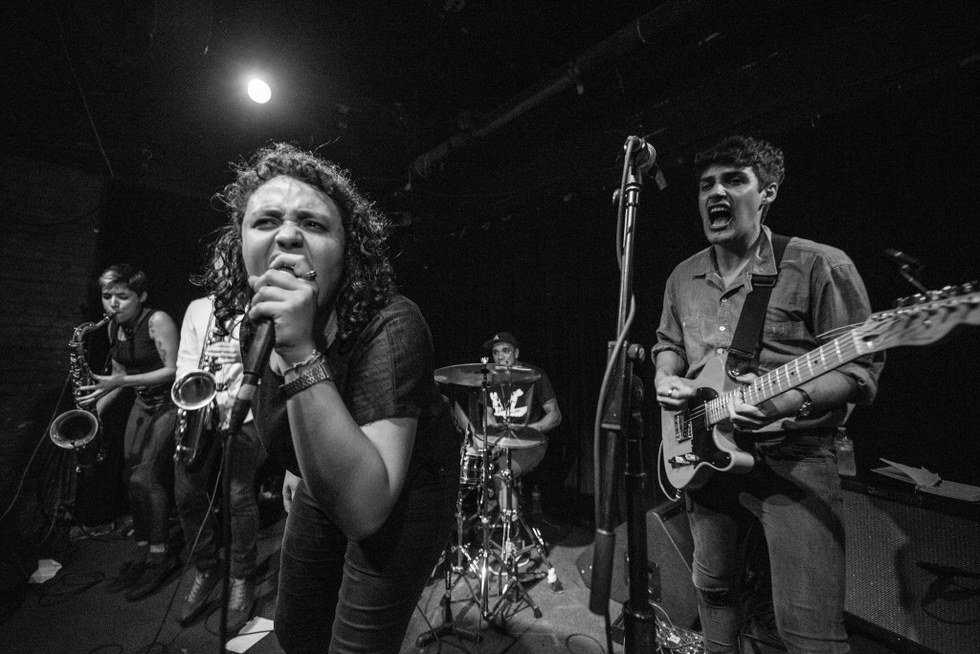
This all changed again when I went to see one of my favorite bands play a show at UCONN. The opening band was called Downtown Boys, and in about two minutes of playing, they quickly became my new favorite band. The leader singer, Victoria Ruiz, screamed out barely audible words in a mix of Spanish and English, but quickly got her point across, and she was mad.
Behind her, a tightly-knit punk band played as fast as their bodies would possibly let them, accompanied by, not one, but two saxophones. This was what I was craving for in music. While it might have been a small niche, I had found it.
The next time they played the Willimantic Record store I saw them again. This time, even though I knew what to expect, it still caught me by surprise. Every part of it was exciting, like riding a musical rollercoaster.
When I saw they were playing a show on 750 Main Street, an event room owned by Cafemantic, I freaked out, and for two months, waited in anticipation. Opening bands consisted of UCONN band Reduction Plan kicking things off, followed by the danceable, Southern twang of the Dang Bats.
The next 30 or 40 minutes was closer to a religious experience than I had ever had. Smiles lit up everyone's faces as soon as the band took the stage. What took place next would be best described by the band themselves as, “bilingual political dance sax punk party.” Think of the coolest, most exciting lecture in racial politics you have ever heard.
In between songs like “Slumlord Sal” and “100% Inheritance Tax,” lead singer Victoria Ruiz would talk about the history of slavery in Hartford, and insurance companies like Aetna. Every topic was up for discussion, and backed by well-thought out knowledge: slavery, the hospitality industry, Bruce Springsteen, mortality, police brutality, Beyonce sinking a cop car. Nothing was off limits.
Ruiz would then go back to the party, and everyone would happily and safely dance along, respecting the space of the people next to them. Ruiz screamed like her life depended on it, backed by a saxophone that was less “Careless Whisper” and more like cries for help.
A resounding message was certainly clear: While Willimantic might be the punch line of a bunch of lame jokes by most people, it's a strange but inviting place. Anyone is welcome to throw a punk show, and people just won’t show up, but they chug beer and happily sing along.

















