In the next few weeks Arkansas is expected to begin drug testing welfare recipients, joining a list of other states that use similar programs to prevent fraud in the system. Behind this legislation is a belief held among many lawmakers: government assistance should only be provided to those who are financially insecure, fiscally responsible and conform to a lifestyle that reflects responsibility. This belief makes sense on the surface: if welfare is an investment, there’s no reason to invest in people who will not return on that investment. This is especially true if you believe government spending is wasteful if it doesn’t benefit the taxpayers paying for the spending.
In this way, those who support drug testing welfare recipients don’t oppose the concept of government assistance for poor people, rather they want to make the system more efficient with as little waste and fraud as possible...or so they will tell you. In reality, if this were true and those supporting drug testing welfare recipients cared primarily about fiscal efficiency, they would focus on making other programs more efficient. Further, their justification for scrutinizing assistance for poor and unemployed people applies a double standard that’s biased against poor people.
It is true that fraud happens in welfare spending. With that said, it’s not as bad as one would think, as most fraud is not individuals gaming the system. Even if individuals gaming the system did contribute to all of the fraud and abuse of the welfare system, cracking down on welfare fraud would still not be the best means to make government fiscal policy more efficient.
Specifically, the use of offshore tax havens is the greatest contributor to fiscal inefficiency in the United States. In this way, though welfare fraud may cost taxpayers about $60 billion in any given year, the use of offshore tax havens costs the taxpayer about $150 billion per year. Some may say that it’s not a fair comparison: the money wasted by welfare fraud is wasted money that was already in the budget, while money lost on tax havens was never in the budget in the first place. Further, tax havens are technically legal. Though it’s true that tax havens are legal and fraud by its definition is not, that doesn’t mean that the government is more fiscally efficient with the existence of tax havens compared to them not existing. Both policies put more money in the government's budget that it otherwise wouldn't have, and cracking down on tax havens does that more efficiently.
Put differently, say one is a legislator and there are two fiscal problems that make the government less fiscally efficient. The existence of both of these problems entails the government having less money to operate day-to-day operations or invest into new programs had these problems otherwise not existed. One problem wastes more than twice times as much as the other problem. If one’s objective is to create fiscal efficiency and reduce waste, but only one problem can be addressed, which one would be the best problem to confront? Obviously, the answer is the bigger problem, tax havens, but in contemporary political decision-making this isn’t the case, and the explanation for this cuts deeper than a cost-benefit analysis.
Put bluntly, American discourse on government spending is deeply flawed. There is no question that the government on some level needs to spend money in order for the economy to function, however it’s underestimated how much the government actually influences the economy by nature of its existence. The government enforces contracts, prints money, protects property, regulates markets, regulates the environment, and spends money on infrastructure. Though in everyday life government’s constant presence doesn’t seem constant as many of these norms are internalized and enforced socially, that doesn’t take away from the fact that if one were to decide against doing these norms the government would still penalize them.
What’s more, the government does spend money enforcing the norms on capitalist trade, and though these norms benefit everyone to some extent, some people benefit more than others. For instance, if one person has $1 million dollars and private property is protected by government, that person benefits more from a government program, paid private property protection, than someone who just has $100. Granted, both individuals are having their property protected and on some level are benefiting from that, however the person with $1 million is benefiting more from that system. If private property isn’t protected, the person with $100 could lose $100, while the person with $1 million could lose $999,900 more than the that person. In the meantime, the person with $1 million is $999,900 richer than the other person. This is all due to a government program paid for by everyone's taxes: the protection of private property by government.
The United States’ cultural inability to see how basic government programs already benefit some individuals disproportionately creates a cultural double standard in discussing government assistance. Americans have so much faith in the capitalist system and hold so much contempt for government programs that they forget that if it weren’t for government programs there would be no capitalist system. Americans are perfectly content with the government programs that already exist, create structural inefficiencies, and make it difficult for many people to make opportunity for themselves. For Americans, rich people aren’t understood as beneficiaries of a social structure that favors them in its basic composition but as ubermensch champions of individualism. That's not to say rich people are bad, it’s just worth noting that people like Donald Trump owe their livelihood to government programs just as those who are dependent on welfare are.
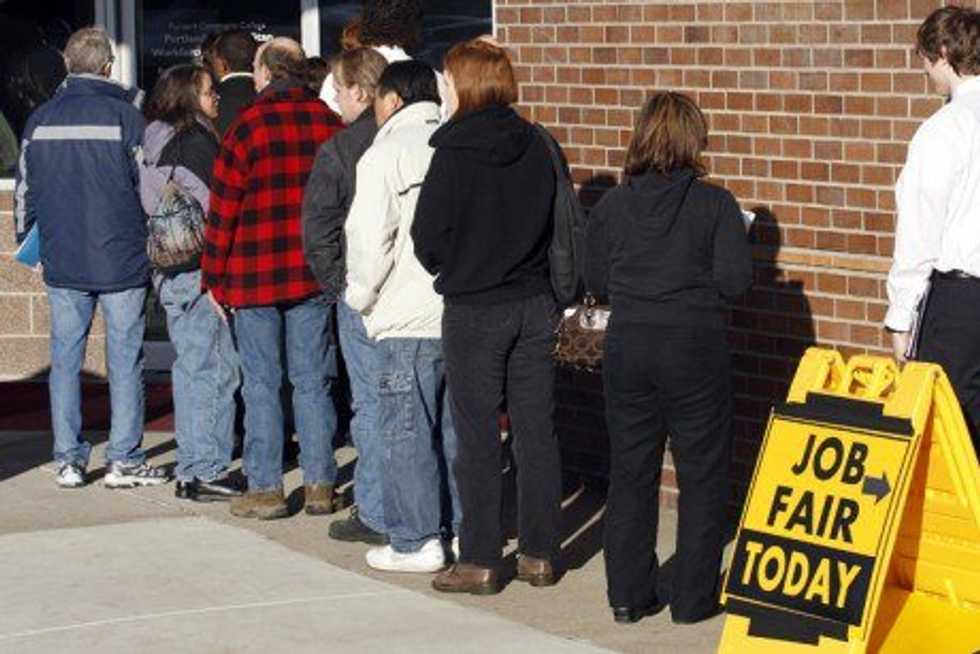
Transitively, just as rich people are seen as lions of individualism and responsibility, those who are poor or unemployed are held in contempt for being dependent and irresponsible. Because basic programs and structures of the economy are erased in the American consciousness, those who utilize relatively new programs such as unemployment insurance, EBT, and Medicaid are seen as lazy people dependent on government, like a child dependent on a parent. To some, these people aren’t self-made like the rich and they aren’t victims of circumstance, they’re parasites dependent on the government.
This cultural thinking that holds poor people in contempt is the real reason why welfare recipients in Arkansas and around the country are being drug tested. These programs don’t do much, if anything, to prevent fraud in the system or reduce poverty. Instead, they waste time and resources trying to affirm a cultural fantasy: that poor people are lazy drug users who probably deserve to not have financial security. If legislators could deprogram their cultural biases concerning the economy and the people within it, perhaps economic policy and discourse could become more refined and beneficial to all. Though government programs intent on helping the poor can be harmful to the economy, that can be said of any basic government program. Economic policy and social spending that explicitly helps the poor isn’t bad for the economy, rather it performs a function traditionally not understood in the economy. As of right now, that remains to be the case. The United States would rather waste money trying to punish poor people than spending money efficiently for everyone’s benefit.