
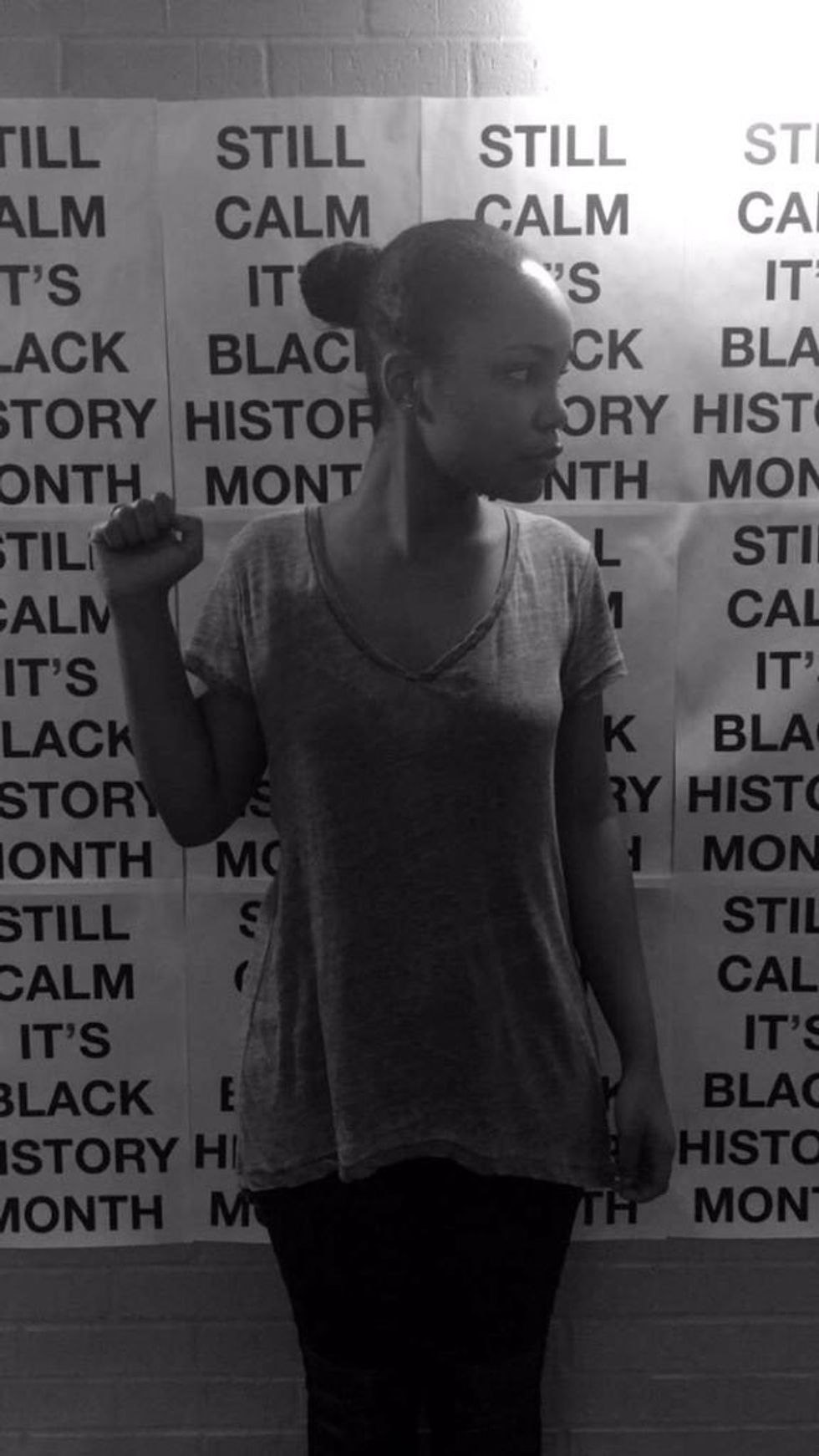
Senior Kyla Cherry poses by "Still Calm It's Black History Month" posters.
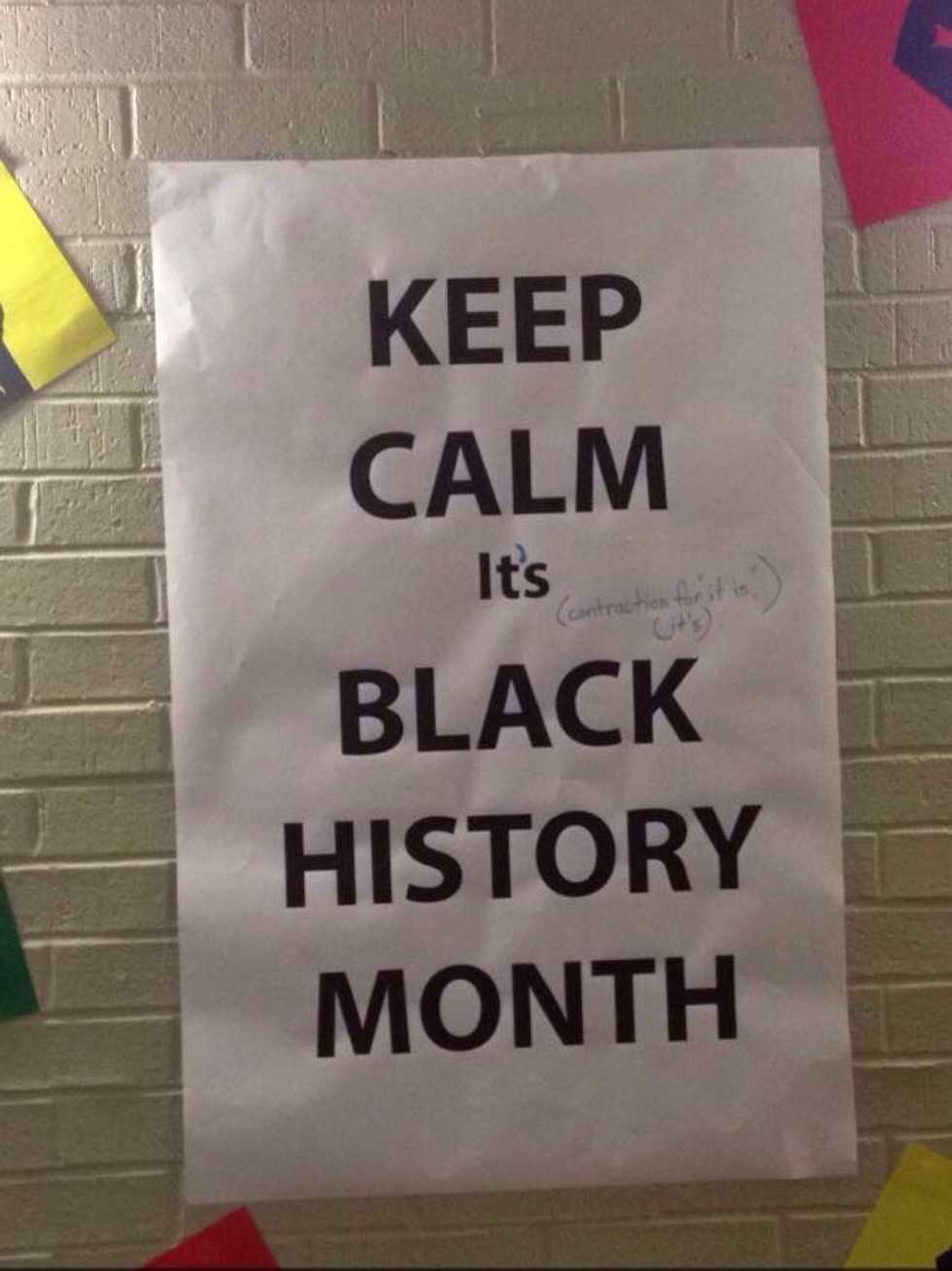
Within the first few days of the month, Stephens Susies were hard at work to remember their heritage and honor Black History Month. Seniors Kyla Cherry and Taylor Brown created a “Keep Calm It's Black History Month” poster to adorn the walls of our dining hall, Stamper, when they noticed there weren’t any BHM decorations on campus. The poster hung for less than a day before it was subject to someone’s physical critique. An unknown person present in the dining hall drew an apostrophe along with the note “contraction for ‘it is’” in blue ink. If it is not immediately clear to you why this presents a problem — that’s OK!
Your willingness to listen is what counts. Correcting the grammar on a poster celebrating everything black Americans have overcome not only implies grammar is something other races need to explain to African-Americans, but erases their entire struggle and minimizes it compared to superior levels of literacy. Essentially, it implies black people are illiterate and only this witness could be their “white savior” by so loudly correcting this happenstance error.
However, students quickly turned around, producing “Still Calm It’s Black History Month” posters (with a tribute blue apostrophe) that were abundantly posted around campus as well as hosting a rally in Stamper at lunch time on Feb. 4, 2016. Cries of, “Who cares? Bitch, I care!” rang out with spoken word poetry bringing attention to the turn of events. Even a @StillCalmSusie Twitter account sprang up, citing "recent events on campus" as deciding factors to "start a movement to educate our peers." The Stephens community found a positive energy from these tension-causing events, but just in case you encounter a similar moment in the future, I’ve compiled a list of dos and don’ts for culturally sensitive incidents:
DON’T: Impose classist and racist grammar rules. I get that sometimes correcting grammar can be an irresistible impulse; however, when it relates to a message with intense feeling and appreciation for a struggle you did not, nor will ever personally endure, keep it to yourself. You can whisper it out loud to yourself if you TRULY cannot contain this urge.
DO: Listen to the message and appreciate its intent. I can only assume that you would appreciate people doing the same to you. Publicly speaking out for something you are passionate about is scary enough without people ignoring your message and pointing out mistakes that are irrelevant to your point.
DON’T: Cast your judgment before listening to different sides of the story. Don’t shut out others’ perspectives. You won’t get the chance to experience others’ perspectives for yourself but you can try your best to understand it through active listening.
DO: Try to learn and actually understand the root of what is offending certain people before offering what you think about the situation. Without stopping to fully analyze the issue, what you have to say does not actually have much value. Also, listening with the intent to hear and listening with the intent to understand are completely different. You must choose the second one to have valuable input.
DON’T: Laugh. Never laugh at someone’s suffering because you do not understand their struggle. You may not realize that is what you are doing when you laugh at what you think is a “silly” or “ridiculous” situation to be upset about, but that is probably the easiest way to let your privilege shine through. Having privilege is not a bad thing — putting it to bad use or not being aware enough to acknowledge it is.
DO: Listen fully, and if you still do not understand, ASK QUESTIONS! And then repeat the process of thoughtfully listening. Do not ask questions if you do not really intend to consider the answers. Can I get a #WasteEveryonesTime2016 ?
DON’T: Say something that may be funny (but that you also know you maybe shouldn’t say) to someone that you don’t know personally. Or just don’t say it at all. I am guilty of doing this much more recently than I’d care to admit. This is just general life advice, not limited to moments of cultural sensitivity.
DO: Stop and appreciate why what you think might be funny could also be insensitive, offensive and volatile. Chances are you thought it was funny because it made light of a struggle you haven’t experienced. In that case, you are not in a position to say anything about it. If you are making light of a struggle you identify with, use your own discretion.
DON’T: Try to talk yourself out of a hole you’ve gotten yourself into — because you will almost definitely dig it even deeper. By doing this, you are running a high risk of people tuning out what you are saying and focusing on interpreting what you said in the worst way possible. If you can explain what you need to succinctly, go ahead, but do not belabor the point that you, in fact, are not insensitive.
DO: Stop trying to explain what you really meant once you catch yourself doing so, and apologize sincerely. Offering a fake apology is worse than offering none at all, in my opinion. If you do this you are effectively making yourself an insensitive, prejudiced person and a liar. One of those things is bad enough.
And last but not least…
DON’T: Beat yourself up excessively for saying one thing wrong if you apologize and learn from it. I am quite guilty of this. There is no reason to keep thinking about when you said something uncomfortable if you have truly learned your lesson and done your best to apologize. It is hard to generate new positive comments and understandings of issues if you are too afraid to speak because you might say something wrong. But removing yourself from the conversation while trying to learn is not helpful either.
DO: Recognize that you should think harder before you say something similar again, and then actually do that! Making the same mistakes over and over can be a tough cycle especially if you don’t tie them together into a recognizable pattern. I have been making the same mistakes in my personal life for…too long. But while talking about and especially listening to others talk about sensitive issues, I’ve learned to gain a small piece of a new perspective with each conversation.
These are just a few things, but hopefully, they’ll help you on your journey to understanding others’ cultures, identities, and movements.