

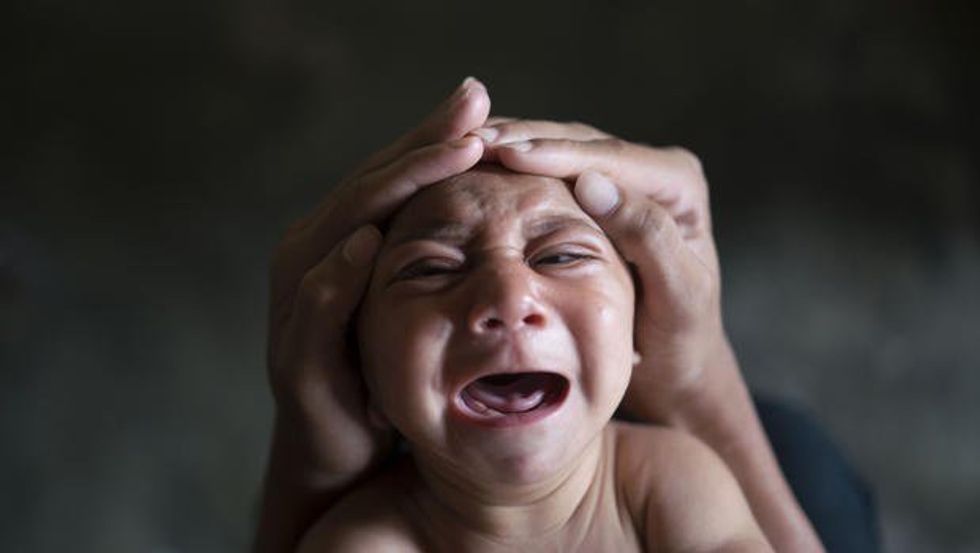
By now, I’m sure you’ve heard of the Zika virus, which is being transmitted through Aedes mosquitoes in many parts of Africa, the Americas, Asia and the Pacific. The most recent outbreak in Brazil has sparked conversation across the globe about how to battle this virus. For those of you who are unfamiliar with Zika, it can be sexually transmitted and causes flu-like symptoms for about two to seven days. I’m sure you’re thinking, “Hey, the flu -- that’s not that bad,” but it's far worse than just the flu. In women who are pregnant, or trying to get pregnant, being infected with Zika virus is terrifying. The virus is being transmitted to their babies and causing them to be born with microcephaly. Microcephaly is a condition in which a baby is born with an abnormally small brain, causing them to have social, physical and mental disabilities, often so debilitating that they don't survive childhood without intense care.
According to the World Health Organization, in the next 12 months, three to four million more babies will be born with microcephalous in Brazil and French Polynesia. My issue with this alarming statistic is that we are dealing with a disease that can be prevented, in most cases, with simple bug spray and more knowledge about the implications this virus has on pregnant women. It is crucial to increase awareness because, with proper supplies and protection, it is preventable.
With three to four million babies being born with such a debilitating disease, these countries will begin facing a grave economic issue, as well as a population that can’t survive to reproduce. I’m not sure where Darwin and his evolutionary theory fit in, here, but I’m far more concerned about than just population decline and economic issues. Many women in Brazil are being told to put off conceiving children while the United States and Brazil work on a vaccine, however, with issues such as rape, violence, and accidental pregnancies, many women are at risk. Brazil, being a country where abortion is illegal, has ignited conversation and movements for the right for women to have abortions, especially in the case of unwanted pregnancies or a pregnancy to a baby that will be born with microcephalous.
This epidemic, like most, absolutely has a class and color by disproportionately effecting the poor, lower classes in Latin American countries who don't have access to abortions, birth control, or even active protection against sexual violence.
Scientists and doctors believe that the spread of this virus initially began during the 2004 World Cup in Brazil, and its presence is expected to skyrocket following the Summer 2016 Olympics that will be held in Brazil. With the increase and tenacity of the virus, as well as the fact that it has spread to more than 30 countries, and deemed an international health emergency, it is crucial that we spread awareness, and support those in Latin American and African countries having to face this epidemic without the resources and protection that we are lucky enough to have.