

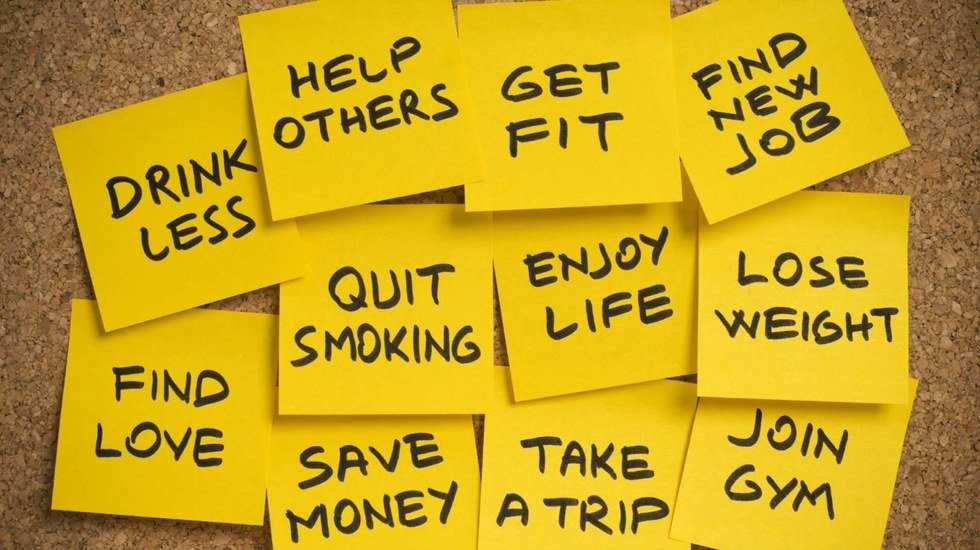
The New Year is here! For many people, January is a month of renewal and refreshment, a chance to “start over” and absolve yourself from the excesses of the previous year. It’s a promise to yourself to tread on a new path and move forward, providing a glimmering hope in your mind despite a backdrop of white snow, bitter cold, and removing ice from your car windshield.
People often make a list of things they want to improve on and accomplish in the new year. This list is called a “New Year’s Resolution.” Common resolutions include losing weight (the fitness industry receives a spike in gym applications during the first couple weeks of any given new year), to quit a bad habit like smoking or drinking alcohol, or to improve personality traits by being “kinder” or “listening to others more.”
These aspirations are well intentioned, and I encourage people to set goals and obtain them, but I’d recommend people not make a list of new year’s resolutions. They are unhelpful in obtaining your goals, and people often fail in keeping them for a variety of reasons.
Why should you not make new year’s resolutions?
The reason is that tying your goals to a specific date like New Year’s Day often put unnecessary expectations to keep them. Most people do not commit to their resolutions fully, and this leads to a sense of failure. Tying your goals to New Year’s Day means when you slip up, or outright fail, to keep a resolution (say, your resolution was to quit smoking from New Year’s Day 2017 onward, and you smoke a cigarette three weeks later), you feel as if you have failed for the entire year, and you are less likely to resume your resolutions. This happens because your goals were date-intensive, and the timeframe held more weight than the goal’s content.
Goals should have a definite completion date, and should be timely and obtainable; however, it’s important to remember that being in the present moment is more important than hinging your expectations on a particular date. New Year’s Day is a day, just like any other day. The transition from 2016 to 2017, or from any one point in time to the next, is a state of mind. You are fundamentally no different from New Year’s Eve to New Year’s Day, with the exception of a possible hangover.
Focus on the goal’s content, and not on the date on which to start the goal, and you’ll be more likely to finish the tasks you want to accomplish. Don’t focus on quitting smoking on New Year’s Day, just simply focus on quitting smoking. Don’t try to be a kinder person in 2017, simply start being kinder right now.
If you focus on the present moment, on any particular day, you will have a more enjoyable day and a more fulfilling 2017. You will not feel as negatively about slipping up on a goal because you will start over at the next available moment—now.