
Some of Ronald Reagan's detractors would use the word "Teflon" to describe him. Originating from the DuPont product of nonstick coating for cookware, when describing a specific individual, usually a politician or other public figure, the word means that any criticism, no matter how valid or damning, doesn't stick enough to tank that individual's career. When used to describe Ronald Reagan, it often refers to how his administration faced a string of scandals, most notoriously the Iran-Contra affair, yet none seemed to taint his reputation enough to end his career and result in his name living in infamy.
When I first began to familiarize myself with the term "Teflon" in that context, I thought it referred to public figures who seemed to maintain a universally positive public image no matter what questions about their character were thrown their way. And indeed, that is the way it plays out in some cases. It's why Bill Cosby was able to get away with sexually assaulting women for virtually his entire career, because he commanded such respect in the media and public eye, and was placed on a pedestal, so to speak. As a result, when many of his victims did try to speak out, their claims were dismissively brushed off without a moment's thought, effectively silencing them and shielding Cosby from any accountability for his actions.
But sometimes, a public figure can develop what I call a "Teflon aura" for opposite reasons. They might be protected from accountability for their words and actions not by a public perception of them as benign, but by a polarized public opinion. In the political sphere, it may feel like the opposite, as every time an ideologue says something stupid or shocking, or simply uses a bad choice of words, their political rivals are quick to pounce on them and fit them into their narrative, so it can feel like there's plenty of accountability to go around.
However, this kind of exchange has become so commonplace in the political sphere that it blurs the line between fact and fiction, and leaves the average voter unable to distinguish between truthful criticisms/allegations, or such that are motivated simply by partisan bias. So, while a politician might take heat for putting their foot in their mouth, public opinion is likely to remain the same, because the heat will likely come from those who already hate them, and those who like them will defend them.
Case in point: Nightly News anchor Brian Williams was fired and publicly disgraced after revelations that he fabricated stories of his experiences on location as a reporter, notably his claim that during the Iraq War, he rode in a military helicopter that was struck by an RPG and forced down. These revelations resulted in Williams's previously well-liked reputation being significantly tainted, maybe forever.
Around the same time, allegations surfaced that Fox News political commentator Bill O'Reilly lied about being with soldiers in combat during the Falklands War. This did gain some significant news coverage, but most of the backlash came from left-wing commentators and periodicals, ideological opposites of O'Reilly. Since O'Reilly is expected to simply give his opinion, and average citizens generally form their opinions of him based on whether they agree with him, public opinion of O'Reilly remained relatively the same, whereas Williams's trust from the public was bound to his commitment to be honest and impartial as a journalist, and he betrayed that trust, so public opinion of him plummeted drastically upon public knowledge of his on-air dishonesty.
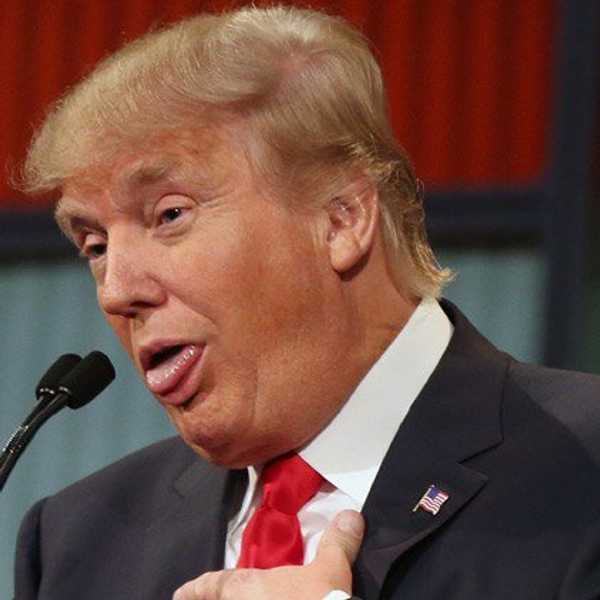
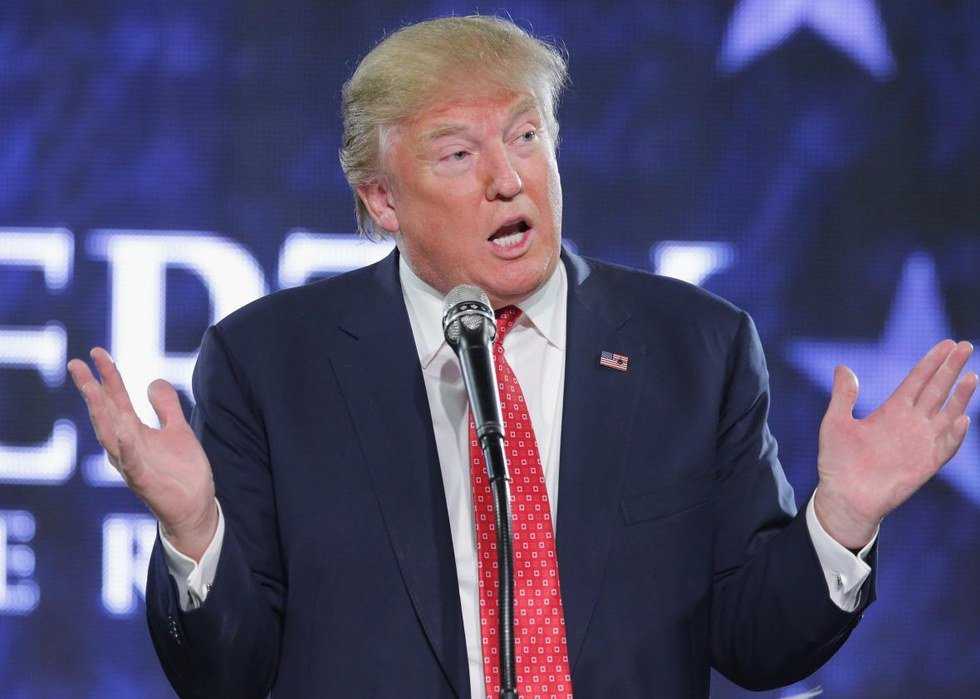
It didn't surprise me at all that Donald Trump's name came up during my brief research of the "Teflon" term, because he practically embodies the term. To say that Trump is a polarizing figure would be an understatement, but he has something else going for him: notoriety.
Trump sticks his foot in his mouth so often that we've become accustomed to it. Seemingly every other day, I'll see the news media swarm around another shocking thing Trump said, and think, "What else is new?" That was reaffirmed this past week, when Trump remarked in a speech that, if Hillary Clinton wins the Presidency, "there's always the Second Amendment," seeming to subtly imply that assassinating Clinton would be a valid option if she wins.
Trump's bombastic statements might generate some backlash, but they often don't have a significant impact because they reflect what is expected of Trump. Trump is known for being outspoken and bombastic, so when he acts that way, it doesn't affect his reputation because that's what he has a reputation for, shielding him from accountability for his words and actions and establishing the Teflon effect.
But I think that's part of the problem. We could ignore Trump's drivel if he was still the host of Celebrity Apprentice, but now he's the presidential nominee for a major political party, and his words matter. He cannot carelessly make a comment appearing to subtly favor assassinating his opponent, and then be angry when he takes heat for it. Even if he didn't mean it, his carelessness with his words does not bode well for him as a presidential candidate, as it displays an unacceptable nonchalance toward the job of President.
When he made that offhanded Second Amendment remark, my reaction wasn't one of complete nonchalance. It was also the surreal realization that this is the new norm of American politics. Trump's influence has taken the concepts of decency and respectful discourse and completely discarded them, and replaced them with a man who has proposed a travel ban on an entire religious group entering the United States, declined to condemn a former KKK wizard, empowered that same former KKK wizard to run for office, and incited violence against dissenters at his rallies, among many, many other things.
This sums up a man who is dangerously close to becoming our commander in chief. So we need to pay attention, and we need to hold him accountable.
This doesn't mean we should all start posting every shocking thing to come out of Trump's mouth every time the media reports on it. We don't need to. He's said and done more than enough to disqualify him from the Presidency. It means we should make a comprehensive list of all shocking statements he's made, all misconduct of which he's been accused, and publicize it with a disclaimer that reads, "Dear voters: this man is unfit to be President. When you go cast your vote in November, don't f*ck me on this!"