


Disney and Pixar movies have never disappointed me. From the breathtaking aquatic wilds in Finding Nemo to the convoluted streets of San Fransokyo in Big Hero 6, I’ve never been let down by the studio’s aesthetic, imaginative worlds.
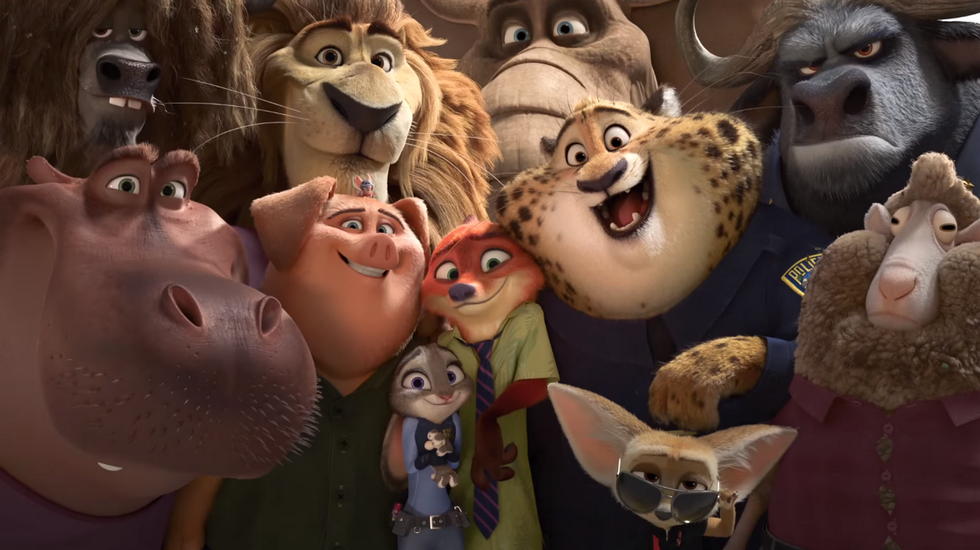
Now, enter the city of Zootopia, a booming metropolis inhabited by all species of animals — where predator and prey have long overcome their primitive discord and live in harmony together. At least, that’s what officer Judy Hopps (Ginnifer Goodwin) initially believes when she manages to become the first rabbit police officer.
Zootopia is unlike any other Disney film. While it still presents typically upbeat messages (like following one’s dreams and staying positive), it is tinged by darker thematic principles in a not-so-subtle approach to presentation. It unapologetically illustrates the issues of race, gender inequity and masked political agenda in a vibrant, kid-friendly delivery.
In the film, the idea of different races is swapped for different species, mainly into two categories: predators and prey. While investigating a case, Judy discovers that a few predators have mysteriously gone “savage,” meaning they have adopted a barbaric instinct to maim prey on sight. This launches the city into panic and predators are soon met with prejudice and unwelcome sentiment out of mass paranoia.
In this powerful allegory, Zootopia comments on the dehumanization of minorities (represented by predators) through media portrayal and how “fear always works” in manipulating public opinion toward a certain group. But the movie delves deeper into this issue by showing small snippets of daily race issues.
An example is when Judy, who originates from the rabbit boondocks where she learned from her parents to be wary of predators, profiles Nick Wilde (Jason Bateman) on sight simply because he’s a fox. This scene parallels police profiling of people of color. As the scene progresses, Nick faces an uncompromising elephant in an ice cream store who refuses to serve “his kind,” echoing tones from the segregation period.
The film is also sprinkled with an array of subtler parodies, such as the “Mammal Inclusion Initiative,” which corresponds with affirmative action and the fact that Zootopia is divided into separate districts. Each district has its own climate to better suit the type of animals that reside there, like how ethnic enclaves live in various urban areas.
Still, the film isn’t perfect in explaining the less obvious causes of internal prejudice and has received criticism for having a muddled definition of racism that creates a few inconsistencies in the storyline.
However, the film is still a major step forward in addressing complex issues in a way that a younger audience can grasp, which is an integral part of educating children about how to understand race relations instead of being sheltered from them. Regardless of age, at some level, while immersed in Zootopia’s the colorful universe, viewers are forced to confront how unnervingly real of a picture this fictional world paints of modern society.















