For almost a century, Disney has been regarded as the epitome of children’s entertainment and the standard for animated films. Their films have educated generations of children across the world about the value of their dreams and the strength of good over evil. However, starting with the earliest Disney animated films, conventional gender roles and sexist themes have been embedded into the framework of Disney plot lines and characters. Disney’s prominence in the film industry grew after their 1937 film, "Snow White and the Seven Dwarfs" was met with both critical acclaim and immense popularity. The company then became the leading interpreter of fairytales, which eventually made Disney films the target for the social psychologists and feminists who critiqued the lack of gender equality in these films.
In response to this critique, Disney triggered the “Disney Renaissance” and it began to release films with a less specific gender demographic and princess films with strong female protagonists, such as "Beauty and the Beast" (1991), "Mulan" (1998) and "The Princess and the Frog" (2009). One of Disney’s latest princess films and the film that the company declared as the end of their “Disney Princess” franchise, "Tangled" (2010), was created to be a direct attack against normative gender roles that are commonly associated with princess films. However, despite Disney’s efforts to remove the gender stereotypes and bias portrayal of women from their films, which are particularly evident in their earliest film, "Snow White and the Seven Dwarfs," their more recent film featuring a solo female protagonist, "Tangled," uses superficial feminist notions tomask the discriminating and misogynist ideas that remain in the film and their princess films in general.
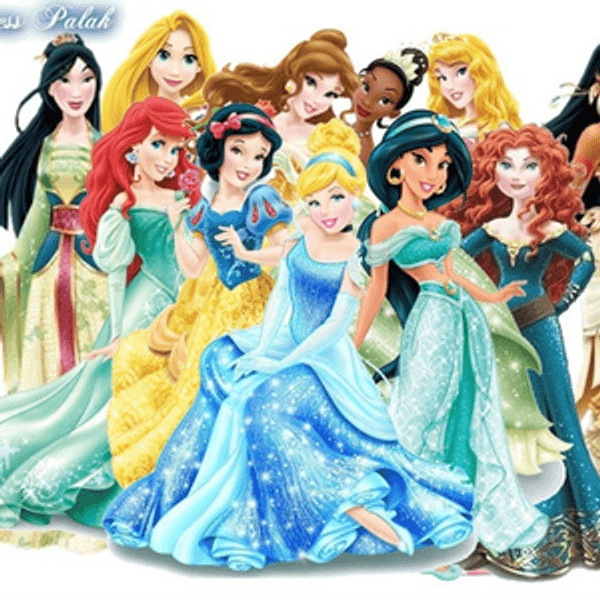
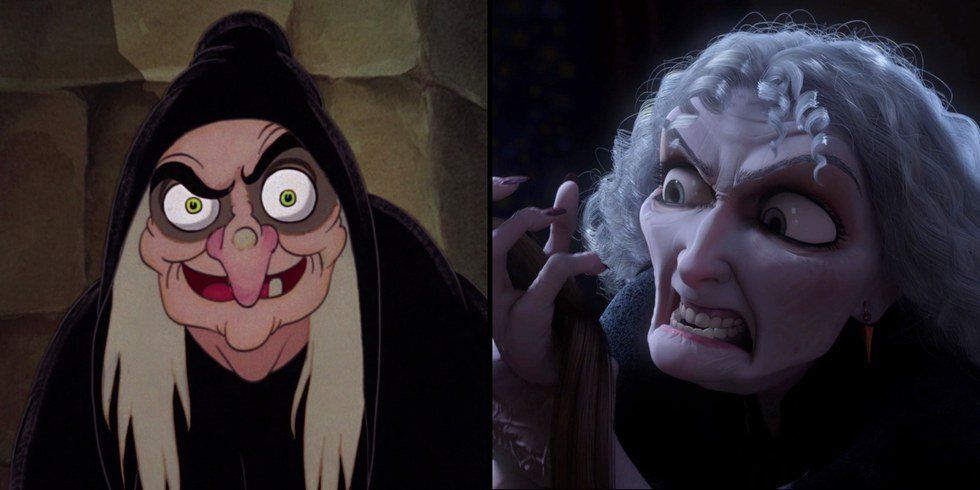
In order to understand how stereotypical gender roles have prevailed in Disney films throughout time, we must look back to the classic-era animated films that feature Disney’s first set of princesses, who were delicate and graceful. These films, which include "Snow White and the Seven Dwarfs," "Cinderella"(1950) and "Sleeping Beauty" (1959), were meant to reflect on what American society perceived as perfect femininity and these princesses served as role models for young girls. They embodied the ideal woman, who has good manners, a knack for housework, and a relentless desire to please. To assert what was not acceptable for women, the antagonists of these early films were old, ugly, and evil stepmothers and queens seeking to ruin the lives of these young and kindhearted heroines.
Disney then constructs a binary opposition which forces women to choose between identifying with either evil and manipulative queens or sweet and passive princesses. These villainesses are commonly driven by vanity and jealousy, reinforcing the idea that youth and beauty is ideal. Finally, narrative resolutions of these classic-era Disney animated films rely on a strong male hero to rescue the helpless princess and escort her back to his castle to, either implicitly or explicitly, marry him. These fairytales are meant to construct a utopian vision of society for members of the bottom of the social order to aspire to. Snow White and the other early princesses were not only animated figures, but models which real women strove to emulate. The entire structure of these films reinforces conventional gender roles of both males and females, while also emphasizing heteronormativity as an essential part of a perfect vision of society. "Snow White and the Seven Dwarfs" perfectly fits into this narrative model. Snow White, the story’s protagonist, is a passive and victimized princess who is completely dependent on those around her.
While there are aspects of "Tangled" that dismiss many of these conventional gender role structures, several strong connections can be drawn between this film and the blatantly sexist "Snow White and the Seven Dwarfs." A large theme in both of these films is the idea that women are considered to be fragile and vulnerable individuals who need to be protected by either men or appropriate authority figures. This is an obvious theme in "Tangled," which focuses on the fairytale of Rapunzel, a princess with magical age-defying hair who is taken away from her home and held captive in a tower by a wicked enchantress, Mother Gothel. To convince Rapunzel never to leave the tower, Mother Gothel tricks her into believing that she is her actual mother and that Rapunzel is too weak to survive in the outside world. This is best captured in the song “Mother Knows Best,” which features Mother Gothel listing the terrifying things waiting for Rapunzel outside of the tower, including “ruffians, thugs, poison ivy, quicksand, cannibals and snakes.”
Most interestingly, Gothel also lists “men with pointy teeth” as something to fear in the real world. Without meeting any male characters yet in the film, we are introduced to men as being fearsome and dangerous. The role of men in this film is very similar to the role of men in "Snow White and the Seven Dwarfs," as both films depict men as being either brutish or heroic figures. In "Snow White," the dwarves do not cook, clean, wash, or maintain any aspect of their house or their personal hygiene. They are not expected to partake in any of these activities and they are only expected to work every day in the mine to make profit. These traits of hyper-masculinity are constructed to both challenge Snow White’s extremely feminized character and to avoid any confusion about the sexualities of the seven cohabitants. Meanwhile, constantly surrounded by squirrels, birds, and deer, Snow White best relates to animals because she finds herself to be a fellow innocent and defenseless creature.
After the intense criticism that Disney received for embedding unrealistic gender expectations in their films such as "Snow White and the Seven Dwarfs," they have focused on constructing strong female protagonists and defying aspects of the conventional cinematic representation of femininity. However, all of their princess films, including one of their latest projects, "Tangled," still have traces of the original misogyny and sexism that originated within "Snow White." Regardless of the strength of the female protagonists, the male characters in the story take the most pivotal roles in the narrative and continue to be the ones to inevitably save the day. The performance of gender within these films speaks to both the role gender plays in modern society and how gender roles have changed overtime.