

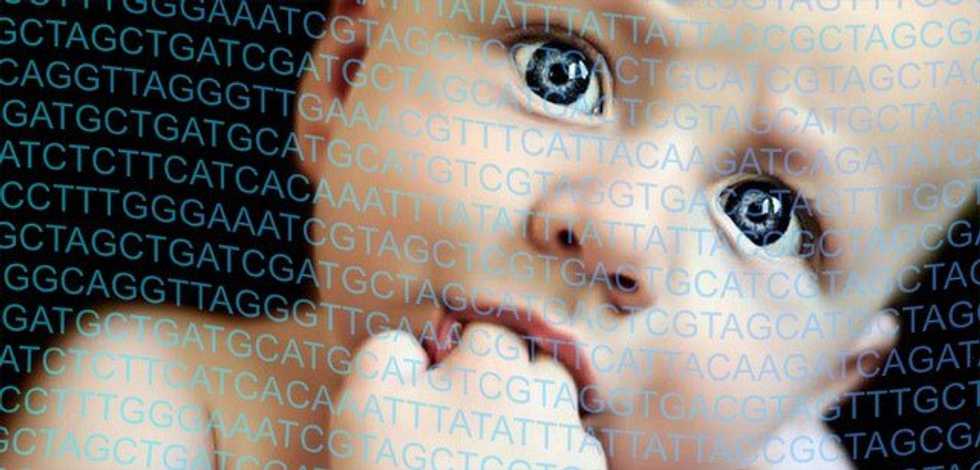
Designer babies are often presented as a concern for future generations, but ready or not, they're here. The term "designer baby" refers to a baby who is genetically engineered in a laboratory dish to have particular traits. With advancements in in vitro fertilization (IVF) happening faster than ever, selectable traits have progressed from lowered risk of disease to gender selection. Advancements in IVF show an increasingly bright future for couples with infertility problems, which is terrific. Scientists are becoming better and better at preimplantation genetic diagnosis (PGD), which allows embryos to be screened for various conditions -- cystic fibrosis, sickle cell anemia, etc. -- prior to implantation into the mother. This lets specialists identify "abnormal" embryos and implant only the most desirable ones. However, in 1996, a couple sought doctors' help at the Genetics & IVF Institute in Virginia in an effort to conceive a girl, as their first two children were boys. This case was highly publicized because PGD was not used to avoid a medical problem, but rather to achieve "family balancing". Certain fertility institutes advertise 100% guaranteed gender selection, so choosing other traits -- hair color, height, athletic abilities, and even intelligence -- could be right around the corner. But selection for traits unrelated to a child's health has recently raised many ethical debates, and this begs the question: how far should we allow genetic tailoring to go? Should there be limitations?
Some could say that parents should have the right to decide the fate of their children, as they already do through their environment, education, etc. For example, parents who value athleticism may sign their child up for various sports camps, which would certainly affect the way the child matures. So, if technology could help us select the genes that predispose a child to develop a certain way, then why not use it?
Aside from being controversial, a lot of unexpected dangers can arise from messing with DNA. Scientists still have a lot to uncover, so it's hard to make arguments about the benefits or harms of unpredictable changes. As discussed in an article published in Nature, "the precise effects of genetic modification to an embryo may be impossible to know until after birth," not to mention what could happen down the line in future generations. Although past genome-editing technologies have focused on modifying non-reproductive cells, the desire to modify germ cells (sperm and egg cells) is arising and is no longer a rumor. A research team in China recently used a technology called CRISPR to snip out and replace pieces of bad genes to try to eliminate a fatal blood disorder. More and more labs around the world are working to perfect this simple yet powerful technique, which suggests a promising future in eliminating devastating diseases. However, the implications of messing with reproductive cells are quite large, since the changes could be inherited by future offspring, as well. If used to modify reproductive cells, technology would play a much more active role in shaping human evolution, so the bar is set higher when it comes to safety and accuracy. Even though germline engineering has been banned in many countries, it is legal in the U.S.
But if these technologies were to eventually become accessible, their affordability would immediately come into question. How many parents could actually afford to produce the perfect child? This has the chilling potential to widen the gap between the haves and the have nots, leading economic devisions to blend into genetic divisions. These ideas are touched upon in the sci-fi film Gattaca, which depicts a society where genetically-modified individuals are deemed upper class.
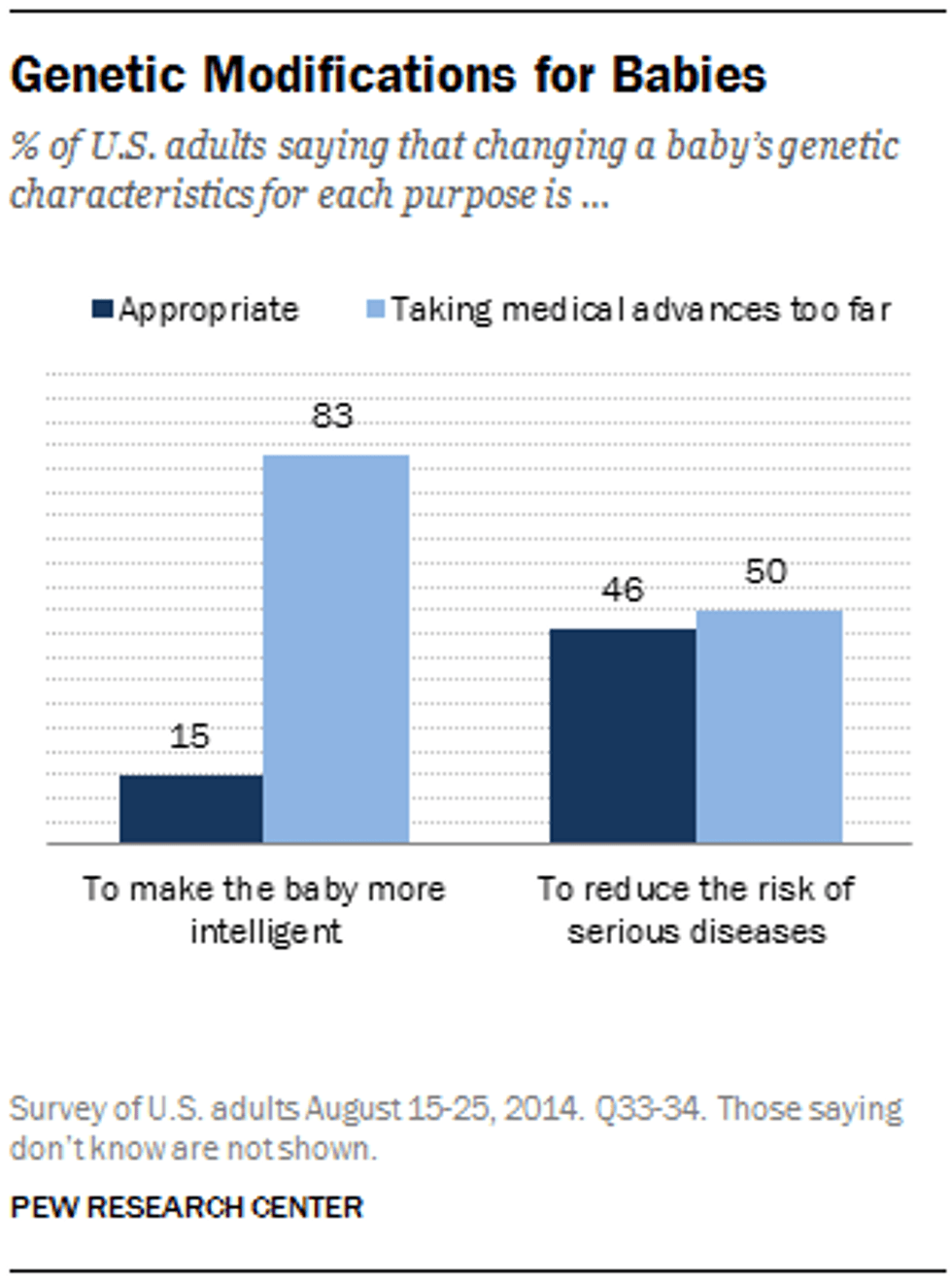
A recent survey gauged the public's opinion about genetic modifications, and it's interesting to note that opinions differ quite a lot depending on what the modifications are aimed to do. It's hard to predict when it will really be time to start worrying about the dangers of designer babies. For now, the concept of genetically engineering a child's IQ may seem far-fetched, but at the rate at which technology is advancing, it's important to start discussing now.