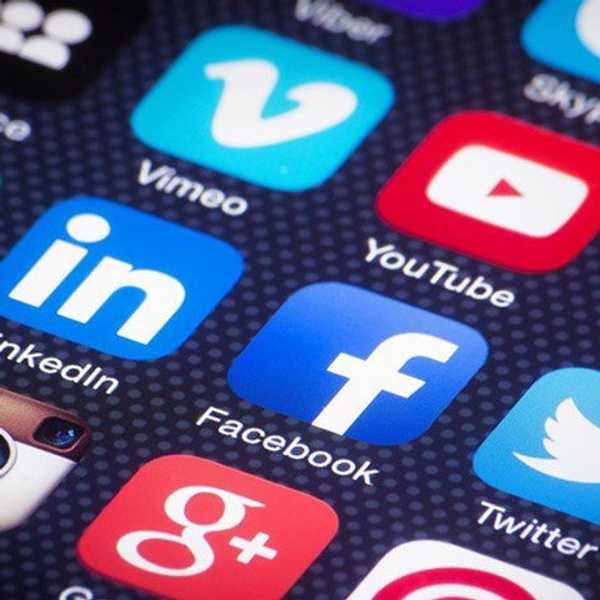
In the last ten years, social media has taken over the internet, starting with AIM and Myspace, progressing to Facebook and Twitter, and now mobile-specific apps such as Snapchat and Instagram.
All in all, social media proves to be more of a distraction and disturbance from life than an enhancement.
- The estimated percentage of the U.S. that uses Instagram is 27.6%
- 75 million people use Instagram daily
- Americans who use social media between the ages of 18-34 report spending an average of 3.8 hours daily on social media
- 59% of children may be social networking by the age of 10
Now, let's do a little experiment: pick up your phone---If it's a smart phone, look at your apps. Consider which apps are really necessary to your day to day life. I would say for me, those would include phone, Google maps and mail. Additionally, I have several other downloaded apps including Facebook, Spotify, and Snapchat. How many do you have downloaded? More than 10?
Technology seems like it's taking over, coloring almost every aspect of our lives. Texting and driving has surpassed the threat of drunken driving in the United States. One of the major concerns of getting a job is not only having the experience, but what employers may see on your Facebook or Twitter. What if, however, people were to take a break from social media to allow themselves to live a life fully, not colored by the amount of likes, shares, or comments?
A heartbreaking story about a student athlete named Madison Holleran helps illustrate how social media can be not only a distraction from living life to the fullest, but destructive to someone's personal life and psyche. ESPN reports that Holleran, the college runner, was beautiful, successful, and seemingly led the perfect life. "She was a deep thinker, someone who was aware of the image she presented to the world, and someone who often struggled with what that image conveyed about her."

Holleran had been struggling with adapting to college life, and together with her friend Ashley, would check out photos posted by upperclassmen on Instagram thinking that was "what college is supposed to be like." Unfortunately, Holleran was overcome with depression and ended her life.
Who, at the end of their lives, will be relieved that they had 400 likes on an Instagram photo? Or who will be happy with themselves for having spent that 3.8 hours a day online? All of the time spent on social media and striving to appear to be living the perfect life could be spent giving back to the world, achieving your dreams, or making lifelong memories.
Believe me, if you go to the beach and don't Instagram it, it still happened. If you go to a fraternity party and don't Snapchat it, you'll survive (and maybe not get in as much trouble with your job or organization).
Don't put a filter on your life, because that alone won't make it worth living.