
"How can you possibly live so many years of your life without tasting a succulent steak or juicy pork ribs?"
"You, my friend, honestly have no idea on what you're missing out. I feel sorry for you."
"We are at the top of the animal kingdom! As humans, it is our birthright to slaughter and consume other creatures. Otherwise, how would the human race have survived this long on Earth?"
Sound familiar? If you're vegetarian, you've heard these kinds of statements countless times. But it almost feels as if every time you give your reasons for being vegetarian, people forget them and later harass you by passing a slab of venison right under your nose. So in this article, I hope to settle the score and definitively inform every reader – vegetarian or not – on why we choose to be vegetarian.
Vegetarianism helps fosters a deep feeling of biophilia and connectivity.
Edward O. Wilson tells us that humans “have a natural urge to affiliate with other forms of life” in his powerful book "Biophilia." We share this Earth with other living creatures, forms of life with whom we are absolutely related. This ever-present bond with Nature and all who inhabit Her must not be broken but exist in an uninterrupted continuity. Yet, every time an animal is slaughtered and delivered to our plates for consumption, this everlasting bond is wrenched apart and tossed aside in forgetfulness.
Now, you may well ask, “But the animal’s already dead! Why waste this perfectly good piece of meat?” Good question. The answer lies in thinking about the source. For example, in the 1700s John Woolman, an American Quaker, realized that it was a most lucrative enterprise to sell West Indian sugar and rum to the customers who came to his shop. But he ultimately refrained from doing so. Why? Because these goods were the products of slave labor. Woolman thought about the source of his goods and discerned that such a business was intrinsically undesirable for him to conduct.
Analogously, for us – the consumers – to realize that the business of preparing animals for our consumption is intrinsically undesirable would afford us a similar elevated state of mind about the source of all our meat. This realization would eventually lead us to a profound awareness of and sympathy for our fellow creatures. Personally speaking, I am touched with a pang of sadness each time I walk into my university’s dining halls – there’s bound to be at least a pound of beef being served in sizable cuts, a pound of beef once belonging to the body of a gentle cow.
Vegetarianism may be a healthier alternative to eating meat.
Dietitians have concluded that, in general, a vegetarian diet is healthier than a diet that includes meat. Of course, there are many qualifications and assumptions to be made here, but a vegetarian diet is lower in saturated fats and cholesterol and higher in fiber, folate, and antioxidants. Such a diet naturally leads to substantially reduced risks for obesity, heart disease, high blood pressure, diabetes, and various cancers. By combining regular exercise with this kind of diet and avoiding risk behaviors (e.g. smoking), vegetarians have shown to live longer, on average, than non-vegetarians in Western countries.
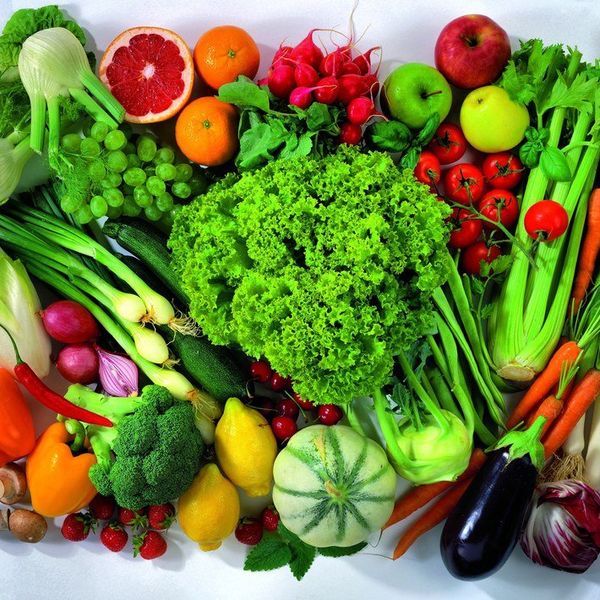
As a group, the biggest challenge we vegetarians face is that of not getting all our necessary nutrients. But this problem is in logic only – in reality, it poses no difficulty for us. We are at a loss for protein, vitamin D, iron, and zinc. Through either nutritional supplements or actual food sources, we can usually ensure that we get our daily intake of these important nutrients. Protein from rice, beans, milk, tofu, nuts, and seeds; vitamin D from the Sun, oils, milk, and breakfast cereals; iron from dark green leafy vegetables, fortified breakfast cereals (e.g. Mini-Wheats), and dried fruits; and zinc from whole grains, nuts, and cheese – the opportunities for nutrient management are endless.
Any lingering thoughts and questions about vegetarianism.
Vegetarianism is both a creed and a lifestyle choice. Some vegetarians may not know why they’re vegetarians – perhaps simply following age-old religious injunctions – but those of us who do know cannot compromise on our ideals. We want to live a life that not only keeps our bodies healthy and robust but also enriches our entire being and gives us a sense of lasting joy. To live in peaceful coexistence with our fellow creatures is to experience the most profound happiness imaginable. And in this world, at once turbulent and antagonistic, maybe this coexistence is worth a little sacrificing for.