


The terror attacks last Tuesday in Brussels that claimed the lives of 31 people and injured some 331 served as a painful reminder of the evil that threatens world today, even in the most comfortable and advanced of nations. These attacks have become more frequent in Europe than in the United States since the rise of ISIS, but this is primarily the result of convenience. Europe is closer to Iraq and Syria and has a much larger Islamic population than the United States. ISIS is a complex organization and there are no easy solutions.
Banning Muslims from entering the United States as Republican frontrunner Donald Trump has suggested though is not feasible and would do more to endanger Americans here at home than protect us. As of right now, ISIS is primarily a Middle Eastern and European problem. Our government should work with the countries most threatened by ISIS to ensure it does not become our problem and that what happened in Brussels does not occur in Nashville.
On the military side
Destroying ISIS is a lot like rooting Al Qaeda out of Afghanistan. It’s an accomplishable task, but like any ideology, it only appears in some other country, sometimes in a more deadly fashion than the former. ISIS is propelled by Sunni discontent with the oppressive, Shia-dominated government that we helped gain power in Iraq and the Alawite-dominated regime of Bashar al Assad in Syria. Many of the advisers and generals in ISIS are former members of the Hussein regime that lost their jobs after the U.S. invasion. As with Al Qaeda, trying to defeat ISIS from the U.S. is like the federal government trying to root out the mafia without working with local police.
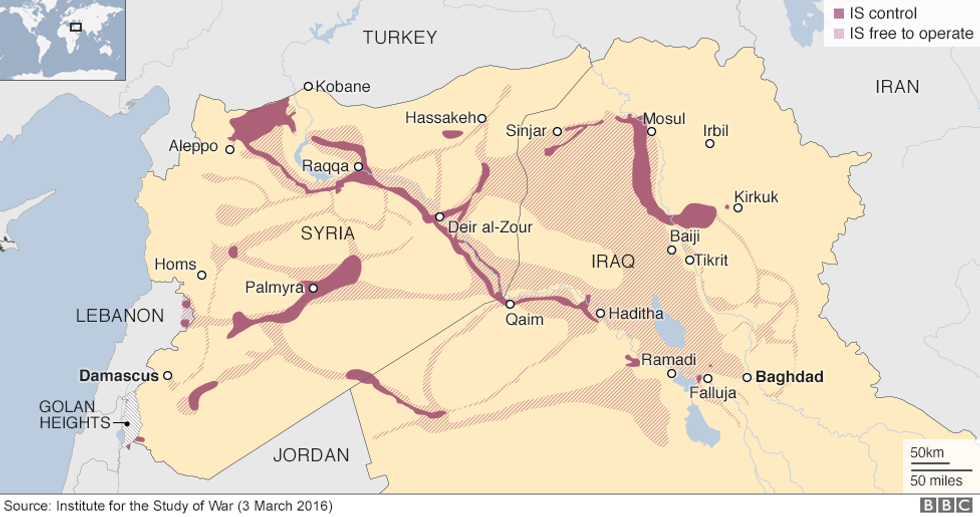
Successful U.S. airstrikes and coordination with Kurdish ground forces have managed to take out a large portion of ISIS’ cabinet and have reduced ISIS-controlled territory in Iraq by 40% and in Syria by 20%. But, working only with our version of ‘good guys’ will never defeat terrorist organizations in the Middle East that threat Western security. ISIS is the real threat to the U.S. and Western Europe, not Iran, not Assad, and certainly not Vladimir Putin. If your next door neighbor is an abusive parent and his house is burning, you help him put out the fire before it spreads to your house before dealing with the issue of his child abuse. Putting diplomatic pressure on Assad and the Iraqi Shia government to work with and respect the rights of disenfranchised Sunnis can come after the Islamic State has been defeated.
On the domestic side
It’s human nature to want quick, simple solutions to complex problems. It’s no wonder that polls over the past six months have shown more than a third of Americans in favor of at least a temporary moratorium on all Muslim immigration. This is an understandable knee-jerk reaction, no different than a 12th century Muslim not understanding the difference between sects of Christianity and wanting to kill all Eastern Orthodox Christians because Catholic crusaders murdered his wife and children. The problem with such a plan is its feasibility, not to mention how counterproductive it would be to our Muslim allies that we are relying on to help us defeat ISIS. Muslim jihadists have no problem murdering innocent people. How hard would it be for them to lie and say they have converted to Christianity or no longer practice Islam in order to get a visa? Then there’s the diplomatic blowback a policy like this would bring. We have to work with Muslim-led governments like Turkey, Syria, Iran, Iraq, Saudi Arabia, United Arab Emirates, Jordan, Lebanon, and Egypt if we hope to not only eradicate ISIS, but make sure no other Sunni terrorist state takes its place once it is gone.
While banning Muslims is not the answer to security from this threat at home, more ethnic profiling would greatly help. In Israel, where terror attacks have just been a part of life throughout its entire existence, more than 75% of terrorists are Muslim (88%), Arab (79%), male (87%), and members of a Palestinian terror organization (91%). How do they combat the threat? They profile young, Arab, Muslim men.
The vast majority of Muslims hate ISIS and everything it stands for even more than most American Christians. But, letting an Indonesian Muslim in the country is not the same as letting in a Syrian or Iraqi or a European Arab who recently travelled to one of those two countries where ISIS is based. The cost of institutional discrimination is worth it if it saves lives. It’s not peaceful Syrians’ fault that their country is full of radicalized jihadists who would love to blow up an American airport. But, then again, that’s not Americans’ fault either and we shouldn’t have to spend a fortune just to avoid the appearance of racial profiling in order to keep our people safe.

Defeating ISIS is not as simple as bombing a rogue state into submission. While the U.S. is affected by ISIS’ existence, this is not our war and should not become our war. Nothing forges alliances like a common enemy and if our government and particularly the Republicans in Congress would stop acting like Iran and Assad are the greatest threats to world security since Hitler, the different religious and ethnic factions in the region would probably come together and solve the problem of ISIS before 2017. On the domestic side of things though, a general ban on Muslims would be the most counterproductive policy we could implement in destroying ISIS. It would not stop a Muslim terrorist from entering this country any more than a ban on guns would stop gun crime and it would damage relations with our allies in the process. Instead, a more common sense approach to ethnic profiling should be adopted in immigration and airport security.