

Much has been said about the threat of terrorism. Be it radical Islamism or any other sort of extremism, the fear of being caught in such an act of politically motivated violence can be paralyzing. Yet this is precisely the goal terrorism means to achieve. It is important to realize that within the context of American society and security, such fears are entirely unsubstantiated. Approximately one hundred Americans will have died in motor vehicle accidents by the time you go to bed tonight and at least one will die from skin cancer within an hour of you reading this. Exactly zero, however, will experience an act of terror today.
Psychological studies have shown that we tend to have exaggerated fears of occasions or events in which we lack control, hence the unease of being in an airplane that’s operated by a pilot who is a stranger as opposed to confidence in our own ability to drive to work. This fear and miscalculation in turn--despite the fact that the actual risk of being caught in the middle of a terrorist attack anywhere in the world is approximately 0.001%--drive our policy decisions and tend to draw our attention away from areas of higher importance, albeit lower sensitivity.
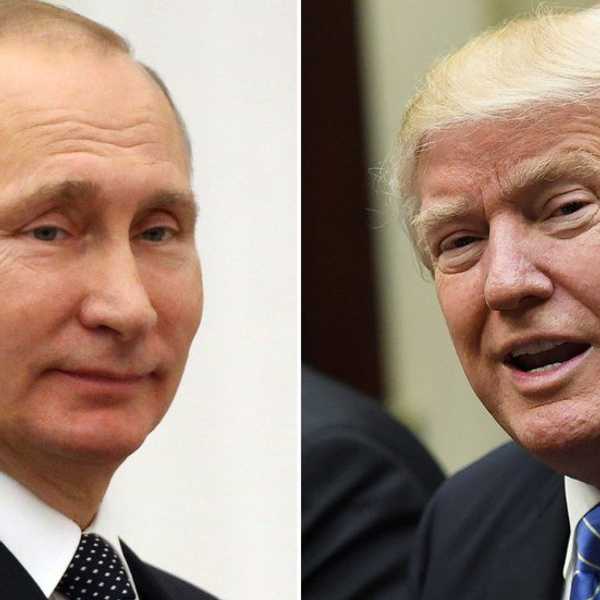
With the dissolution of the Soviet Union in December of 1991 came the sudden collapse of Russia’s global power and influence. The Russian Federation, as it is now known, found itself in a state of prostration and unprecedented weakness as well as full of bewilderment at how the behemoth of the USSR could be erased from the map in the course of humdrum political decision-making. Yet such was the fait accompli. The subsequent economic and political crises as well as the rise of unadulterated kleptocracy within the Russian state left people nostalgic for a better time of former Soviet years. Such sentiment of course yielded a leader, Vladimir Putin, who, riding a wave of unprecedented global energy demand and high priced natural resources, was able to raise the living standards of millions of Russians.
Over the course of Russia’s rise, however, the economy was left structurally weak, relatively undiversified, and vulnerable to global swings in demand for energy resources thus precipitating a crisis the moment oil and gas prices dropped--as they have in recent years. Such factors, compounded by Russian leadership’s need to maintain a certain living standard for its people, the country’s declining demographics, and purely expansionist sentiment of Vladimir Putin who now thought it his duty to restore Russia’s former imperial and Soviet glory, gave birth to a highly aggressive foreign policy built on national sentiment of extreme patriotism. This foreign policy manifested itself in a number of ways.
The newly fashioned Russian Federation has waged two bloody wars in Chechnya in an attempt to quell rebellion in a restive region calling for its independence. Furthermore, in the years since USSR’s fall, Russia has created a number of frozen conflicts either by way of direct invasion or sponsorship of pro-Russian nationalist and separatist groups. The conflict in Eastern Ukraine is an example of just the kind of foreign adventurism Russia has engaged in over the years. Since the beginning, in 2014, of hostilities between the Ukrainian government and Russian-sponsored separatist rebels in the east, over 9,000 people have died and at least a million have been displaced. In his most recent bid to maintain geopolitical relevance, Russian president Vladimir Putin, has embarked on a bombing campaign in order to prop up the embattled Syrian dictator, and Russia’s ally, Bashar al-Assad.
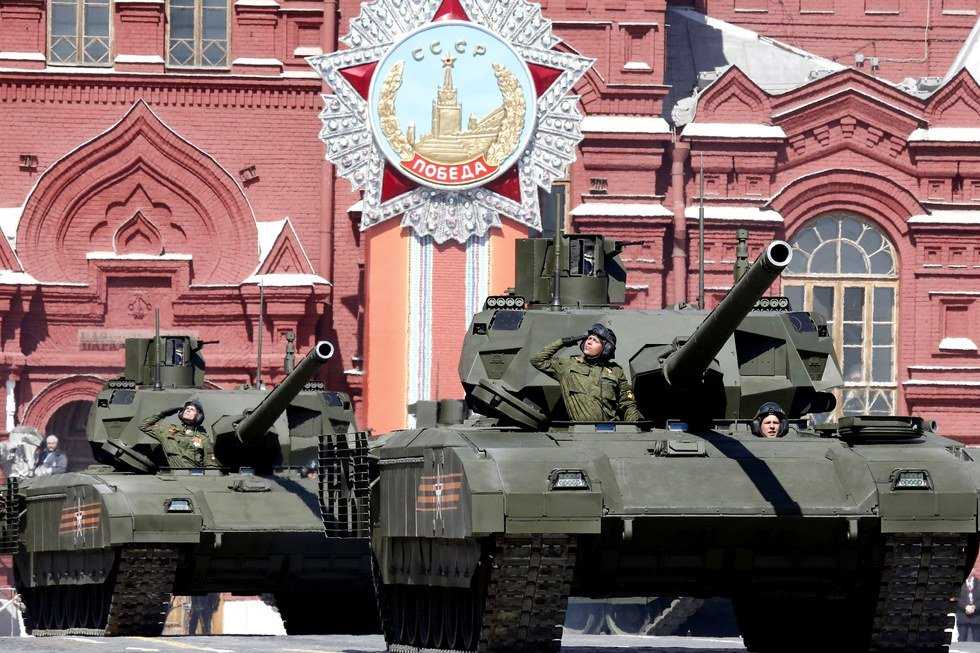
The historical record indicates that states and rulers in decline tend to lash out in irrational and unpredictable ways. Russia is undeniably a declining power steeped in heavy-handed authoritarianism, kleptocracy, and economic malaise, and it is precisely this quality that makes it so dangerous to the United States and its allies. As its recent forays abroad suggest, Russia still holds much military power and has been modernizing its forces over the past years. It now has significant anti-access/area denial (a2/ad) capabilities and is able to mobilize quickly and decisively within its Eurasian sphere of influence. Russia is also in possession of some of the world’s largest stockpiles of leftover Soviet nuclear arms which Putin has repeatedly threatened to use against Russia’s adversaries.
Russia’s military capabilities, however, are just one of the many ways in which it has been able to undermine the United States and the Western European alliance in recent years. By repeatedly engineering crises and fomenting instability in its near abroad, Putin has been chipping away at European Union’s and NATO’s unity as the member countries struggle to come up with an appropriate response while not sacrificing too much in economic terms--Russia after all is a significant trade partner for Europe and the European countries depend heavily on its natural gas supply. By injecting itself in the Middle Eastern conflict, Putin has been able to directly influence the events there and the consequent flight of people outwards--another point of contention among Europeans who so far have no viable plan for dealing with mass migration.
All this activity on Russia’s part points to the need for the United States to reaffirm its commitment to Europe as a friend and ally. The United States needs to pressure its European allies to increase their military spending which has in recent years of relative peace fallen below the standards set by the NATO treaty. Additional support must also be provided to eastern European countries who are most at risk of Russian aggression yet who also have the least capable military forces. Further modernization of European forces would create a sufficient deterrent from Russian aggression and facilitate a continuing peace in the Western world. Until any meaningful change in Russia’s regime allows for a relaxation of tensions, the name of the game, as it was during the Cold War, must be containment.

















