


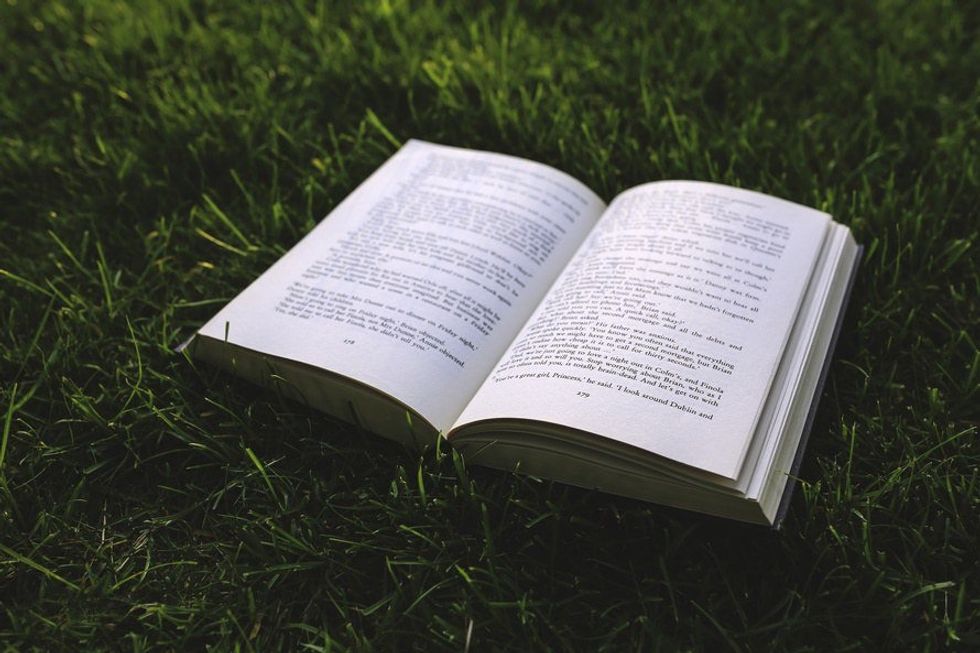
Two summers ago, I went to a library sale and got a great deal on Khaled Hosseini's acclaimed novel, "The Kite Runner." It's a book I had long wanted to read, and it was with great excitement that I began my reading. But soon I was back to school and, long story short, I have started and restarted the novel several times but never even made it halfway through.
Why the delay? I blame it on college.
Specifically, I suffer from an all-too-common side effect of an English literature degree: a decreased interest in reading outside of school. When I get home from school, I usually have pages of reading to work on, both literature and scholarly articles. When I'm not reading, I'm writing about what I've read. And on the rare On other occasions, I'm not working on an English-related subject matter, I'm reading plays for my other degree, theatre. First of all, I have very little free time not devoted to school or work. Second, when I do, the last thing I want is to do more reading. At that point, I just want to go for a walk, take a nap, bake some cookies. Anything but stare at more printed words.
I still love reading, but I feel we have drifted apart like friends who no longer have time for each other. I long for the days when I could come home from school and still want to bust through a few chapters before bed. But what concerns me the most is, if three years spent earning an English degree killed my reading interest this much, what will happen if my career path taxes me with just as much reading? I went into English literature because it is something I find interesting and exciting. It's frightening to think I could be losing the passion which got me here in the first place.
Having been the victim of this unfortunate pitfall, I cannot provide a definite way to shake off the beast. However, looking back on my experience as an English major does provide me with some thoughts that I hope could hold some grain of usefulness moving forward. One trend I noticed was I became more interested in other forms and genres such as short humorous comics and online articles. While I lacked the stamina to sit down and read a large novel on my free time, shorter forms of writing helped me channel my interests in a more manageable way. I would definitely recommend anyone suffering from reading fatigue consider branching out and reading some works that differ from your required reading, even if that means reading material you may have dismissed as "stupid" or "not worth your time" before.
I also realized I was drawing too hard a line between required class reading and pleasure reading for me. In my brain, they were also distinct categories, but in reality, I sometimes read some of my favorite authors for classes. I naturally gravitated towards literature classes focusing on genres and authors I enjoyed and also discovered some new writers I really liked. Not all required reading will be your cup of tea, but remember you can read something for a class and for yourself at the same time. They're not mutually exclusive.
And finally, as silly as it may sound, it helps to keep telling yourself you enjoy what you do. Despite the title of this article, I do still love reading, but I found myself forgetting that part of myself. Yet every time I sit in a literature class and feel that amazing spark from a lively discussion on literature, I remember how alive this makes me feel. Perhaps my biggest mistake has been letting myself believe my passion was actually waning when all it needed was a regular pick-me-up. So if you find the idea of curling up with a good book not so exciting anymore, it can't hurt to remind yourself you love reading, even if you have to take breaks from it.
In June, I will graduate with my English degree, and I am so excited to have free reign to read whatever I want. As grateful as I am for my education, my relationship with reading needs a boost. I'm looking at you, "Kite Runner."















