
Months before the beginning of my freshman year of high school, I moved from Maryland to Pennsylvania. I was faced with the task of not only making new friends, but also trying to manage moving my entire life two hundred miles from my community of 13 years. I imagined that walking into a new high school would be like trying brussels sprouts for the first time; I knew I had to do it sometime, but I wanted to push it off as long as possible. Don't forget that at the tender age of 13, I didn't understand that the process of making new friends is never, ever as bad as you think it is; however, that didn't stop my imagination from conjuring horrifying "first day nightmares."
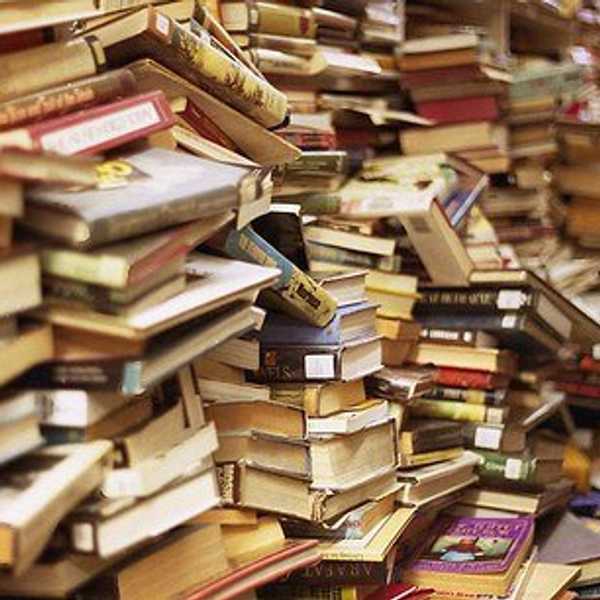
The social anxiety of how I imagined high school pushed me to introversion, even though I am naturally an extrovert. So, I had to manage my fear in some way, and I chose reading as my remedy. I began to spend most of my free time in our gorgeous and well-stocked library, letting myself marinate in the adventures of a post-apocalyptic heroine or in the struggles of an underdog fighting a system of oppression. I imagined myself as any one of the strong leads I read about, who faced innumerable challenges in life but always seemed to land on their feet. It seemed as though the challenges these fictional characters faced were never a viable match for their determination and spirit. I emulated these characters and felt that their stories could become my own. In my eyes, the hundreds of semi-resolutions and successes I read about were more compelling and satisfying than any of my own. I didn't just emulate these characters and their lives; I wanted to be these characters, to leave my life behind and live someones else's. Reading was an escape from the frustrations of rigorous academic work, or perhaps more importantly, the social anxieties of making and maintaining friendships. Literature kept me afloat through times of stress by providing an alternative storyline, one that didn't involve fear of icebreakers or awkward social interactions. Thus, many afternoons slipped away as I was safely tucked away in the south-facing corner of the library, reading voraciously.
Fortunately, the next four years of high school forced the dreaded (but completely necessary) process of social puberty, and by my senior year, I was no longer shy and reserved, but instead confident and outgoing. I made lasting friendships and found a true passion in running. So, afternoons were now spent working out with my teammates, not hidden behind dense stacks of books. Soon enough, the college process consumed me, and I was struggling to find any free time in my schedule at all. I moved reading to the back burner in order to make space for my daily activities. In fact, the only reading I was doing at that point was of college applications, and even that fell into only two categories: sweating bullets as I tried to decide and prioritize my top three interests in life, or trudging through the complex and mind-numbing process of financial aid. To say the least, pleasure reading wasn't a significant part of my later high school years.
Before I knew it, freshman year of college was just weeks away. I felt prepared and excited, ready to take on the challenges of Haverford academics. Once I started, I quickly realized that the most challenging part of school was learning how to manage my free time. My senior year of high school was defined by my lack of free time, and now here I was in college, faced with unprecedented amounts of time. I certainly had a good amount of work, but my entire day wasn't planned out minute by minute -- I actually had the freedom to plan my own day. Faced with this time, I resolved to not waste all of it binge watching "The Office" for the fifth time through; I had to be slightly more productive. It was at this point that I felt a familiar longing for some old, papery friends. I missed the smell of books. The new ones -- exceptionally crisp and sterile, like fancy sports cars. The old ones-- a combination of all the world's spices pressed into a collection of bound paper, with more complexity, depth, and specificity than you can imagine. I also missed the adventures that transported me to foreign lands, and the characters that inspired goodness in my own heart.
I then decided to try pleasure reading again. A trek to the library from the apartments proved worthwhile as I discovered that there are more nooks and crannies in Magill than I could have ever dreamed. As I sat down with my first pleasure read in many months, a book called "The Truth about the Harry Quebert Affair," I couldn't help but chuckle at the fact that it seemed I was back in freshman year of high school, stuffed into a tiny corner of a maze-like room, nose in a book, ignoring all of my pressing responsibilities. The only perceivable difference, perhaps, was the content of the books; I had become more interested in classic mysteries and thrillers than I had ever been before. However, something else felt different as well. I had a hard time pointing it out, but soon enough it became clear that reading was no longer an escape from my own life.
I realized that unlike my freshman year in high school, avoidance had nothing to do with my reading adventures. I no longer wanted to hide from my social responsibilities by escaping to a literary world that didn't exist. I no longer wanted to deny my academic stress by imagining that I was someone from my stories, infinitely wiser and stronger than myself. I had, in many ways, already inherited traits from the characters I so dearly emulated. My morals were stronger, my confidence more resilient, my heart kinder, and my mind more open. I was no longer reading to soothe the pain of failure; I was reading because I enjoyed it. I was reading because my mind was tired after a long day of equations and quandaries, and I wanted to unwind into something fun and relaxing. I still admired the characters in my books, but not through a lens of jealousy, but of appreciation. In my writing seminar, I learned to study the narrator's voice and word choice, which revealed nuances in the literature I had never noticed before. I read to appreciate the beauty of flawless sentence structure and meaningful plot development. I loved rereading books like one re-watches movies, to catch subtleties in the plot. The really wonderful thing about a good book is that it is never stops revealing different parts of itself to you.
Looking back, it appears as though I have reached out for the comfort of literature during times of significant change in my life. Six years ago at the beginning of high school, books were my crutch; I used them to find solace from my own hyper-critical, hyper-anxious mind. I fell in love with books, but for reasons that were not entirely positive. A year and a half ago when I began college, I again found a longing for books. This time, however, I wanted to appreciate the literature for its style, beauty, and timelessness. I now can say with confidence: I am truly "pleasure" reading.