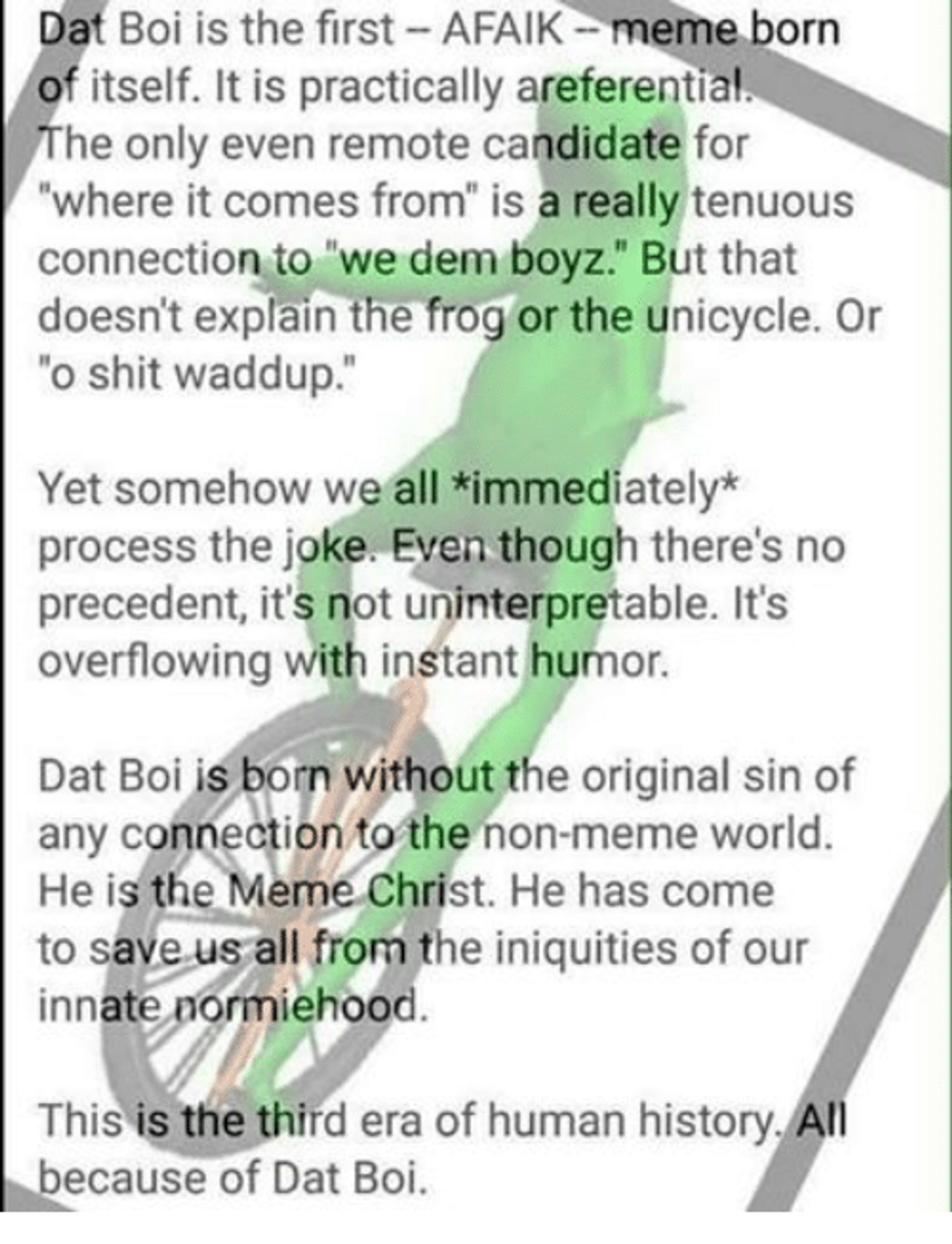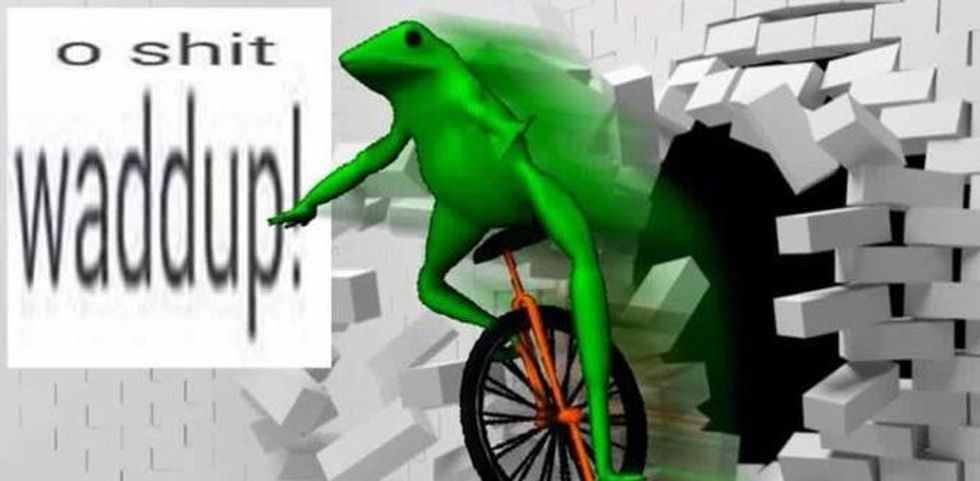
About 2 weeks ago, I was scrolling through the “discover” page of my Instagram and saw this:
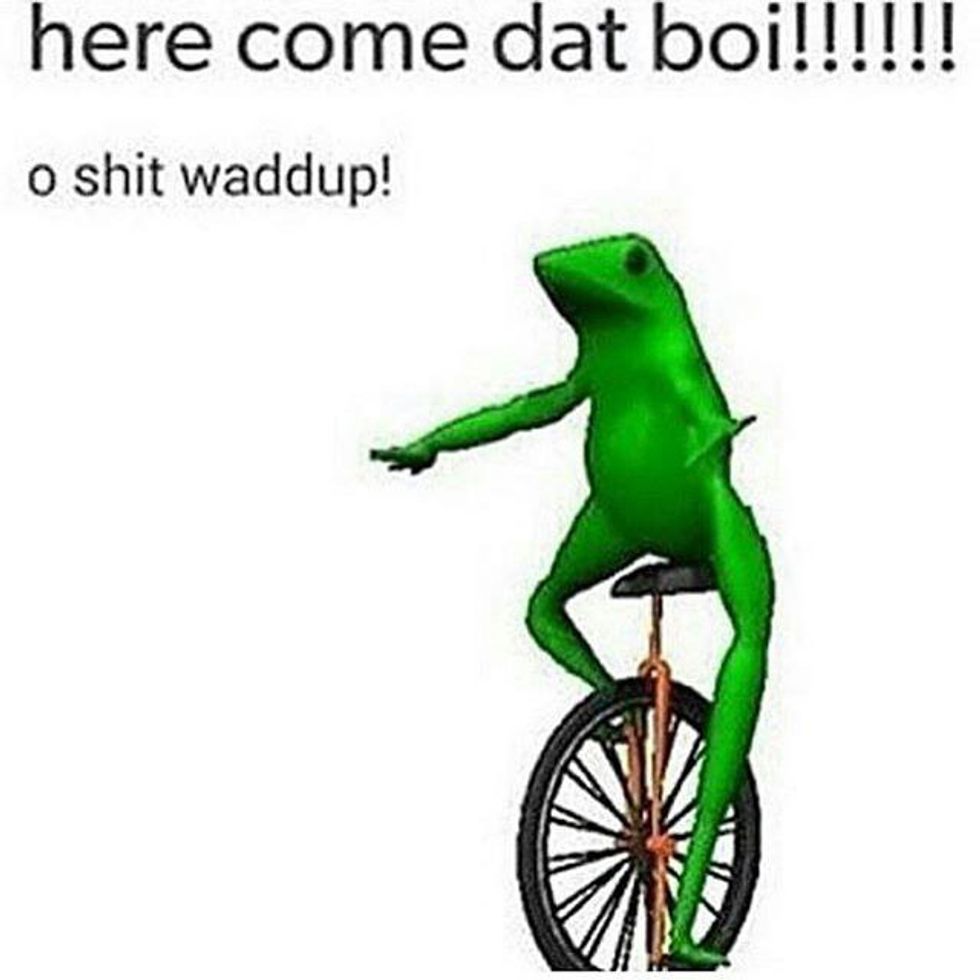
Source: knowyourmeme
At the time, I just didn’t get it. It's just a low-resolution image of a frog, a unicycle and some text. I thought it was just a one-off joke from a really niche internet group, and dismissed it. But as time went on, “dat boi” began to appear everywhere, from my Facebook friends, to an eventual subreddit dedicated to producing edited images and macros that fit the theme. Here are a few of my favorites:
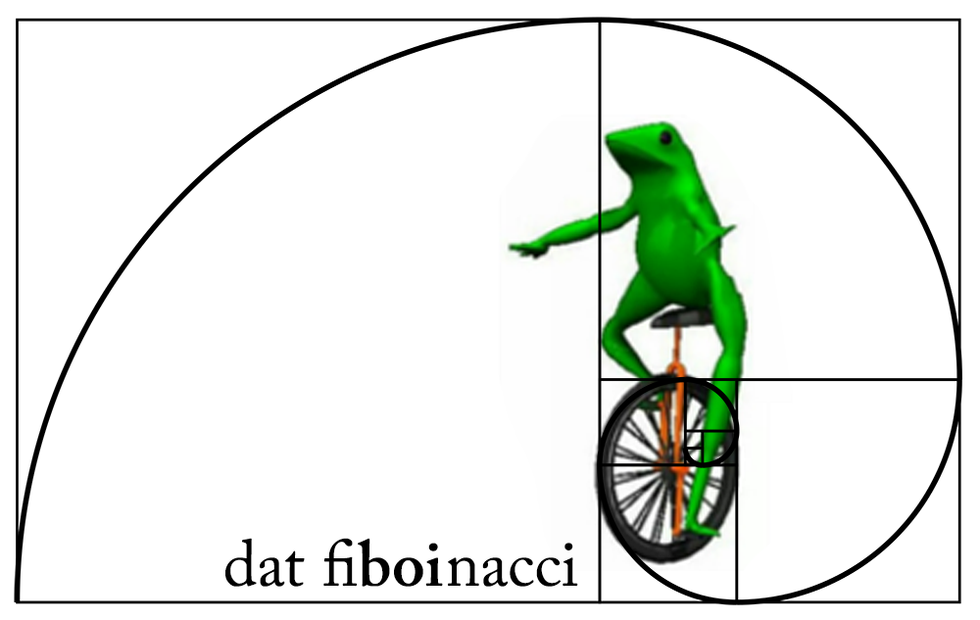
Source: alexandrite-eyes
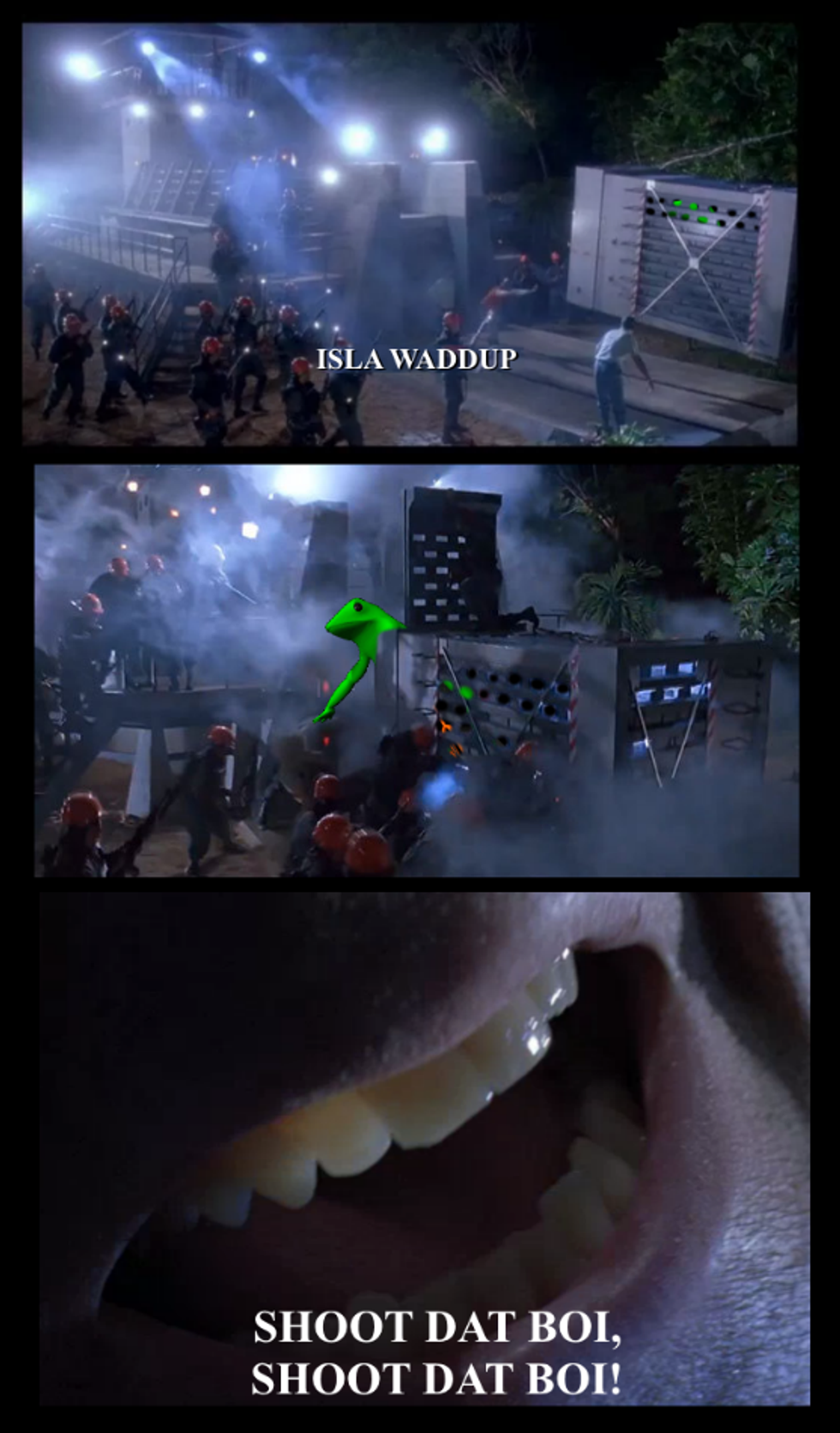
Jurrasic boi: jprimer
What was more peculiar to me was that suddenly I found it hilarious. There was something absurdist about this poorly animated picture, even without context. And although the context was eventually tracked down to a Tumblr post about 4 years ago, there was a general reaction of “so what?” There was something inherently funny about these purposefully poorly edited images of a frog on a unicycle combined with a purposefully misspelled expression from youth culture that I cannot explain. It is the definition of niche: Something so abstract and nonsensical that it becomes absolutely hilarious to some people and confusing to others. It has a mutable quality that makes it the perfect meme, and it can very easily be edited into countless other images.
“Dat boi” is bizarrely self-referential: You don’t need to know anything about the history of “dat boi” in order to “get it.” It’s literally just the same picture of a frog on a unicycle, and all you have to do is recognize it in order to get the joke. But what is the joke? Good question. I think the joke can be summarized as a combination of absurdism and exclusiveness of the joke. There’s just no easy way of explain WHY the image is of a frog riding a unicycle, nor why it was funny to begin with. It’s an inside joke that identifies fellow members of a specific subset of the internet dedicated to iterations of bizarre and hyper-specific images, phrases, and memes that are constantly falling in and out of popularity. “Dat boi” is the new rare pepe, or the new “weird Facebook” or the new “Mr. Skeltal.” These trends are constantly falling in and out of favor primarily because as the meme gets larger, more and more people begin to get “in” on the joke until it becomes mainstream and therefore loses its ability to serve as a symbol of identity. To see an example of this: Watch this Wendy’s commercial that uses “AdviceAnimals” meme format, and then never use that type of meme again.
“Dat boi” is one of many specific internet trends that will always be there. In WWII, the image of “Killroy was here” was scribbled wherever American forces had been and was a small reminder of “belonging” to the group of fellow soldiers who had been there and survived before you. Inside jokes are social tools which indicate to others around you how close a person is with another, and where social groups form and end. It’s that feeling of quoting “Monty Python and the Holy Grail.” Not only is the quote probably contextually appropriate to the conversation, you’re also trying to identify who in the group is a part of a group that has seen the movie and then you are making assumptions about their other interests as well. In summary, while it may be a picture of a frog on a unicycle, “Dat boi” is also a great example of how we organize ourselves socially through the power of memetics. I’ll take my PhD now please.
This post is an extended exploration of the image bellow, sourced from "On Sizzle":