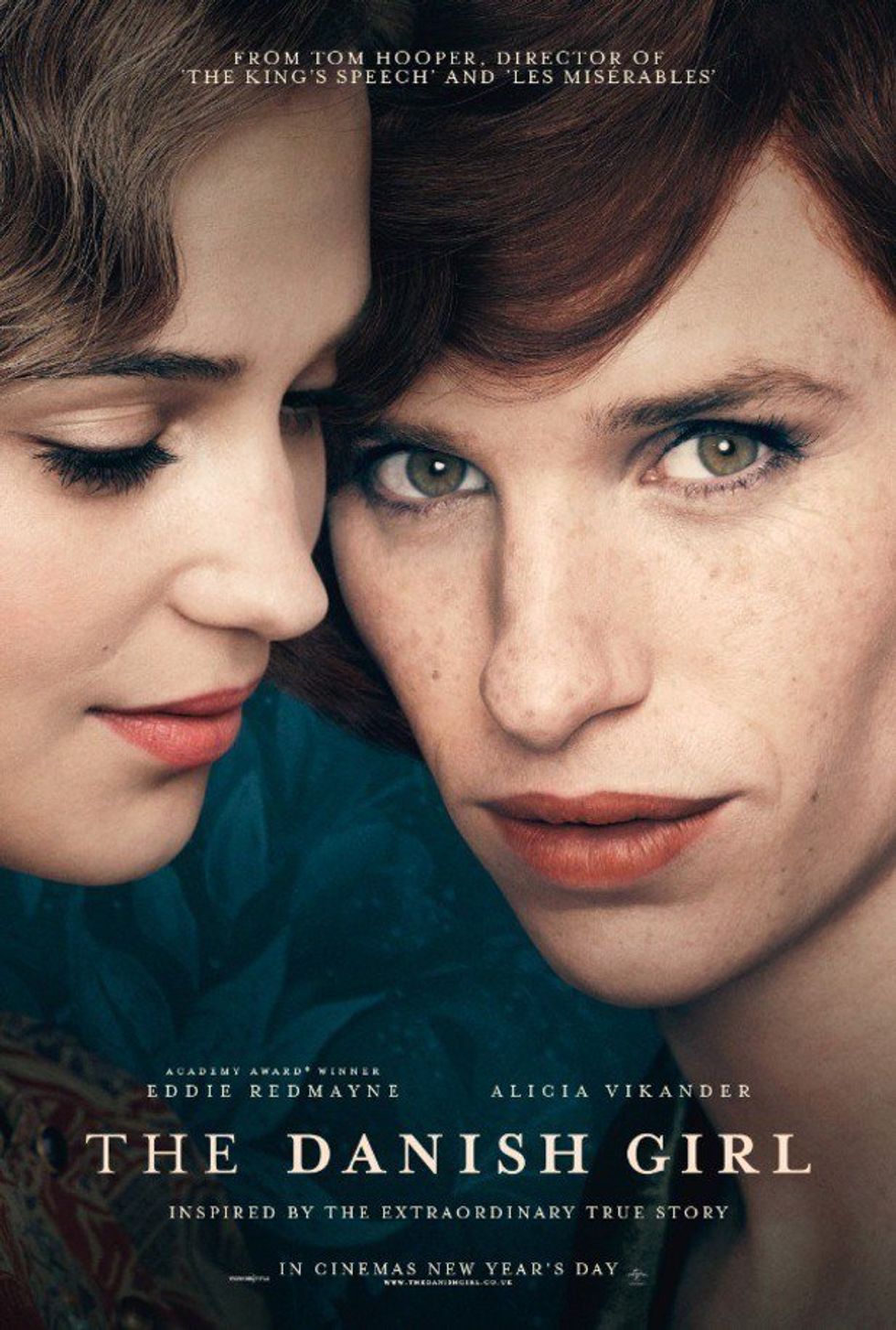
The year 2015, saw a lot of biopics and "based on true stories" films, such as "The Revenant," "Trumbo," and "Legend." Many audiences were also inundated with commercials for a dazzling story of grave importance known as "The Danish Girl", detailing the life and turmoil of Einar Wegener as he struggled with his gender identity, eventually becoming Lili Elbe in the first gender reassignment in history.
Too bad it's all fake.
Yes, there was a painter in Denmark in the 1920s named Einar Wegener. Yes, he and his wife Gerda — also a painter — faced unimaginable adversity as both came to terms with his identity as a woman. But this is where the similarity ends.
The film is based on a book written by a man who read Einar's posthumously published diaries (a biography titled "Man Into Woman," published in 1933), then decided that in order to bring this amazing and essential story to modern audiences, he had to fabricate 90 percent of it. "The Danish Girl" was published as a novel in 2000, and it is this fabrication upon which the film takes its heaviest inspiration, rather than the actual historical events.
Every single commercial, TV spot, web pop up, or whatever else was seen by the masses touted this film as a biopic based totally on Einar and Gerda's life. It was billed as a love story that transcended gender and was way ahead of its time, which I can agree with, but the truth of their struggle is nowhere to be found in the film's almost malicious two-hour runtime. Instead, we focus on Gerda's unconditional (and fictional) love for her husband and on Einar's conflicting feelings about his own identity.
With transgender equality on the front lines of societal conversation, it is no surprise that this movie was made when it was. Media exposure of the subject is necessary for the movement's warriors to get their foot in the door of progress, but "The Danish Girl" might end up doing more damage than intended.
By casting Eddie Redmayne in the lead role, outrage surged through the blogosphere. By hiring a cisgender (that is, non-transgender) person, they effectively silenced potential voices who are intimately aware of the trials Wegener went through and who could bring that intimacy to the screen. Personally, I think Redmayne did the best he could with one of the weakest Hollywood scripts I've ever had the displeasure of experiencing, but that's beside the point.
The acting is fine, even above average. Alicia Vikander, a Swedish newcomer you may have seen in "The Man from U.N.C.L.E." or "Ex Machina," makes a grand statement on what it means to be selfless in her Oscar-winning turn as the tortured artist Gerda. A study of the film actually showed that she is onscreen longer and more often than Redmayne's Einar, though her Oscar was for Best Supporting Actress. Again, it is less the actual subject matter I have an issue with but rather with the blatant disregard for historical accuracy.
I cannot comment on the film's depiction of Einar's identification as a transgender person, as I am a cisgendered man. However, the film approaches his thoughts and feelings from a third party perspective. I was incredibly aware that I was watching someone think, rather than be absorbed into the thoughts themselves. Film has a unique ability, when applied correctly, to make an audience member feel what the character feels, but "The Danish Girl" simply made the concept of feeling wrong in your gender seem even more foreign.
The intention is there: we see Einar caress beautiful dresses as if he longs to have a collection of his own. His eyes linger on his wife as she undresses for bed, less in a sexual manner and more as a study on how a woman's body should move. She even helps him unleash Lili from her bodily tomb in one dizzying scene, putting on makeup and a wig before attending an art gallery opening. Unfortunately, these things come across as leery and lewd, things to be sneered at rather than experienced jubilantly.
I wanted so badly to feel Einar's internal conflict. I wanted to be made aware of those feelings and slip into his thought process. I wanted to be led through his journey like Virgil through Hell, as I can only imagine being confined by gender roles in the 1920s could be.
There is emotion in the film, lots of it, but almost all comes from Vikander's Gerda. Her range swings like a great pendulum between absolute despair and jubilance, sometimes in the same scene. Difficult doesn't begin to describe the challenge in portraying a woman whose entire life is turned upside down, and though she wishes to remain faithful and supporting to her husband it steadily becomes clear that it simply isn't possible for their relationship to continue without evolution, a notion which is done impeccably in the film's third act.
I am fully aware that I am not this film's target market. But as an aspiring filmmaker and devourer of modern cinema, it seemed a perfect time to expand my horizons and learn a little about history at the same time. I was met with an uneven and often muddled collection of beautiful performances stilted on shoddy dialogue all wrapped up in admittedly pristine cinematography. Director Tom Hooper brought his trademark grandeur to a story that really needed an intimate touch, significantly weakening any potential impact on a viewer.
I'm glad I saw the film, and yet I find myself rejoicing even more that I didn't have to pay for it. As important as the issues within it are the issues with the film itself overshadow any good it could have done for the community it was trying to represent. Overreach killed the beast this time, and no magic spell can bring it back.