


The city of Flint, Michigan, continues to struggle in obtaining a fresh water supply with unsafe levels of lead and iron creeping into water systems. President Barack Obama has declared the area around Flint a federal emergency with some lead levels high enough to be considered “toxic waste” by the Environmental Protection Agency’s standards.
The cause
Flint was originally connected to the Detroit water system but began drawing water from the Flint River in April 2014 in an attempt to save money. The connection was supposed to be temporary until a new supply line to Lake Huron was built and the decision was made during a financial state of emergency.
After testing was performed by researchers from Virginia Tech the Flint River was found to be highly corrosive. The water started eroding the iron water mains, causing the water to turn brown. About half of the service lines to the homes in Flint are made of lead. Because the Department of Environmental Quality didn’t treat the Flint River with an anti-corrosive agent lead from the service lines began to seep into the water supply.

Flint high above safe levels for lead in water
There are no safe levels of lead in drinking water but the EPA recommends that steps should be taken to reduce a level that is above 15 parts per billion (ppb). Even as little as 5 ppb can be worrisome. As an example the city of Troy contains 1.1 ppb of lead in their drinking water while Detroit contains 2.3 ppb (the water source Flint was originally connected to).
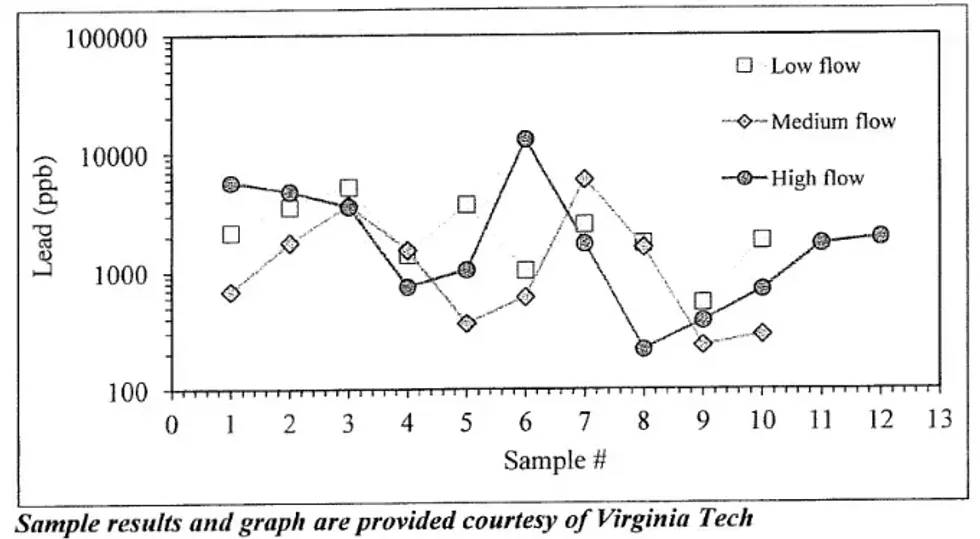
When tested in the summer of 2015 the water in Flint contained 27 parts per billion with the highest level found in Virginia Tech’s sample at 158 parts per billion. In the spring of 2015 more than half of the readings came in at around 1,000 ppb and the highest level found was at 13,000 ppb.
Symptoms
Lead poisoning is irreversible and can cause lifelong symptoms such as high blood pressure, abdominal pain, muscular and joint pain, a decline in mental functioning, headache, memory loss, and mood disorders. When found in children lead poisoning can cause learning difficulties, developmental delay, and slowed growth.
There have been 87 cases of Legionnaires’ Disease in the Flint area, 10 of which have been fatal since the water crisis. Legionnaire’s Disease is a respiratory disease that affects the lungs and can cause pneumonia. Snyder and government officials say they’re still looking for a cause despite the correlation made between increasing recorded cases of infection since Flint’s water crisis.
State response to the situation
The DEQ is under heavy criticism for its lack of prevention by not adding anti-corrosives to the water supply. Snyder is also facing calls for resignation because of his delayed response to the crisis, having knowledge about the incident for months before taking action.
A state of emergency was issued by Snyder with the National Guard handing out bottled water to the citizens of Flint. Snyder also sent a letter to Obama asking for federal help in dealing with the crisis. The president responded by declaring the situation in Flint a federal emergency, freeing up to $5 million to help in the immediate aid for the water crisis.
Despite returning to Detroit water there are concerns that the pipes are damaged and will continue to leech lead into the water supply. Snyder reports that over the long term replacing services lines could cost $54 million. Snyder also said that 90 days of clean drinking water could cost $10.3 million and home filters, filter cartridges and testing kits could cost $31 million in a year, warranting federal aid to help those afflicted.