


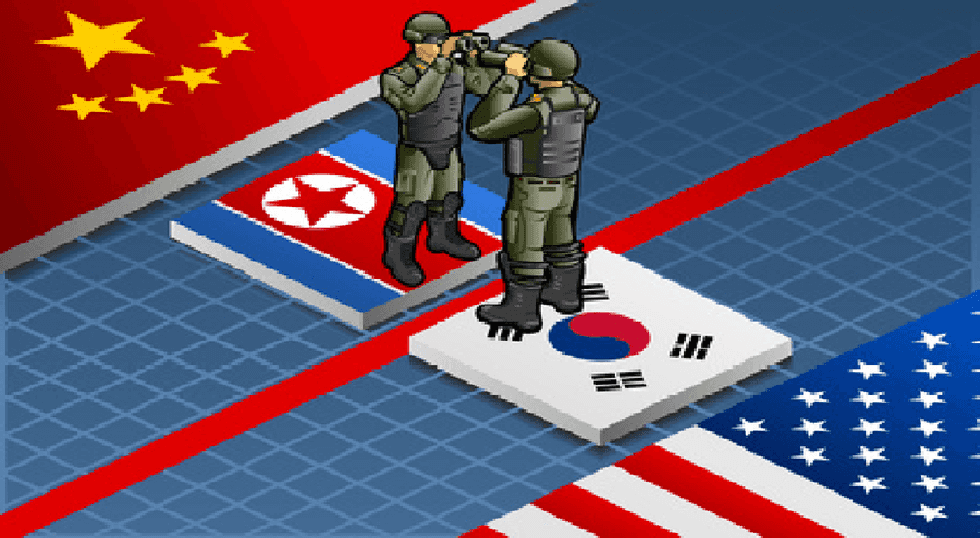
In the landscape of global politics, most countries try their best to avoid conflict with the United States. North Korea is not one of those countries.
In the past few days, Kim Jong Un has said that the United States has “crossed the red line” with their most recent set of sanctions, directed at Kim Jong Un himself. Director General of U.S affairs in North Korea, Han Song Ryol, said recent U.S activities in the region are “an act of war” and threaten that “a vicious showdown could erupt” if the United States and South Korea hold their annual military exercises, planned for September.

A trend has surfaced that shows an outrageously aggressive claim from North Korea make its way to U.S headlines and the threats die off with seemingly no repercussions within days.
However, the impacts of another North Korean threat puts pressure on world leaders for three key reasons.
The first is the obvious militarization of the 38th parallel and a closer step to war.
The United States is generally unafraid of any military conflict with North Korea. A tiny country with a technologically inferior force seems to be easily beatable. Even with the threat of nuclear warheads, the United States have the anti-missile defense systems in place so whats to fear? The last time the United States was in an official conflict in the region, the Korean War, the Allied advance was stopped, not by the North Koreans, but rather, by China. In this new conflict, China would get involved for the same reason they did more than sixty years ago. The threat of a unified Korea which acts as the U.S's pawn is enough to force Chinese action, despite disagreements with North Korea's government. Throw in an unstable Russian leadership and the U.S's faltering global image, a global conflict where countries take sides could occur, especially if the United States easily dispatches of North Korea. In the end, while it is feasible for the United States to win a military conflict, the loss of life would be astronomical.
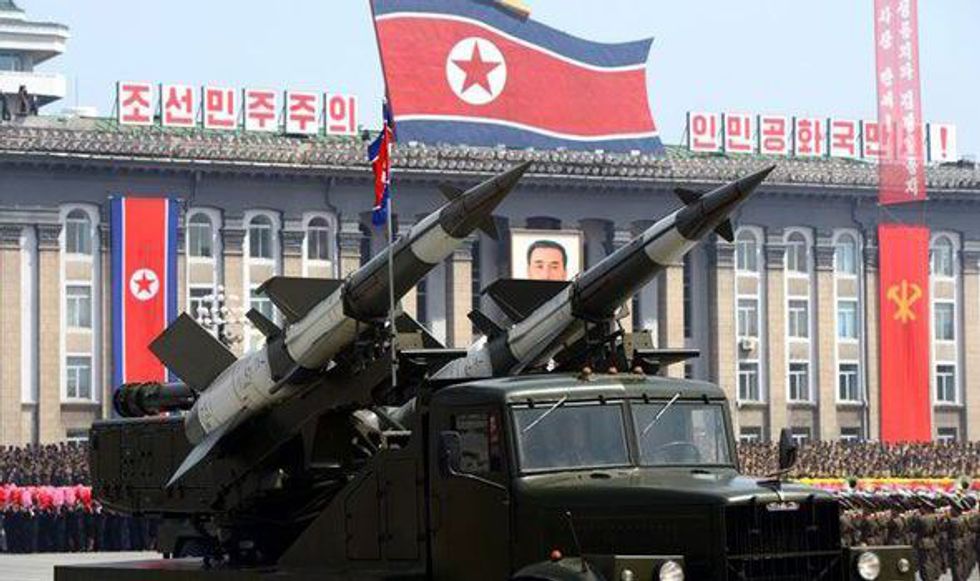
The loss of life impact then connects to the theory of mutually assured destruction. Once casualties rise up, there is less and less for countries with nuclear capability to lose. This tips the scales against the countries in disadvantages, leading them to more desperate measures. History shows a perfect example with the Japanese and German air forces in World War II. With losses mounting, the Japanese air force took to the notorious kamikaze missions in a desperate attempt to turn the tide of the war. The German Luftwaffe, less famously, began a ramming campaign, where they would try to use their airplanes to disable U.S bombers (differences were that the Japanese kamikaze was a suicide mission with explosives on the aircraft, while the Luftwaffe would encourage pilots to bail out and survive for future missions). Desperation leads to unthinkable acts. Terrorist groups threaten nuclear warfare more often and they are bigger threats to use these warheads because they have less to lose. War with unstable governments such as North Korea are similar in that they are likely to be in a similar situation as groups such as ISIS due to their inferior wartime capabilities.
Lastly, this is a huge step away from unification. The Korean peninsula has had a rich history of great accomplishments that was brashly ripped apart by the United States and former Soviet Union. Since the end of the Korean War, both North and South have been talking about reunification and the United States has been the biggest roadblock. Continued cooperation between the United States and South Korea has strained relations with the North. Threatening war exercises and seemingly imperialistic actions turn the North Korean government defensive and more focused on holding onto power. The United States response to the threats by North Korea show a mutual unwillingness to cooperate. The United States, as the strongest power in this political triangle, must take the lead and back off. By allowing South and North Korea to decide their own future, reunification is much more likely. Lim Dong Won, who served as Unification Minister under President Kim Dae-jung (‘98-’03), stated in 2013 that the South “must recover its independent identity as the main player in negotiations with North Korea".

In the 2016 Olympic games in Rio, the politics and conflict washed away for a few minutes when gymnasts Lee Eun Ju of South Korea and Hong Un Jong of North Korea posed together for a picture. When politics are put aside, we see people being people, loving each other and their accomplishments. There is no reason that peace cannot be achieved and it is time for cooperation in light of the latest outcry by North Korea.

















