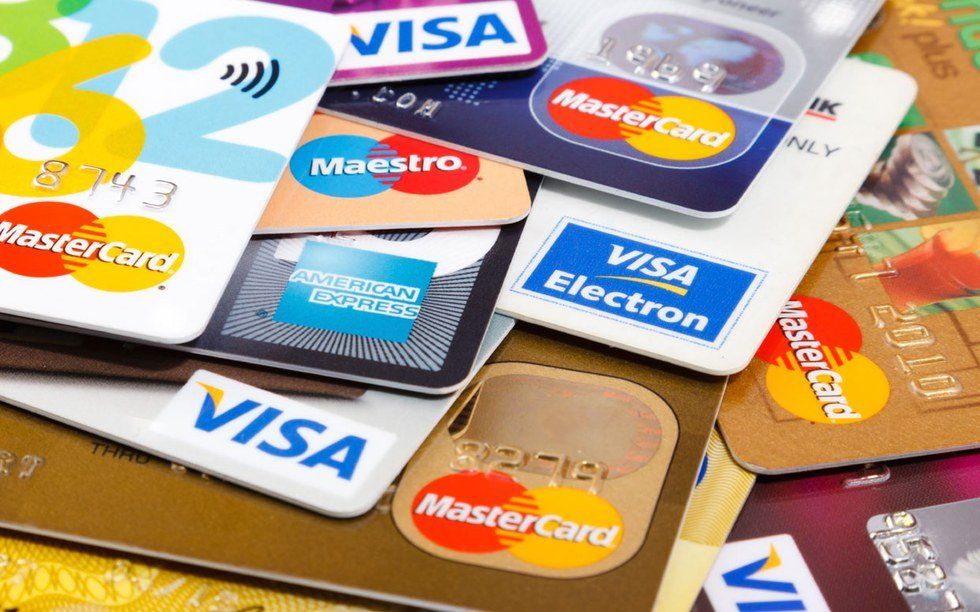
After speaking with numerous classmates of mine, it appeared that there was a huge misunderstanding between credit cards and how they affect your credit score. First, I want to outline the five items that affect your credit score the most: payment history, debt usage, credit age, account mix and credit inquiries. Payment history is whether or not you have paid your obligations on time within the last seven years. If you have collections filed against you, then your score will be hurt. If you miss one payment with AT&T or State Farm, there is usually a grace period and as long as you pay within that grace period, then your score will not be affected. Debt usage is a measure of how much credit you have available and how much you use, all expressed in percentages. Credit age is simple. It is how long you have had your checking account, credit cards, etc. Account mix includes revolving credit accounts (Mastercard, Visa, Discover), mortgages, auto loans and student loans. Credit inquiries is how often creditors, such as banks, look into your credit. This happens when the bank is considering giving you a car loan or a mortgage.
It is important to know what affects your credit score. Let's look at what your credit does for you. When you look to purchase a car, your credit is taken into consideration. According to credit.com, in Louisiana the average credit score is 658 — 56 points below the national average — and those numbers are what determines how much you pay in interest. A 658 score can look to pay 6 percent to 7 percent in interest, depending on other items such as a down payment. The nation, with a 714 score, will pay between 2 percent and 4 percent.
Nobody wants to pay higher interest on a $20,000 car. It gets expensive! Any credit card you get will help your score, as long as you pay your bill on time. Starting with a credit card is great, but it has to be started well before you wish to buy a car. Your credit age makes up 15 percent of your credit score. The account mix is another area that is impacted by credit cards. A well-rounded mix will always score better than an account that has zero revolving credit accounts, mortgage loans and auto loans. This makes up 10 percent of your score. Another reason why having your credit established is because of credit inquiries. Generally, your credit will be examined when credit cards are considering you as a potential client. This makes up another 10 percent of your score. Let's assume that you get a $2,000 credit limit by American Express. If you use $500 of that, then your debt usage will be 25 percent. As a rule, you want to keep your debt usage under 25 percent, with 5 percent to 10 percent being ideal. According to credit.com, the average debt usage is 26 percent across the nation. This score will make up 30 percent of your credit score. Lastly, you have the payment history. This category will remain perfect, unless you mess it up. As long as you pay your bill on time and do not have any long overdue (30-90 days) late payments, your score will go up. This accounts for 35 percent of your credit score.
Credit cards are not bad. If used properly, they will help you more than they will ever hurt you.