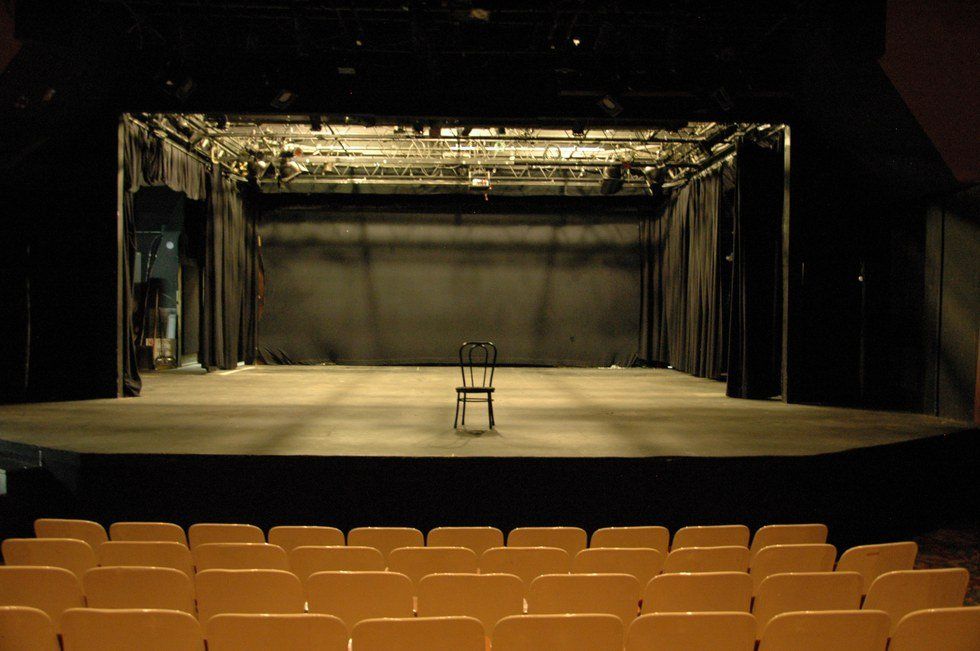
Setting is an incredibly important feature of improv, especially long-form. Setting keeps things visually stimulating for the audience and eliminates the need for time consuming exposition. Here are two ways to effectively use setting in your shows.
Establishing character
“Watch out for the dirty laundry.” Janie calls to her guest while stepping over an invisible pile. “My chair’s full of papers right now so go ahead and take a seat on my bed. You can just throw the wrappers on the floor. I’ll pick them up later.”
The clear image of a messy bedroom establishes Janie’s character much faster than a conversation could. Also, watching the uncomfortable guest carefully sweep a pile of old wrappers off of Janie’s bed is more interesting to watch than someone stating, “Janie’s room is always such a mess!”

Bonus: With a setting like this, there’s a chance for a game within the scene. Every time someone comes into Janie’s room, she could name a new aspect of the mess. “Be careful of the old burrito. I forget where I put it, but you’ll know it if you smell it.” “I’m pretty sure my dog is in here. If you see him, let me know. He’s been missing for days.” “Try to stay on the parts of the floor that are still white. Think of it like hop scotch, but with consequences.”
Establishing genre
Sci-fi is a genre that relies heavily on setting. In order to do real justice to the genre, you should add common sci-fi setting tropes. For example, every time you enter the ship’s control room, make a sound like “zoooop!” while moving your eyes from the floor to the ceiling. This will create the illusion that a bridge door is sliding upward. If every character entering the control room does this, and really commits, it will add a lot to the environment.
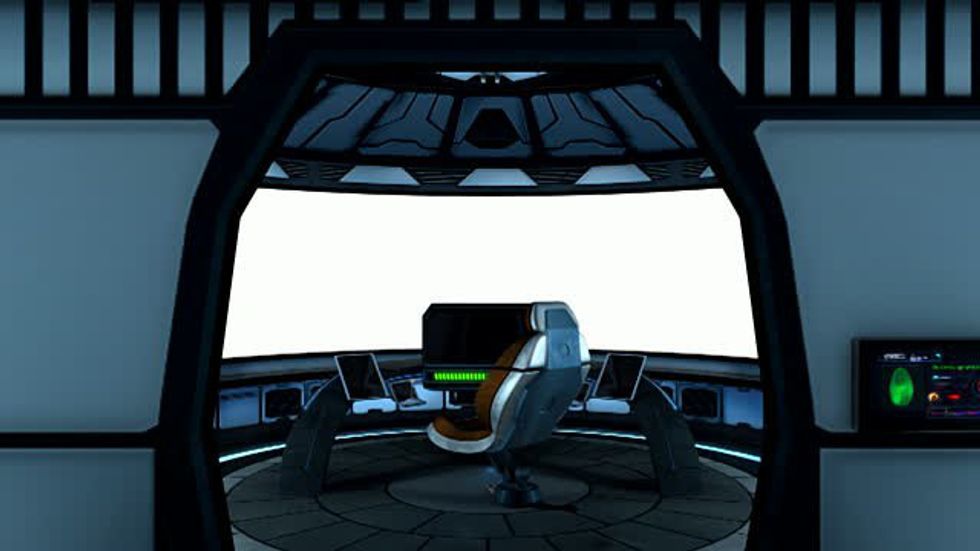
Furthermore, using setting eliminates the need for exposition. “Captain, take a look at this.” Says one improviser. Then, they pantomime a huge touch screen on the fourth wall. This is much more engrossing than stating, “Our ship has many technological capabilities. We even have touch screens in the control room.”

Plenty of other genres have tropes you can play with. Creaky doors and confined spaces in horror, lively taverns and marketplaces in fantasy, swinging doors to saloons in westerns.
Bonus: If you establish memorable set pieces, you can use them to recall old settings. Every time an improviser says “zoooop!” before walking into a space, the audience knows they’re entering the control room. It eliminates the need for expository phrases like, “follow me to the control room!” or “I finally made it to the control room.”

If you're having trouble establishing setting, here's an exercise you can do with your troupe. Get five to ten people and stand in a line. Then, pick a setting. Finally, in order, each person must enter the scene, use whatever has been established, establish something of their own and leave the scene. The last person should use every set piece plus one of their own.
Let's say your setting is a kitchen. The first person fills a glass of water and leaves. The second person fills a glass of water, grabs a banana from the fridge and leaves. The third person fills a glass of water, grabs a banana from the fridge, checks out their hair in the toaster's reflection and leaves. This chain continues down the line. You can do this exercise with any setting in any genre. Have fun!