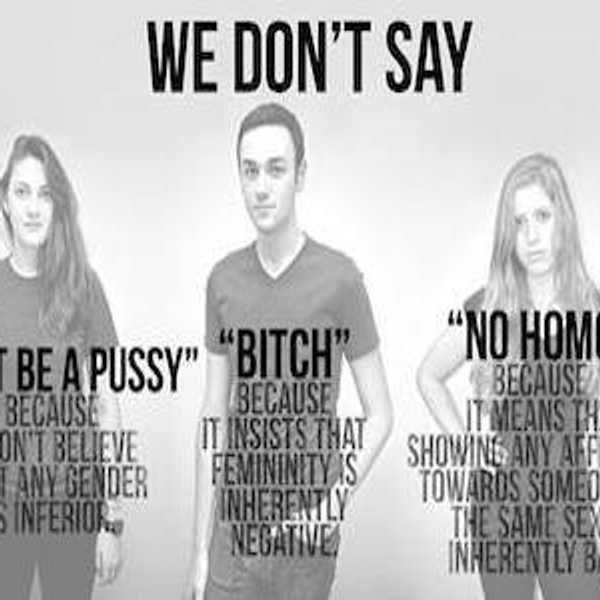

There are many things that millennials are good at, as we continue to move forward as a generation. From raising awareness about societal issues to questioning norms, and not to mention internet memes, there’s certainly a lot going on. One specific thing that comes to mind, however, would be the issue of “Politically Correct language” or “PC language” for short. Perhaps one of this decade’s greatest, double edged swords is that of political correctness. While this type of language succeeds in respecting the title of a group or specific type of person, we seem to be missing the mark when it comes to words and actions that incite actual change, otherwise known as rhetoric. Are we actually omitting rhetoric itself in that sense? With that said, I will now argue several points in the case against PC language.
1) PC Language silences more than it gives a voice
I will begin by saying that while PC language serves its purpose of making sure no one is offended, it’s allowing people to have an excuse to be far too sensitive. If someone says something that is not entirely correct, we become obsessed with addressing the problem. By doing this, we basically negate what the other person is saying and present an entitled image of ourselves in the argument. Maybe the person didn’t mean to misuse the terminology, it happens. It’s best to respectfully communicate and let the other person know what they could have said. Simply seeing the situation from the perspective of the other party could prevent an unnecessary quarrel, and whoever feels good after an argument with friends or loved ones?
Getting caught up in PC language is the gateway to a judgmental attitude and no one likes to be judged unnecessarily. Some judgment is good, we need to have that accountability for and from our friends. But it should come from a position of love, not the desire to be right. By getting caught up in how someone says something, we put a brother or sister’s head instantly on the metaphorical chopping block and pretty soon, they will seek to avoid conversation in the future. PC language silences more than it allows someone to have a voice which doesn’t leave room for positive growth or change.
2) PC language is made worse by instant gratification.
Ever since the development of the internet, instant gratification is becoming more and more of a problem as technology further advances. It’s so much of a problem that we have no more patience in our communication. Getting to the point is superior to true understanding and regard for the other person. The reason instant gratification relates to PC language is because PC language desires to get to the point of correctness and if that target isn’t hit the first time, more arrows are launched, and pretty soon, someone is being attacked.
3) PC language counteracts rhetoric.
In short, rhetoric is the systematic study and intentional practice of effective symbolic expression. One of the functions of this form of expression is to incite change and cultivate a response to a contingent issue. But this is taken away once PC language comes into play. Why? Because PC language is a way of creating neutrality and change isn’t made through neutrality. In other words, taking action and moving towards the goal of needed change has no room for political correctness. Of course we should always be respectful of another person or group at all times, but getting caught up in the precision of certain terms is powerful enough to stop a movement from trying. This point is actually in close relation to my next one.
4) PC language suppresses expression.
America is a diverse place, therefore, we must be careful not to marginalize or discriminate groups that are different from us with our language. We should never slander or use hurtful words, especially because of someone else’s differences to us. That’s just purely unethical. If we have an opinion or viewpoint, we should articulate it respectfully, but we shouldn’t have to worry about always saying everything exactly correct when it’s not necessary. PC language has the power to limit expression and free speech, which is our first amendment right.
5) There is a time and a place for PC language.
Although I’ve just presented some pretty abrupt points in regards to the case against politically correct language, I wouldn’t say that this way of speaking is always unneccesary. The main context I am attempting to argue these views in is that of social settings. My ultimate goal here is to articulate how PC language can hurt others or prevent change when pressed excessively. Of course politicians or the president should be careful about what they say and make sure they're correct with their language. But in a social setting, we shouldn’t give each other a hard time if something is stated incorrectly, which is something millennials often do. The goal of our relationships should be to build each other up in love and proper correction, not to always have the superior stance.