
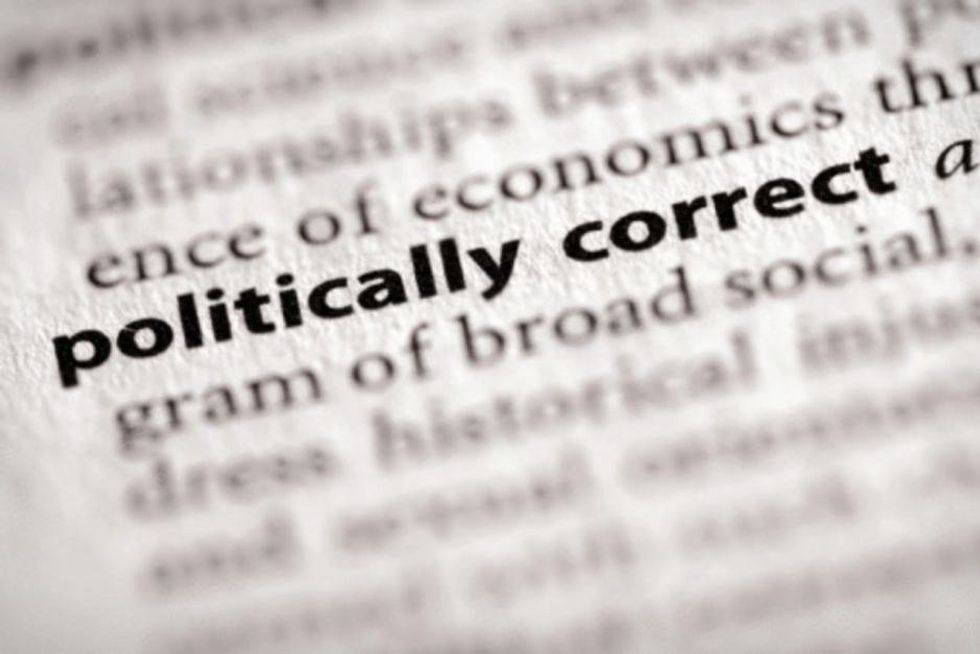
The Merriam-Webster Dictionary defines being politically correct as “agreeing with the idea that people should be careful not to use language or behave in a way that could offend a group of people.” Sounds like common decency, right? No one should go out of their way to offend somebody, and statements that insult or belittle race, ethnicity, gender and sexuality should certainly be avoided. However, many people see political correctness not only as an attack on free speech, but also a detriment to society, in making us “thin-skinned.” According to an article in The Atlantic, some comedians refuse to perform on college campuses because the students “can’t take a joke.” Well, turns out there is a lot more to political correctness then the definition above. Some aspects of political correctness include things like microaggressions and trigger warnings, which are also under scrutiny.
in Psychology Today, Dr. Derald Wing Sue, a counseling psychology professor at Columbia University, writes that “Microaggressions are the everyday verbal, nonverbal, and environmental slights, snubs, or insults, whether intentional or unintentional, which communicate hostile, derogatory, or negative messages to target persons based solely upon their marginalized group membership.” That being said, there is an entire website dedicated to examples of microaggressions, that I would strongly recommend checking out.
It is frightening to think that some of the things we say so casually, without a second thought, can have a deeply negative impact on those we are speaking to. Opponents of political correctness claim that this will limit free speech, forcing people to carefully consider every word they say. But is this really a bad thing? We’ve all made the mistake of speaking before thinking and have probably regretted what we’ve said immediately after the last word has left our lips. But microaggressions (and political correctness as a whole) aren’t just about realizing the effects of our words, but also recognizing our own perspectives and privileges. As a heterosexual, cisgender, white male, I have many privileges that people of other sexual orientations, gender, races and ethnicities are wrongfully denied. And in having more privileges than others, I have to realize that my perspective on life is going to be entirely different than those with fewer privileges. However, those against political correctness (many who happen to be heterosexual, cisgender, white males) believe that microaggressions are just another way the “PC Police” (those who encourage political correctness) try to suppress their voices. Which is ironic, considering that straight white males have had the loudest voices in politics and society for centuries.
Trigger warnings, on the other hand, are a bit more complicated and controversial. Trigger warnings are cautionary tactics used to prevent unintentional exposure to topics that could potentially cause flashbacks for someone with a negative experience of that particular subject. Again, this seems like a generally great idea, preventing people from having negative flashbacks and being aware of the sensitive nature of certain subjects. So, what are the accusations against trigger warnings? Unlike microaggressions, the accusation that trigger warnings can lead to censorship is not completely unfounded. For example, Professor Jeannie Suk, who teaches at Harvard Law School experienced this firsthand. In an article in The New Yorker, she explains the problem with teaching rape law (which is itself a relatively new subject), and notes some students called for the subject to be dropped from the curriculum and for the word “violate” to stop being used in the class (such as “They violate the law”).
Now as you can probably guess, this single occurrence alone has multiple layers and perspectives, with no clear answer. Personally, as a fan of both political correctness and free speech, I feel conflicted. While we should try to minimize the contact between people and content that could cause them traumatic flashbacks, should we do so at the cost of educating students on an important subject? Imagine a student, one who went to an institute that dropped sexual assault from their curriculum. After the student graduates, she becomes an attorney, and one day, encounters a case involving sexual assault. Now she could pass on the case and recommend a colleague with experience in the issue, but what happens when the removal of sexual assault from the study of law becomes institutional? There could be a generation of attorneys, lawyers and even judges that have no knowledge of how to legally deal with the subject. And without them, how could someone guilty of sexual assault be prosecuted? This may just seem like just a set of absurd theoretical situations or wild speculation, but I believe it demonstrates the potential overzealous political correctness has in discrediting and potentially erasing a controversial subject. It may already be happening at Harvard Law School.
That being said, I feel I should reiterate that I am a supporter of political correctness. However, I am also wary of its potential to not only discredit and erase subjects, but people’s opinions as well. In our pursuit to make the world more politically correct, and therefore more hospitable for everyone, we should be aware of a few things. We should be aware that refusing to mention or discuss a controversial subject does not mean it no longer exists, as this would negatively impact those affected by the subject. We should be aware that simply because someone disagrees with us, they are not automatically politically incorrect. We should be aware that using political correctness as a way to discredit someone, or give ourselves the moral high ground is just as wrong as being politically incorrect. Finally, we should be aware that political correctness is not just about doing away with things considered offensive. It is also about educating people as to why these things are offensive, and hopefully preventing them from being passed on.