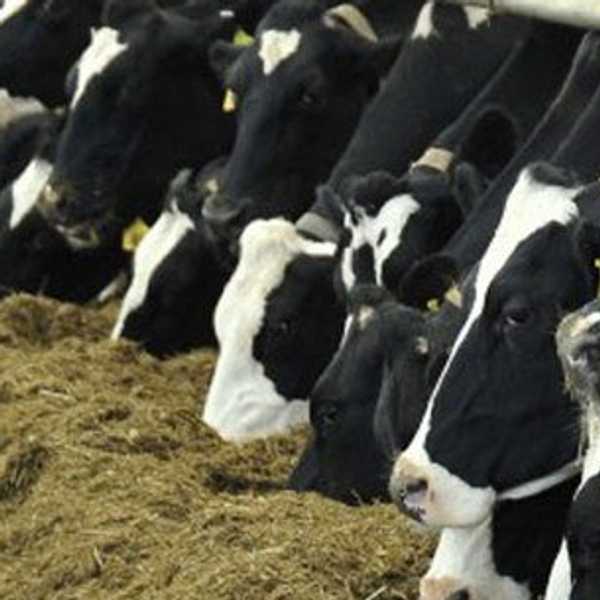


Today, consumers want the latest and greatest, only the best, for the cheapest price of course. One of the most popular bandwagon fads going around now is organic food. I’d like to focus on the #1 selling “organic” product in America, beef. Have you ever heard of Corn Fed Vs. Grass Fed beef? It is a popular believe in the public that grass fed is certainly the way to go. One of many claims is that grass fed is more natural for the Bovine and for us in the long run. But I was always told if the old way was the best way, wouldn’t we still being doing it that way?
Before I get started I would like to introduce some general knowledge and terms. Bovine is the technical and general term for cattle that I learned in an Agricultural Science class. It can also be used to classify animals such as sheep, goats, ox, and deer. A general misconception is that all cattle are cows. A cow is a female who has previously given birth. Not all males are bulls, a bull is an intact male. Because you only need a few bulls for reproduction most male cattle are castrated (making them steer) and used for meat production. So, you could say steer will be our focus for today. Another important term is “conventionally raised” which is the technical term for corn or grain fed beef.
As a consumer, you might ask “Why do we feed corn?” The first reason is taste. Feeding corn gives the cut of meat a higher fat content or better marbling. Which in turn enhances flavor, “U.S grain fed beef has earned a worldwide reputation for its quality, consistency, and taste (beefusa.org)”. If we did not supplement the bovines diet with corn, we would not have enough beef to sustain the demand supply ratio. Cattle are “raised on pasture for 12-18 months, and finished at a feedlot for 3-6 months(beefusa.org)”. That means a feedlot finished steer can be market weight in 15-24 months, compared to the usual 3-5 years for a pasture only raised steer. It also cost less to feed corn, there are no scientifically sustained health risks to humans or cattle, and it simply taste better!
I would venture to say that cost is the biggest contributing factor in the decision whether to feed bovine corn or not. America has an unbelievable demand for food, especially meat. To provide that food, we need resources, which are limited. For example, you need a field to raise the cattle in, a barn for shelter, feed of some sort, and most of all, money! If you choose to feed only roughage, you need 9 acres per head of cattle. That’s roughly 30% more land than conventionally raised cattle. Not to mention the cost of buying extra hay to supplement the diet, a bale of alfalfa hay can go for 3-12 dollars and a single steer can consume about 3 bales a day at least. So, let’s say you raised 30 head of grass fed cattle in the state of Nebraska which produces the most cattle in the U.S., you can spend $39,105- $68,670 on just hay and land for 1 steer. Obviously, you don’t pay for land each year so this would be based on initial startup, but those numbers are staggering. Conventionally raised cattle consume less than half that amount of hay, eat less food that is cheaper, and need less land. The turnout rate for corn fed cattle reaching market weight is 2.5x faster than grass fed, which means we can produce more meat, for less money, less resources and over twice as fast. This makes production cheaper, as well as the product. It is common knowledge that the more it cost to make something the more it cost to purchase. Grass fed steaks are significantly more expensive. You are paying up to 3x as much for a label.
It is simply not the same. Grass fed beef has been said to have a distinct taste when compared to corn fed. Scientifically this could be from the lack of marbling in the cut of grass fed beef. Grass fed steer tend to be leaner because roughage does not provide a lot of fat content or lipids. Society might have you trained to think “if it has less fat it has to be healthier”. However, that is simply not true. One’s body needs a certain amount of fat intake to be healthy. I do not know about you but I want my meat to taste like meat.
Are there major effects on one’s health related to consuming corn fed beef or grass fed beef? There have been claims of corn fed beef having negative effects on cholesterol, insulin and blood pressure levels, weight gain, nutrition, and hormones. However, studies have proven that insulin and cholesterol levels were in fact typically the same in both beefs. The diets of cattle do not affect blood pressure. Weight gain depends on serving size and frequency, and both meats types have tested to have the same nutritional content. Another interesting debate is the types of fatty acids and their effects on humans. But the most common concern is that the hormones the cattle receive are harmful. According to the National Cattleman’s Beef Association “Non-pregnant women produce 480,000 nanograms of estrogen daily, A 3 ounce serving from an implanted bovine contains only 1.9 nanograms (beefusa.org).” That seems to be a small enough amount that it shouldn’t affect us, but the studies that have been done were inconclusive. Many people argue E-coli is more prominent in corn fed beef. However, it has been proven that such allegations are unfounded and simply not true. In some studies e-coli was found more in grass fed beef, but many studies have ruled these different diets to not influence the presence of e-coli. It has been proven that e-coli cases can be prevented with proper handling and cooking techniques.
Is it healthier for the bovine to only eat roughage? Honestly there isn’t a solid answer to this question. In nature, bovine likely wouldn’t be found eating corn, but they probably had access to plants with higher fat contents to sustain the need for lipids in the diet. Animals have a way of finding what they need. Cattle are known for eating dirt when they lack minerals in their diet, or even licking metal fences for iron. Even though the common perception is that grass fed beef is all natural, that is rarely a true statement. Grass fed beef regularly receive vaccinations, and have limited use of antibiotics, meaning they can still be used. Without these precautionary steps the beef wood be unsafe to consume, cattle are exposed to numerous bacterial diseases such as e-coli, listeria, mad cow disease, Blackleg etc.
There is currently a practice in place that allows veterinarians to closely monitor a steer’s digestive system every day. This practice is known as a fistulated or cannulated cow. PETA loves to blast this all over the internet as an abused and in pain animal but they honestly don’t even know it’s there once it heals “The fistulated cow currently at University of Illinois is named Brooke. “Brooke’s been here for four or five years and she’s fine. If anything, she’s overweight and over-cared for (Dr. Brian Aldridge).” Its quite beneficial to the cow because it prevents stress and digestive mishaps. “fistulated cows are also a staple in bovine nutrition research, since having a fistula makes it easy to sample rumen contents in order to study how different nutrients affect a cow’s digestive system (Modern Farmer).” The television series Dirty Jobs hosted by Mike Rowe featured a farm that uses this practice. It’s very common and certainly backed by the agricultural community from all sides. “People have looked into the longevity of animals with a fistula and they do really well, (Dr. Brian Aldridge).” So, it’s safe to say if feeding these steer corn was having negative effects, we would know.
Does feeding steer corn contribute to the amount of greenhouse gases in the atmosphere? It doesn’t matter what cattle eat, they will produce methane gas because of their type of digestive system. Cattle are ruminants which means they have four compartments to their stomach. The four parts are the rumen, reticulum, omasum, and abomasum. The important thing about their stomach is they ferment their food before digesting it. They also regurgitate partially digested material and rechew it, which is known as chewing a “cud”. This process in turn produces the gas methane, which is expelled by the livestock. Cattle are in fact the number one methane producer among livestock. However, humans blow cattle out of the water with the production of 70% of the world’s methane output. The real threat to our ozone is ourselves and our travel habits, not our food. Another productive way cattle farmers help our environment is by using the manure from cattle to fertilize crops, rather than chemical and synthetic fertilizers.
So, let’s recap. I’ve covered many reasons people claim grass fed is better. However, looking at the facts it appears the only substantial difference between the two is cost. Which can’t be argued, Corn fed is the more affordable and manageable option. Health risks for humans and cattle caused by a grain based diet are unfounded. Methane production will happen regardless of their diet. Which leaves only taste to debate, which is nothing more than a matter of preference. Hopefully we can convince our society to research more and believe the internet less. There’s a lot of partial truths out there, and even more companies that take advantage of naive customers who know little about the industry. I would like to leave you with a challenge: next time you eat something, research how it got to your plate, and odds are you will be surprised.
Works Cited
Ebner, Paul. "Grass, Grain, Beef and E. Coli." Purdue Food Animal Education Network. Dept. of Animal Sciences, n.d. Web. 20 Oct. 2016.
Smith, Ph.D., Stephen B. Smith, Ph.D. B. "Ground Beef from Grass-fed and Grain-fed Cattle: Does It ..." Department of Animal Science. Agriculture and Life Sciences Texas A&M University, 7 Dec. 2013. Web. 20 Oct. 2016.
Daley, Cynthia A., Amber Abbott, Patrick S. Doyle, Glenn A. Nader, and Stephanie Larson. "A Review of Fatty Acid Profiles and Antioxidant Content in ..." NCBI. US National Library of Medicine, 10 Mar. 2010. Web. 21 Oct. 2016.
"Beef Industry Statistics - Beef USA." Beef Industry Statistics - Beef USA. National Cattleman's Beef Association, n.d. Web. 16 Nov. 2016.
@ModFarm. "Holey Cow: The Wonderful World of a Fistulated Cow - Modern Farmer." Modern Farmer. Anna O'Brian, 12 Sept. 2014. Web. 18 Nov. 2016.