Cooking with cast iron pans can be beneficial for your health. The World Health Organization estimates that about 30 percent of the world population suffers from an iron deficiency. Cooking with cast iron (yes, just like your grandma!) can be a natural, easy source of this essential mineral in your daily diet. Iron deficiency (anemia) can lead to tiredness, decreased work productivity, difficulty with cognitive performance, and can make certain types of infections harder to fight off. Cast iron pans and dutch ovens are naturally non-stick, and they don't have chemical coating compounds found in many modern non-stick pans. These pans last FOREVER, are incredibly cheap to maintain, and you can cook just about anything in them.
The downside to using cast iron is that after each use, the pan must be seasoned to maintain its magical non-stick, incredibly shiny qualities. I can still hear my mom from the table nearby when I would offer to clean the dishes; "don't submerge that in water!" "Just leave the skillet, I'll get it later." After buying my own and learning to care for it, I understand why it was so important to my mom.
Cooking With It
My favorite things to cook in my cast iron pan (a grill pan, complete with the little grill lines) are summer squash, Irish potatoes, steak, sweet potatoes, corn, grilled cheese, brussels sprouts, mushrooms, and chicken. Cast iron can be heated on the stove at high temperatures and used for grilling, frying, and sauteing. It can also be used in the oven for baking a broiling. A grill pan is an ideal choice if you want to use this pan for meat and veggies, and I got mine (unseasoned so it was originally a shiny silver color) at TJ Maxx (HomeGoods) for $14.99. As I had experience cooking with and cleaning the skillet my mom cooked many of my meals in growing up, I wasn't worried about starting with an unseasoned pan.
If you would like an everyday pan to cook more breads/fry things with, you may want to go with a skillet instead of a grill pan or dutch oven. Skillets are extremely versatile and are great for cooking eggs, cornbread, frying tomatoes, squash, or making pancakes. As they are round pans, they are also a little more stove-friendly than a square grill pan.
Dutch ovens are the huge round dishes with lids that you can use to bake breads, make soups and stews, and cook large cuts of meat in. My sister bought a pre-seasoned dutch oven this year, and she loves it. They are often on sale in the winter months and can make great Christmas gifts, and are perfect for taking to potlucks or using on a camping trip. They do take up a lot of cabinet space, and if you don't often make soups or bake, they may not be the best option for you.
How To Clean
Pro tip: NEVER use soap.
1. Make sure pan is still warm, pour kosher salt into pan and rub in with paper towel/brush/sponge to remove food residue and rinse with warm water.
2. If food residue still remains (for example, if you fried something and little burnt bits of breading are still stuck on), fill pan halfway with warm water and heat on medium until boiling. Allow water to boil for a few minutes until debris/excess oil loosens from pan surface, then lower heat and pour water off.
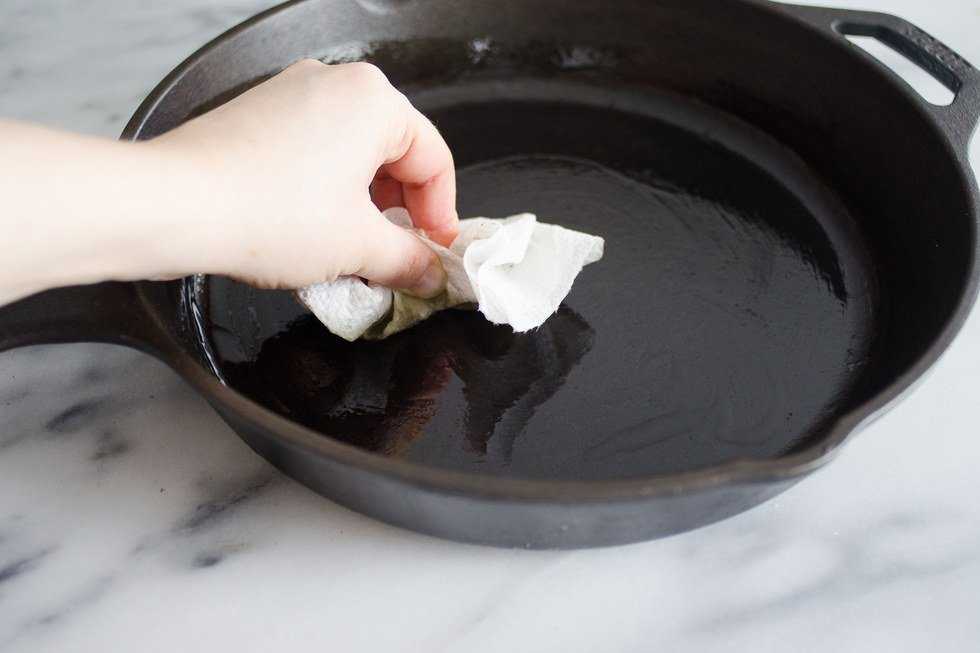
3. Pour oil onto paper towel and wipe down all sides of the pan until there is an oily sheen (pan should be black and shiny), make sure pan is warm during this step.
4. Bake pan at 350 degrees for 20 to 30 minutes. I usually leave mine in the oven until its next use. (If your roomates never check the oven before turning it on--you probably shouldn't leave it there)
Used, un-seasoned cast iron will rust quickly and this is incredibly difficult to remove/re-season. While it can be done, it should be avoided-especially if you want to get regular, lifelong use out of the pan. Pans that are not pre-seasoned are incredibly affordable and are available online, at most camping stores, and many discount home-good stores. Pre-seasoned pans are usually more expensive, but could be a better choice if you are nervous about starting from scratch. You can also buy pans that may need a little TLC from your local Goodwill, Salvation Army, or Flea Market. There are great tutorials for restoring neglected cast iron pans on Pinterest and other social media platforms. Buying my cast iron pan was a great investment for me, and it lowers my risk of anemia as a young adult female (in which the disorder is very common).